Sterile technique: keeping germs out of the needle
In short
About 8 minutes for the short version; 12 with every detail open.
- Germs on hands, tables or vials can get under your skin. Clean steps keep them out.
- Use a new sterile needle and syringe every time. Never reuse or share them.
- Wipe the rubber top of the vial with alcohol and let it dry. Then do not touch it.
- Throw a vial away if it is cloudy, has bits in it, was frozen or is too old.
- Clean steps cannot fix a product that was dirty from the start.
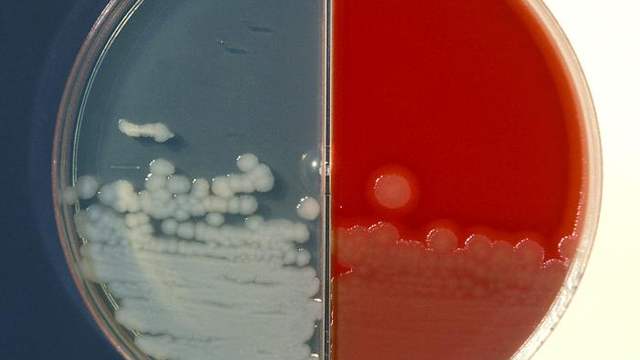
Each section starts with the short answer. The rest is folded under “In detail”.
Sterile means free of living germs. Aseptic technique is the set of habits that keeps a sterile thing sterile while you use it. Health workers are taught to use these habits for every injection.1,2 This page explains them for someone at home.
This page gives no amounts, volumes or sums. It is about keeping germs out, not about what to inject.
How germs get under the skin
How do germs get in?
Germs are too small to see. They live on skin, on tables and in the air. A needle that touches them carries them through the skin, past the body’s first defence.
The short animation shows how germs get in and spread, one step at a time.
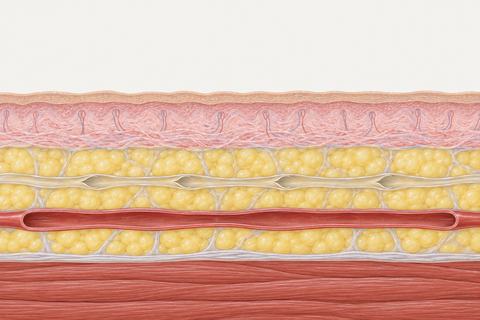
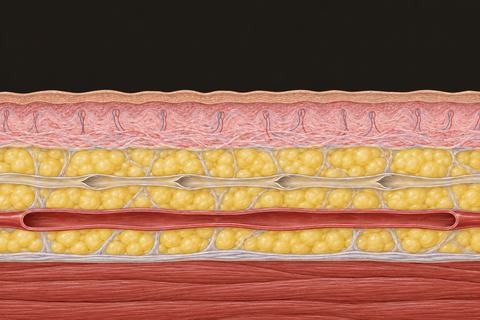

Your device asks for less motion, so this animation does not play. The picture shows the end result and the list explains every step.
-
Germs can sit on skin and on the rubber top of a vial. You cannot see them.
Evidence: In humans
-
The needle goes through the skin. It can carry germs into the fat layer underneath.
Evidence: In humans
-
Germs grow under the skin. They may form a pocket of pus (abscess), or redness spreads (cellulitis).
Evidence: In humans
-
Germs can travel along a lymph vessel. Red lines on the skin can be a sign of this.
Evidence: In humans
-
Germs in the blood can cause sepsis. Spreading redness, red lines, fever, feeling very ill? Get help now.
Evidence: In humans
In short: A needle can carry germs from the skin, the rubber top of a vial or the liquid into the fat under the skin. There they can form an abscess or cause cellulitis, spread along lymph vessels and reach the blood (sepsis). Spreading redness, red lines, fever or feeling very ill need a doctor straight away. With confusion, very fast breathing or blotchy skin, call your local emergency number.
Lines: solid = shown in people
Based on: World Health Organization (2010)1; Preventing Unsafe Injection Practices3; Safe Injection Practices to Prevent Transmission of Infections to Patients2; Smith et al. (2013)4; Skin abscess5; Cellulitis6; Lymphangitis7; Sepsis8
AI-generated illustration (gpt-image-2.5-sunburst-2026-09-08, 21 October 2026) CC BY 4.0 Image details The picture contains no text; the words, lines and moving marks on it are added by this site.
In detail: The same chain in words, with every warning sign , about 1 minute to read
- Germs are present on the hands, the table, the rubber top of the vial, the skin, or already inside the liquid.
- The needle picks them up and carries them into the tissue under the skin.
- Under the skin they can grow. The skin around the spot becomes red, hot and swollen: this is a skin infection called cellulitis. Sometimes the body walls the germs off in a pocket of pus: an abscess.
- The germs can spread along the lymph vessels and into the blood. In the blood they can cause sepsis, which damages organs and can kill.
- Warning signs are spreading redness, heat, swelling, pus, red lines, fever or feeling very ill. Then you need a doctor quickly.
Every step below breaks this chain at one point. Leaving out one step leaves one way in.
Check the product first
What do I check before I start?
If your product did not come from a pharmacy: check before you use it
These checks can show that something is wrong. None of them can show that a product is good or free of germs.9,10,4
Tick each box when you have checked it.
-
A lab report proves little if:
- its batch number is not the one on your vial;
- it does not name the lab, or has no date or signature;
- it shows only purity (HPLC), with no test of what it is, such as mass spectrometry;
- it has no test for germs (sterility) or for toxins from germs (endotoxin).
Even a full report covers only one sample. A report from the seller comes from someone who gains if it looks good. It cannot show that your vial is clean.16,17,18,19,20
Before you start
What do I do before I start?
- Wash your hands with soap and running water for at least 30 seconds. Include the wrists and the spaces between the fingers. Dry them with a clean paper towel. If your hands are not visibly dirty, an alcohol hand rub also works.
- Clear and clean a table. Remove clutter. Wipe the surface with 70% alcohol and let it dry.
- Lay out everything you need on the clean surface: a new needle and syringe in sealed packs, alcohol swabs, and a sharps container within reach.
- Check every pack. Throw away a needle or syringe whose pack is torn, wet or past its expiry date.
Handling the vial
How do I keep the vial clean?
- Wipe the rubber top (the stopper) with a fresh alcohol swab. Let it dry in the air before the needle goes in.1
- Do not touch the stopper after you have wiped it. Do not let the needle touch anything except the stopper and, later, your skin.1
- Use a new sterile needle and syringe every time you go into a vial. Never put a needle back into a vial after it has been in your skin. Germs and blood from your skin would end up in the whole vial.1,3,21
- Never leave a needle in the stopper to use it again later.3,1
- Never share a vial, a syringe, a needle or the water. Hepatitis B, hepatitis C and HIV can pass this way, even when no blood is visible.1,30,31
A needle is also only really sharp the first time. A reused needle is blunter and makes infection more likely.31
Single-dose and multi-dose vials
How long can I use an opened vial?
-
Single-dose vial
open once, then throw away the rest
-
Vial without a preservative
within 24 hours of opening, unless the maker says otherwise (WHO)
-
Multi-dose vial with a preservative
throw it away 28 days after first use, unless the maker gives another date (CDC)
-
Compounded GLP-1 medicine in a multi-dose vial (US)
never past 28 days, even with liquid left or if the instructions say longer (FDA)
Sources Sterile Water for Injection, USP; World Health Organization (2010); Preventing Unsafe Injection Practices; FDA's concerns with unapproved GLP-1 drugs used for weight loss12,1,3,21
In detail: Why a multi-dose vial carries more risk, and how to date it , about 2 minutes to read
A single-dose vial usually has no preservative. It is meant to be opened once. Whatever is left must be thrown away, because germs that get in can grow freely.12,3
A multi-dose vial is used several times. It usually contains a preservative that slows the growth of bacteria. But the preservative does not work against viruses, and it does not fully protect against bacteria either.3 Every time a needle goes through the stopper, there is a new chance for germs to get in. That is why health workers use multi-dose vials only when there is no other option.1
If you use a multi-dose vial:
- Write the date on it when you first use it.
- Throw it away 28 days after first use. A medicine from a pharmacy may have its own date in the leaflet; follow that.3
- For compounded GLP-1 medicines in multi-dose vials, the FDA is stricter. Throw the vial away 28 days after first use, even if there is liquid left. Do this even if the instructions say you can use it for longer.21
- A vial without a preservative should be thrown away much sooner. WHO advises within 24 hours of opening, unless the maker says otherwise.1
Bacteriostatic water and sterile water
What water can I mix a powder with?
Some products come as a powder that must be dissolved before use. Only use water made for injection, from a sealed container. Never use tap water or bottled drinking water.1,30
There are two kinds:
| Sterile water for injection | Bacteriostatic water | |
|---|---|---|
| What is in it: is there a preservative? | No Only sterile water | Yes Sterile water with a preservative (benzyl alcohol) |
| How often you may open it: more than once? | No Once. Throw away the rest. | Yes Several times, as a multi-dose container |
| What the preservative does: does it kill viruses or clean a dirty vial? | No Not applicable: there is no preservative | No Slows the growth of bacteria. Does not kill viruses and does not make a dirty vial clean. |
Benzyl alcohol is harmful for newborn babies, so bacteriostatic water must never be used for them.32
Mixing a powder with water
How do I mix a powder without harming it?
The same rules apply as for any vial. Wipe both stoppers. Use a new sterile needle and syringe.1
- Let the water run slowly down the inside wall of the vial.
- Mix by gently rolling or swirling the vial. Do not shake it.
- When it is dissolved, the liquid should be clear and without bits. If it is not, do not use it.
Mixing your own vial also means working out amounts. Mistakes happen, and some have been serious.33 This site gives no amounts. A pharmacist or doctor can check your understanding of a prescribed medicine.
In detail: Why shaking can harm a peptide , about 1 minute to read
Why not shake? Peptides are fragile chains. Shaking and changes in temperature can make them clump together (aggregate).34 Clumped peptide can lose its activity (Evidence level: Shown in cells or tissue in the laboratory).34 Clumps in protein medicines have also been linked to immune reactions in patients (Evidence level: Seen in humans in case reports or small uncontrolled studies).35
In detail: Dosing mistakes the FDA has seen , about 1 minute to read
The FDA has reports of people who injected 5 to 20 times the intended amount of compounded semaglutide from multi-dose vials. Most were not used to measuring with a syringe. Others had been given wrong conversions between milligrams, millilitres and “units”. Some needed hospital care.33
Storage and the cold chain
How should it be stored?
Wegovy, for example, belongs in the fridge and must not freeze
2–8 °C
in the fridge, says the Wegovy label. Keep it away from the cooling element.
Who took part EU product information for Wegovy, one example of a peptide medicine label Source Wegovy (semaglutide)15 Evidence Established
The cold chain means keeping a medicine cold at every step, from the factory to your fridge.
For products from outside a pharmacy, nobody knows how they were stored or shipped. The FDA has received complaints about compounded GLP-1 products that arrived warm or with too few ice packs. It advises not to use an injectable GLP-1 product that arrives warm.21
In detail: What the Wegovy label says, and why temperature matters , about 1 minute to read
Authorised peptide medicines come with clear storage rules. The Wegovy label is an example. Store it in the fridge (2–8 °C), away from the cooling element. Out of the fridge, it may be kept below 30 °C only for the time the leaflet states. Do not freeze it. Protect it from light. Do not use it if it has been frozen or left in direct sunlight.15
The reason is chemistry. Changes in temperature and shaking can break peptides down or make them clump (Evidence level: Shown in cells or tissue in the laboratory).22,34 A freeze-dried powder is usually more stable than a liquid. But freeze-drying itself can make some peptides clump more after mixing.34
When to throw a vial away
When should I throw a vial away?
- It should be clear, but it is cloudy, coloured, or has bits or flakes in it.
- The vial is cracked, or the seal or cap is broken or missing.
- It has been frozen, or left warm or in the sun.
- It is a multi-dose vial more than 28 days after first use, or it has no date.
- You touched the stopper, or the needle touched something else.
- A used needle went into it, or someone else used it.
- You do not know how old it is or how it was stored.
When in doubt, throw it out.
Why a powder is not proof of sterility
Is a dry powder sterile?
Germs were found in vials that had never been opened
749
people had infections by 1 July 2013, and 61 of them died
Who took part US outbreak investigation, 2012–2013: fungal infections after steroid injections from one pharmacy Source Smith et al. (2013)4 Evidence Humans, limited
Many people trust a freeze-dried powder because it looks dry and clean. But dry and clean-looking does not mean free of germs.
So sterile technique protects you from germs you might add. It cannot remove germs that were already in the product. See product risk.
In detail: What freeze-drying does, and how a factory makes a powder sterile , about 4 minutes to read
Freeze-drying removes water from a frozen product. It does not kill germs. In fact, laboratories use freeze-drying to keep collections of bacteria alive.36
In a proper factory, sterility comes from other steps. The liquid is passed through a filter that holds back bacteria. The vials are filled in germ-free conditions. The freeze-dryer itself is sterilised. Regulators inspect these steps.37 If they are skipped, the powder can carry germs and bacterial toxins (endotoxins), and you cannot see them.37
Germs are not the only thing that can be wrong. The plate shows six problems a vial from outside a pharmacy may have.
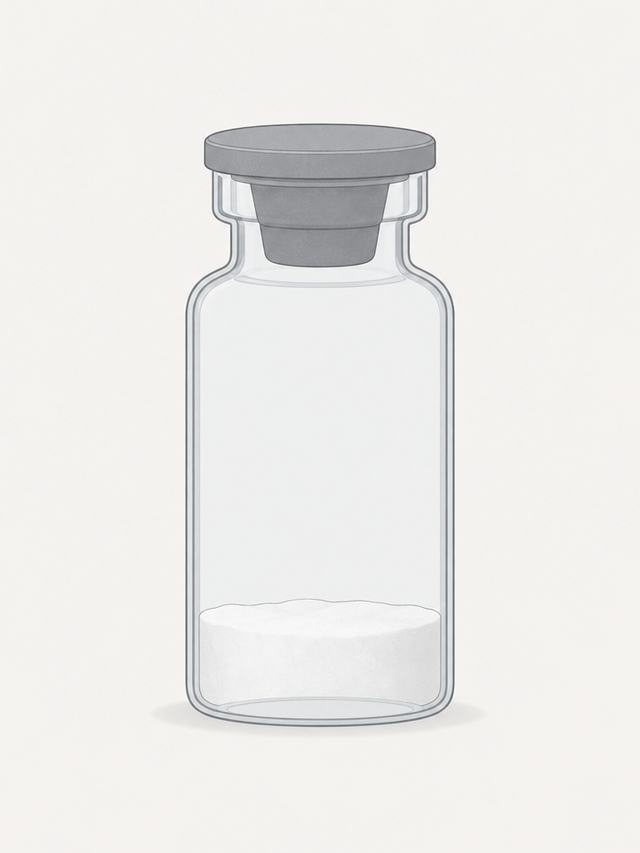
Key
- Marker 1: May not be what the label says The FDA warns that one name can cover different salt forms, or even a different active substance. A French lab found that products sold as TB-500 did not always match their description.
- Marker 2: The amount may differ from the label A 2026 study in Australia tested 3 products sold as retatrutide. They held from about half to almost twice the amount on the label. The TB-500 certificates the FDA saw did not check the amount.
- Marker 3: May hold near-copies and leftover chemicals Making a peptide can leave chains that are too short or slightly wrong, plus leftover solvents and other chemicals. Most certificates the FDA saw gave the purity but did not say which impurities were there.
- Marker 4: May not be tested for bacterial toxins (endotoxin) For anything injected, the FDA says this test is key. The certificates it saw for BPC-157 and TB-500 did not have it.
- Marker 5: May not be tested for germs For injections, the FDA says germ tests are key too. The certificates it saw for BPC-157, KPV and TB-500 showed no germ tests.
- Marker 6: Clumps may make immune reactions more likely Peptides can stick together into clumps. The FDA says clumps and impurities may raise the risk of an immune reaction, from harmless to life-threatening. No study has tested this for BPC-157, KPV or TB-500.
In words
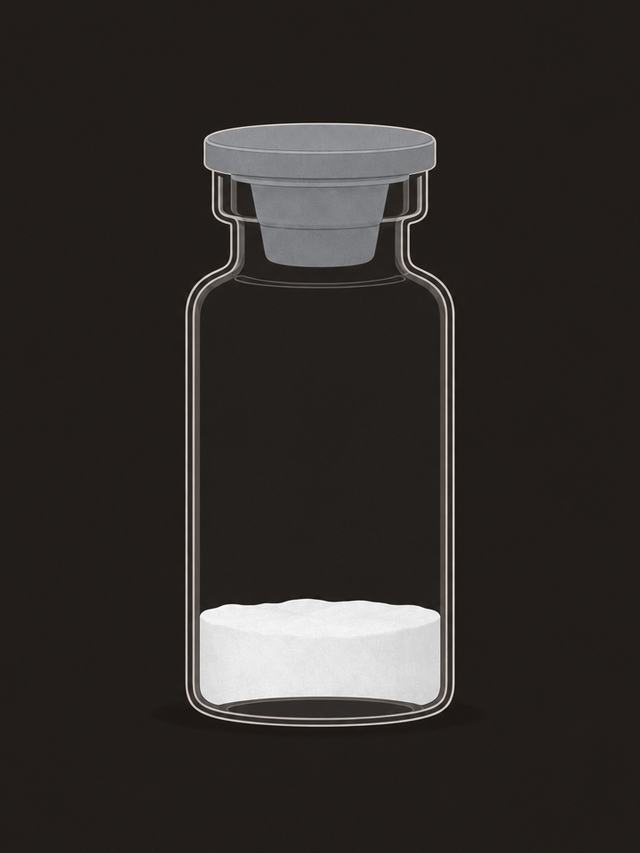
The picture shows one small glass vial with a grey rubber stopper and some white powder at the bottom. It has no label. Six numbers show what may be wrong with a vial like this when it is bought online. Number 1, on the glass where a label would be: it may not be what the label says. The FDA warns that one name can cover different salt forms, or even a different active substance. A French lab found that products sold as TB-500 did not always match their description. Number 2, on the powder: the amount may differ from the label. A 2026 study in Australia tested 3 products sold as retatrutide. They held from about half to almost twice the amount on the label. The TB-500 certificates the FDA saw did not check the amount. Number 3, on the powder: making a peptide can leave chains that are too short or slightly wrong, plus leftover solvents and other chemicals. Most certificates the FDA saw gave the purity but did not say which impurities were there. Number 4, inside the vial: it may not have been tested for bacterial toxins, called endotoxin. For anything injected, the FDA says this test is key, and the certificates it saw for BPC-157 and TB-500 did not have it. Number 5, inside the vial: it may not have been tested for germs. For injections the FDA says germ tests are key too, and the certificates it saw for BPC-157, KPV and TB-500 showed no germ tests. Number 6, on the powder: peptides can stick together into clumps. The FDA says clumps and impurities may raise the risk of an immune reaction, from harmless to life-threatening. No study has tested this for BPC-157, KPV or TB-500. That is why number 6 has a different colour: it is a possible risk, not a proven one.
Based on: FDA Briefing Document for BPC-157-Related Bulk Drug Substances (BPC-157 (free base) and BPC-157 acetate), Pharmacy Compounding Advisory Committee meeting, 23–24 July 2026; FDA Briefing Document for KPV-Related Bulk Drug Substances (KPV (free base) and KPV acetate), Pharmacy Compounding Advisory Committee meeting, 23-24 July 2026; FDA Briefing Document for TB-500-Related Bulk Drug Substances (TB-500 (free base) and TB-500 acetate), Pharmacy Compounding Advisory Committee meeting, 23–24 July 2026; Piatkowski et al. (2026); Delcourt et al. (2023)
AI-generated illustration (gpt-image-2.5-sunburst-2026-09-08, 21 October 2026) CC BY 4.0 Image details The picture contains no text; the numbers and labels are added by this site.
In detail: The 2012 outbreak: germs inside unopened vials , about 1 minute to read
A real example shows what this means. In 2012, US health officials traced an outbreak of fungal infections to steroid injections from one pharmacy. Fungus was found in vials that had never been opened. By 1 July 2013, 749 people had infections and 61 had died.4 The problem was not how the injections were given. The germs were inside before anyone used a needle.
Next steps
What should I read next?
- How and where to inject, and what a normal reaction looks like: injection safety.
- Getting rid of used needles safely: sharps disposal.
- When to get help: warning signs.
Stop-now warning signs
Call your local emergency number now
- Pain at the injection spot that is much worse than it looks, or dark, purple or grey patches or blisters there This can be a rare, fast-spreading infection of the deep layers under the skin (necrotising fasciitis).
Get medical help today
- Redness, heat, swelling or pain around the injection spot that keeps growing or getting worse This can be a skin infection (cellulitis), which needs antibiotics before it spreads.
- Red lines that run from the injection spot towards the armpit or groin The infection may be spreading along the lymph vessels, and from there into the blood. If you also have a fever with a fast heartbeat or fast breathing, call your local emergency number.
- A painful, warm lump that fills with pus This is probably an abscess: it often needs draining by a doctor, so do not squeeze it.
- You were pricked by a needle that someone else had used Blood on a used needle can pass on HIV and hepatitis B or C, and preventive treatment works best within hours.
Stop and contact a doctor
- A lump at an injection spot that does not go away, or keeps growing A doctor should check whether it is an abscess, a reaction to the product or something else.
Sources
Every claim on this page links to one of these sources. Scholarly sources link to their DOI; regulatory sources to the regulator's own page.
In detail: All 37 sources, numbered as in the text , about 6 minutes to read
- (2010). WHO best practices for injections and related procedures toolkit (WHO/EHT/10.02). World Health Organization, Geneva. Report who.int (opens an external site) — accessed 20 October 2026 ↩
- (2024). Safe Injection Practices to Prevent Transmission of Infections to Patients. Regulator cdc.gov (opens an external site) — accessed 20 October 2026 ↩
- (2024). Preventing Unsafe Injection Practices. Regulator cdc.gov (opens an external site) — accessed 20 October 2026 ↩
- (2013). Fungal infections associated with contaminated methylprednisolone injections. The New England Journal of Medicine 369:1598-1609. Research article doi:10.1056/NEJMoa1213978 (opens an external site) ↩
- (2026). Skin abscess. Web page nhs.uk (opens an external site) — accessed 20 October 2026 ↩
- (2024). Cellulitis. Web page nhs.uk (opens an external site) — accessed 20 October 2026 ↩
- (2025). Lymphangitis. Web page medlineplus.gov (opens an external site) — accessed 20 October 2026 ↩
- (2026). Sepsis. Web page nhs.uk (opens an external site) — accessed 20 October 2026 ↩
- (2026). Online medicijnen. Regulator igj.nl (opens an external site) — accessed 22 October 2026 ↩
- (2024). Multifactor Quality and Safety Analysis of Semaglutide Products Sold by Online Sellers Without a Prescription: Market Surveillance, Content Analysis, and Product Purchase Evaluation Study. Journal of Medical Internet Research 26:e65440. Research article doi:10.2196/65440 (opens an external site) ↩
- (2020). BeSafeRx: Considering an Online Pharmacy?. Regulator fda.gov (opens an external site) — accessed 22 October 2026 ↩
- (2026). Sterile Water for Injection, USP: prescribing information. Official product information dailymed.nlm.nih.gov (opens an external site) — accessed 20 October 2026 ↩
- (2001). Directive 2001/83/EC on the Community code relating to medicinal products for human use (consolidated text). Official Journal of the European Communities, L 311. Law eur-lex.europa.eu (opens an external site) — accessed 20 October 2026 ↩
- (2026). EGRIFTA SV (tesamorelin for injection): prescribing information and instructions for use. Official product information dailymed.nlm.nih.gov (opens an external site) — accessed 20 October 2026 ↩
- (2026). Wegovy (semaglutide): EPAR — overview and product information. Official product information ema.europa.eu (opens an external site) — accessed 20 October 2026 ↩
- (2000). ICH Q7 Good manufacturing practice for active pharmaceutical ingredients (CPMP/ICH/4106/00). European Medicines Agency, scientific guideline. Regulator ema.europa.eu (opens an external site) — accessed 22 October 2026 ↩
- (2025). Guideline on the Development and Manufacture of Synthetic Peptides (EMA/CHMP/CVMP/QWP/367182/2025). European Medicines Agency. Regulator ema.europa.eu (opens an external site) — accessed 22 October 2026 ↩
- (2026). FDA Briefing Document for BPC-157-Related Bulk Drug Substances (BPC-157 (free base) and BPC-157 acetate), Pharmacy Compounding Advisory Committee meeting, 23–24 July 2026. Regulator fda.gov (opens an external site) — accessed 20 October 2026 ↩
- (2026). FDA Briefing Document for TB-500-Related Bulk Drug Substances (TB-500 (free base) and TB-500 acetate), Pharmacy Compounding Advisory Committee meeting, 23–24 July 2026. Regulator fda.gov (opens an external site) — accessed 20 October 2026 ↩
- (2018). Impurity profiling of the most frequently encountered falsified polypeptide drugs on the Belgian market. Talanta 188:795-807. Research article doi:10.1016/j.talanta.2018.06.023 (opens an external site) ↩
- (2026). FDA's concerns with unapproved GLP-1 drugs used for weight loss. Regulator fda.gov (opens an external site) — accessed 20 October 2026 ↩
- (2010). Stability of protein pharmaceuticals: an update. Pharmaceutical Research 27:544-575. Review doi:10.1007/s11095-009-0045-6 (opens an external site) ↩
- (2025). Poisoning. Web page nhs.uk (opens an external site) — accessed 22 October 2026 ↩
- (2026). Hypoglycaemic coma induced by a falsified semaglutide product: a case report. European Journal of Hospital Pharmacy 33:486-489. Research article doi:10.1136/ejhpharm-2025-004656 (opens an external site) ↩
- (2024). Ik ga naar de huisarts: wat kan ik van tevoren doen en verwachten?. Web page thuisarts.nl (opens an external site) — accessed 22 October 2026 ↩
- (2026). Toxicity linked to unapproved peptide product labelled Retatrutide (health alert). Regulator health.vic.gov.au (opens an external site) — accessed 22 October 2026 ↩
- (2024). Medisch beroepsgeheim: wat en waarom. Web page knmg.nl (opens an external site) — accessed 20 October 2026 ↩
- (2023). Anaphylaxis. Web page nhs.uk (opens an external site) — accessed 20 October 2026 ↩
- (2026). Hygiënerichtlijn voor piercen. Regulator rivm.nl (opens an external site) — accessed 20 October 2026 ↩
- (2023). Veilig injecteren van anabole steroïden. Web page mainline.nl (opens an external site) — accessed 20 October 2026 ↩
- (2026). Injecteren (spuiten/slammen): risico's verminderen. Web page drugsinfo.nl (opens an external site) — accessed 20 October 2026 ↩
- (2026). Bacteriostatic Water for Injection, USP: prescribing information. Official product information dailymed.nlm.nih.gov (opens an external site) — accessed 20 October 2026 ↩
- (2024). FDA alerts health care providers, compounders and patients of dosing errors associated with compounded injectable semaglutide products. Regulator fda.gov (opens an external site) — accessed 20 October 2026 ↩
- (2017). Factors affecting the physical stability (aggregation) of peptide therapeutics. Interface Focus 7:20170030. Review doi:10.1098/rsfs.2017.0030 (opens an external site) ↩
- (2006). Effects of protein aggregates: an immunologic perspective. The AAPS Journal 8:E501-E507. Review doi:10.1208/aapsj080359 (opens an external site) ↩
- (2006). Preservation of micro-organisms by drying; a review. Journal of Microbiological Methods 66:183-193. Review doi:10.1016/j.mimet.2006.02.017 (opens an external site) ↩
- (1993). Lyophilization of Parenteral (7/93): Guide to Inspections. Regulator fda.gov (opens an external site) — accessed 20 October 2026 ↩