Monitoring: which checks matter, and why
In short
About 5 minutes for the short version; 13 with every detail open.
- Some checks can find a problem before you feel it.
- Which checks matter depends on what the product does in your body.
- A first test before you start gives you a number to compare with later.
- No test shows what is in your vial. Normal results do not prove a product is harmless.
- In the Netherlands, ask your GP. Your GP must keep what you say private.

Each section starts with the short answer. The rest is folded under “In detail”.
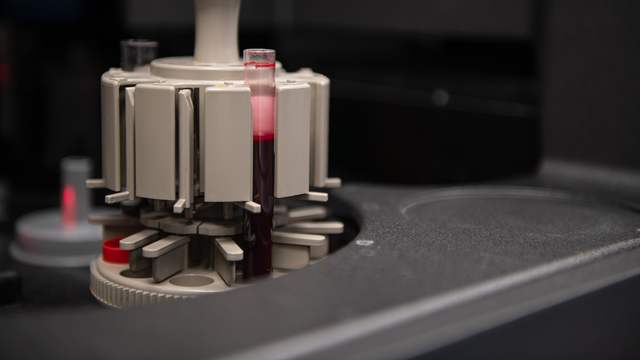
Monitoring means checking your body at set moments: blood tests, blood pressure, your skin and your weight. This page explains which checks fit which kind of product, what each one can find, and what it misses. It gives no schedule. How often to check is something to agree with a doctor who knows you.
Why and when to check
Why check at all?
- Before you start: a first test. Doctors call it a baseline. Normal results differ from person to person, so your own first result is what to compare later results with.1,2
- While you use it: the same tests again, at moments you agree with your doctor. Tesamorelin is a growth hormone booster authorised in the US. Its label asks for blood sugar checks before and during use. The label of bremelanotide asks the same for blood pressure.2,3
- Compare. Your doctor compares new results with your own earlier ones, to see a change.1,4
- When you feel unwell: see a doctor then, whatever the plan. Do not wait for the next check.5
Tell your doctor what you use, so the two of you can choose the right checks. See talking to your doctor.
Blood tests: what each one shows
Which blood tests matter?
| Test | What it shows | Most useful for | What it misses |
|---|---|---|---|
| Kidney function (creatinine, eGFR) | How well your kidneys filter the blood | GLP-1 type products (semaglutide, tirzepatide, retatrutide) | Lots of muscle, a meal with meat or some medicines can change the result |
| Blood sugar (HbA1c, fasting glucose) | HbA1c: your average blood sugar over 2–3 months | Growth hormone boosters; GLP-1 type products used with insulin or diabetes tablets | A sudden low after one injection |
| IGF-1 | How active growth hormone is in your body | Growth hormone boosters (tesamorelin, CJC-1295) | What a high level means in the long run |
| Liver tests | Liver cells under stress, and how the liver works | Products from outside a pharmacy, such as those sold as retatrutide; GLP-1 type products | The cause: an abnormal result needs more tests |
| Blood fats (cholesterol) | Your risk of heart disease | Everyone, as a general heart check | Almost nothing about an experimental peptide |
| Full blood count | Red and white blood cells and platelets | Anyone who injects | A skin infection: watch for red, hot, swollen skin instead |
Sources 1, 6, 7, 4, 8, 9, 2, 10, 11, 5, 12
In detail: Kidneys, blood sugar and IGF-1: the reasons , about 4 minutes to read
Kidneys
GLP-1 type products often cause feeling sick, vomiting and diarrhoea, especially at first. Losing a lot of fluid dries you out. In rare cases this can harm the kidneys, even causing acute kidney failure.10,11 A man with type 1 diabetes had kidney injury and dangerous ketone levels after a product sold online as retatrutide. He also had a gut infection, so the cause is not certain.13
The kidney test (eGFR) is worked out mainly from creatinine, a waste product from muscle. Body size, a lot of muscle, meat and some medicines can change it. So tell your doctor if you train hard or have gained muscle.1
Blood sugar
Boosting growth hormone can raise blood sugar. (Evidence level: Shown in controlled human trials) Tesamorelin was tested in two placebo-controlled trials in adults with HIV and extra belly fat. Within 26 weeks, 5% of people on tesamorelin reached a diabetes-level HbA1c (6.5% or more). On placebo it was 1%. The label asks for blood sugar checks before and during use.2
GLP-1 type products work the other way. On their own they rarely push blood sugar too low. Together with insulin or some diabetes tablets they can.10 The short animation shows why.
Your device asks for less motion, so this animation does not play. The picture shows the end result and the list explains every step.
-
Alone, a GLP-1-type medicine lowers high sugar. Near normal, it works less. Sugar rarely gets too low.
Evidence: In humans
-
Insulin lowers sugar too. So do tablets called sulfonylureas. They still work when sugar is normal or low.
Evidence: In humans
-
Used together, they can push blood sugar too low. This is called hypoglycaemia.
Evidence: In humans
-
So the prescriber may lower the insulin or tablet dose. The labels suggest this.
Evidence: In humans
-
Shaking, sweating or confused? Take sugar if the person can swallow. If not, call your local emergency number.
Evidence: In humans
In short: On its own, a GLP-1-type medicine such as semaglutide or tirzepatide rarely makes blood sugar too low. With insulin or a sulfonylurea tablet it can, so the prescriber may lower the insulin or tablet dose. Know the signs and take sugar at once. If the person cannot swallow, call your local emergency number.
Lines: solid = shown in people
Based on: Mounjaro (tirzepatide)11; Ozempic (semaglutide)14; Sola et al. (2015)15; American Diabetes Association Professional Practice Committee for Diabetes (2026)16
HbA1c shows your average over two to three months, so it cannot catch a sudden low. It is also less reliable if you have anaemia.6 A sudden low after an injection is a warning sign, not something to wait for a test for. See product risk.
IGF-1
IGF-1 carries out many effects of growth hormone. Growth hormone goes up and down during the day, but IGF-1 is steadier, so it is a dependable test.7
Tesamorelin raises IGF-1. (Evidence level: Shown in controlled human trials) After 26 weeks in those trials, almost half of the people on tesamorelin (47%) had IGF-1 above the normal range. The label says the effects of high IGF-1 over a long time are unknown, and asks for IGF-1 checks.2 CJC-1295 also raised IGF-1. (Evidence level: Shown in controlled human trials) Two placebo-controlled trials tested it in healthy adults. One injection raised IGF-1 to 1.5 to 3 times its usual level, for 9 to 11 days. The published summary does not say how many people took part. Three of the authors worked for the company that made it.17
In detail: Liver, blood fats and blood count: the reasons , about 2 minutes to read
Liver
Products from outside a pharmacy can hold impurities that may harm organs such as the liver.18 In the Australian state of Victoria, six people had acute liver injury in 2026 after using a product sold as retatrutide. The health department thinks an impurity may be the cause. It asked people who keep using the product to see their GP about liver tests.5 Gallstones are also a known side effect of GLP-1 medicines.10
Liver tests measure enzymes made mainly in the liver, a protein (albumin) and a waste product (bilirubin). An abnormal result does not always mean liver disease. More tests are needed to find the cause.4
Blood fats
A cholesterol test helps judge your risk of heart disease.8 Semaglutide improved blood fats in trials.10 For experimental peptides, we found no human data on blood fats. So this test is a general health check, not a check of the product.
Full blood count
A full blood count looks at red and white blood cells and platelets. It can help find infections and anaemia.9 Every injection can let germs in. A skin infection usually shows first as redness, heat and swelling around the spot.12 See warning signs.
Checks without a needle
What else is worth checking?
| Check | Most useful for | Why |
|---|---|---|
| Blood pressure and pulse | Tanning and sex-drive peptides (melanotan II, PT-141); GLP-1 type products | PT-141 raises blood pressure for some hours after each dose. GLP-1 medicines raise the resting pulse a little. |
| Skin and moles | Tanning peptides (melanotan I and II) | New or changing moles have been reported. |
| Weight and strength | GLP-1 type products | Part of the weight lost is not fat. |
| Pregnancy test | Anyone who could become pregnant | Several must not be used in pregnancy. For many, there are no data. |
Sources 3, 10, 11, 19, 20, 2, 21
In detail: Blood pressure and pulse: the reasons , about 1 minute to read
Bremelanotide (PT-141) is authorised in the US as Vyleesi. After each dose, blood pressure goes up for a while. In studies, the average rise was up to 6 points in the top number and 3 in the bottom number. It peaked 2 to 4 hours after the dose and was usually gone within 12 hours. The label asks doctors to check that blood pressure is well controlled before and during use. It must not be used with uncontrolled high blood pressure or known heart disease.3 So a reading taken just after a dose and one taken before it are not the same thing.
Melanotan II is a close relative. In one case report, a man had a racing heart, muscle breakdown and kidney problems after injecting it.22
GLP-1 medicines raise the resting pulse a little. In trials, the average rise was 3 beats per minute with semaglutide, and 3 to 5 with tirzepatide.10,11
In detail: Skin, weight and pregnancy: the reasons , about 2 minutes to read
Skin and moles
Tanning peptides copy a hormone that makes skin cells produce pigment. Case reports describe new moles and changing moles in people using melanotan. Four describe melanoma growing from an existing mole during or shortly after use. These reports do not prove that melanotan causes melanoma.19,23
PT-141 can cause dark patches on the face, gums or breasts. In the main trials, 1% of people had them. In a smaller study where people used it every day for 8 days, 38% had them.3
Photos of your skin before you start make changes easier to see. See a doctor about any mole that changes size, shape or colour, itches or bleeds.24
Weight and strength
When people lose weight on GLP-1 type medicines, part of the loss is lean mass. In trials this ranged from about 15% or less to 40–60% of the weight lost. Lean mass is not only muscle: it also includes organs, bone and water. The authors of a 2024 review think the loss of muscle is mostly what you would expect with that much weight loss.20 In a scan study of 140 people in a semaglutide trial, more fat than lean mass was lost.10 Notice if everyday tasks, such as climbing stairs, get harder, and tell your doctor.
Pregnancy
GLP-1 medicines harmed the unborn young in animal studies. The EU labels say to stop at least 2 months (semaglutide) or 1 month (tirzepatide) before a planned pregnancy.10,11 Tesamorelin must not be used in pregnancy.2 For BPC-157, TB-500 and KPV, the FDA found no studies in pregnant women. Animal data were missing, or limited to one rat study.21,25,26
Tirzepatide may make the pill work less well. The US label advises another method than the pill, or adding a condom. This is for 4 weeks after starting and after each dose increase. The EU label calls the effect not clinically relevant.27,11 See before you consider a peptide.
What checks cannot do
Can tests show that a product is harmless?
| Blood tests and other checks | |
|---|---|
| Can they show fluid loss is hurting your kidneys? | Yes A kidney test can show a drop.1 |
| Can they show blood sugar creeping up? | Yes HbA1c shows the average over months.6 |
| Can they show what is in your vial? | No That needs a lab test of the product itself.28 |
| Can they warn you about germs before you inject? | No Germs and toxins in a vial are invisible.29,30 |
| Can they predict a cancer risk years from now? | No For BPC-157, for example, the FDA found no cancer studies at all.21 |
| Can they show long-term effects of a high IGF-1? | Unknown Those effects are not known.2 |
In detail: Why normal results are not the all-clear , about 1 minute to read
- Tests look back, not ahead. They show what has already changed in your body, not what a product may do later.
- They test you, not the next vial. A normal result after one vial says nothing about the next one, which may differ.31
- They only find what they look for. A liver test will not show a skin problem, and none of these tests measure cancer risk.4
- Some risks are unknown. For BPC-157, TB-500 and KPV, for example, the FDA found too little human data to judge long-term safety.21,25,26
Getting checks in the Netherlands
How do I get these checks in the Netherlands?
- Book an appointment. Ask for a longer one if you have a lot to discuss.32
- Say what you use. Bring the product or a photo of its label, and a list of everything else you take.32,5
- You and your GP agree which tests fit. Blood tests are often done by a lab outside the practice.33
- Costs. The GP visit does not use your deductible (eigen risico). Blood tests at a lab do.33
- Results. You may see your medical file and get a copy.34
What you tell your GP stays private.35,36
In detail: If your GP does not want to do the tests , about 2 minutes to read
Your GP must give the care a good doctor would give, by the standards of the profession. That does not mean doing every test you ask for.37 We found no Dutch GP guideline on checks for people who use unlicensed peptides (searched 22 October 2026). So GPs may differ in what they do.
What you can do:
- Ask about your symptoms. Feeling sick for days, yellow skin or a racing heart are reasons for a doctor to look. That is true whatever caused them.32
- Ask which warning signs to watch for, so you know when to come back.
- Ask for a referral or a second opinion. A doctor should normally agree to refer you, and may refuse only for serious reasons.38
- Tests you pay for yourself exist. You usually pay the full cost and have to work out what the result means. A result can look bad when you are healthy, or look good when you are not. Many of these tests have not been well studied.39 Take any abnormal result to your GP.
Health authorities do see a role for doctors here. People in Victoria, Australia, fell ill after a product sold as retatrutide. The health department asked those who kept using it to see their GP about liver tests.5
Between checks: warning signs
What do I watch for between checks?
Checks happen now and then. Your body can change in between. If you notice one of these signs, do not wait for your next test.
Stop-now warning signs
Call your local emergency number now
- Shaking, sweating or sudden hunger that turns into confusion or drowsiness Very low blood sugar can cause a fit or loss of consciousness; take something sugary if you can still swallow safely.
- Severe, constant pain in the upper belly that spreads to the back, often with vomiting This can be an inflamed pancreas (pancreatitis), a known risk of GLP-1 medicines such as semaglutide and tirzepatide.
- Pain, pressure or tightness in the chest, or pain that spreads to the arm, neck, jaw or back This can be a heart attack, which needs treatment in hospital straight away.
- Sudden, severe shortness of breath: gasping, or not able to finish a sentence This can be a serious problem with the heart, the lungs or an allergic reaction.
- A racing, pounding or irregular heartbeat that does not settle, or that comes with chest pain, breathlessness or fainting This can be a dangerous heart rhythm.
- A sudden, severe headache with blurred vision, chest pain, confusion or vomiting Blood pressure may be dangerously high, which can damage the brain, heart, kidneys and eyes.
- An erection that lasts more than 3 hours, or a painful erection that will not go down Blood trapped in the penis can damage it for good if it is not treated quickly.
- Confusion or slurred speech, very fast breathing, or pale, blue or blotchy skin, often with fever or shivering These can be signs of sepsis: the body's reaction to an infection has started to damage its own organs.
- Fainting and not waking up within a minute, or fainting with chest pain, a racing heart or a fit This can be a dangerous heart rhythm or a severe allergic reaction.
Get medical help today
- Vomiting so often that you cannot keep fluids down, or passing very little urine Losing too much fluid can damage the kidneys.
- Yellow skin, or yellow whites of the eyes This can be a sign of a liver problem, gallstones or an inflamed pancreas.
- Dark, red or cola-coloured urine together with muscle pain, tenderness or weakness Damaged muscle can release a protein that harms the kidneys (rhabdomyolysis).
- Fever, shivering or feeling very ill in the days after an injection Germs from the needle, the skin or the product may have reached your blood. If you also have a fast heartbeat or fast breathing, call your local emergency number.
Stop and contact a doctor
- Palpitations that keep coming back, even if they pass and you then feel well A doctor can check whether your heart rhythm is normal.
- You fainted, but woke up quickly and now feel well Fainting is often harmless, but a doctor should check the cause.
- A new mole, or a mole that changes size, shape or colour, itches or bleeds A changing mole can be skin cancer, and tanning peptides such as melanotan II have been linked to new and changing moles in case reports.
Sources
Every claim on this page links to one of these sources. Scholarly sources link to their DOI; regulatory sources to the regulator's own page.
In detail: All 39 sources, numbered as in the text , about 6 minutes to read
- (2026). Glomerular Filtration Rate (GFR) Test. Web page medlineplus.gov (opens an external site) — accessed 22 October 2026 ↩
- (2026). EGRIFTA SV (tesamorelin for injection): prescribing information and instructions for use. Official product information dailymed.nlm.nih.gov (opens an external site) — accessed 20 October 2026 ↩
- (2025). VYLEESI (bremelanotide injection): prescribing information. Official product information dailymed.nlm.nih.gov (opens an external site) — accessed 20 October 2026 ↩
- (2023). Liver Function Tests. Web page medlineplus.gov (opens an external site) — accessed 22 October 2026 ↩
- (2026). Toxicity linked to unapproved peptide product labelled Retatrutide (health alert). Regulator health.vic.gov.au (opens an external site) — accessed 22 October 2026 ↩
- (2025). Hemoglobin A1C (HbA1c) Test. Web page medlineplus.gov (opens an external site) — accessed 22 October 2026 ↩
- (2024). IGF-1 (Insulin-Like Growth Factor-1) Test. Web page medlineplus.gov (opens an external site) — accessed 22 October 2026 ↩
- (2024). Cholesterol Levels. Web page medlineplus.gov (opens an external site) — accessed 22 October 2026 ↩
- (2024). Complete Blood Count (CBC). Web page medlineplus.gov (opens an external site) — accessed 22 October 2026 ↩
- (2026). Wegovy (semaglutide): EPAR — overview and product information. Official product information ema.europa.eu (opens an external site) — accessed 20 October 2026 ↩
- (2026). Mounjaro (tirzepatide): EPAR — overview and product information. Official product information ema.europa.eu (opens an external site) — accessed 20 October 2026 ↩
- (2024). Cellulitis. Web page nhs.uk (opens an external site) — accessed 20 October 2026 ↩
- (2026). Online-Sourced Retatrutide Complicating Impending Diabetic Ketoacidosis in a Patient With Type 1 Diabetes and Concurrent Shigella Gastroenteritis. Cureus 18:e115260. Research article doi:10.7759/cureus.115260 (opens an external site) ↩
- (2026). Ozempic (semaglutide): EPAR — overview and product information. Official product information ema.europa.eu (opens an external site) — accessed 20 October 2026 ↩
- (2015). Sulfonylureas and their use in clinical practice. Archives of Medical Science 11:840-848. Review doi:10.5114/aoms.2015.53304 (opens an external site) ↩
- (2026). 6. Glycemic Goals, Hypoglycemia, and Hyperglycemic Crises: Standards of Care in Diabetes—2026. Diabetes Care 49:S132-S149. Guideline doi:10.2337/dc26-S006 (opens an external site) ↩
- (2006). Prolonged stimulation of growth hormone (GH) and insulin-like growth factor I secretion by CJC-1295, a long-acting analog of GH-releasing hormone, in healthy adults. The Journal of Clinical Endocrinology and Metabolism 91:799-805. Clinical trial doi:10.1210/jc.2005-1536 (opens an external site) ↩
- (2026). Online medicijnen. Regulator igj.nl (opens an external site) — accessed 22 October 2026 ↩
- (2017). Risks of unregulated use of alpha-melanocyte-stimulating hormone analogues: a review. International Journal of Dermatology 56:975-980. Review doi:10.1111/ijd.13585 (opens an external site) ↩
- (2024). Changes in lean body mass with glucagon-like peptide-1-based therapies and mitigation strategies. Diabetes, Obesity and Metabolism 26 Suppl 4:16-27. Review doi:10.1111/dom.15728 (opens an external site) ↩
- (2026). FDA Briefing Document for BPC-157-Related Bulk Drug Substances (BPC-157 (free base) and BPC-157 acetate), Pharmacy Compounding Advisory Committee meeting, 23–24 July 2026. Regulator fda.gov (opens an external site) — accessed 20 October 2026 ↩
- (2012). Melanotan II injection resulting in systemic toxicity and rhabdomyolysis. Clinical Toxicology 50:1169-1173. Research article doi:10.3109/15563650.2012.740637 (opens an external site) ↩
- (2009). alpha-Melanocyte-stimulating hormone-induced eruptive nevi. Archives of Dermatology 145:441-444. Research article doi:10.1001/archdermatol.2008.623 (opens an external site) ↩
- (2023). Moles. Web page nhs.uk (opens an external site) — accessed 20 October 2026 ↩
- (2026). FDA Briefing Document for TB-500-Related Bulk Drug Substances (TB-500 (free base) and TB-500 acetate), Pharmacy Compounding Advisory Committee meeting, 23–24 July 2026. Regulator fda.gov (opens an external site) — accessed 20 October 2026 ↩
- (2026). FDA Briefing Document for KPV-Related Bulk Drug Substances (KPV (free base) and KPV acetate), Pharmacy Compounding Advisory Committee meeting, 23-24 July 2026. Regulator fda.gov (opens an external site) — accessed 20 October 2026 ↩
- (2026). MOUNJARO (tirzepatide) injection — prescribing information (revised 08/2026). Official product information accessdata.fda.gov (opens an external site) — accessed 20 October 2026 ↩
- (2025). Guideline on the Development and Manufacture of Synthetic Peptides (EMA/CHMP/CVMP/QWP/367182/2025). European Medicines Agency. Regulator ema.europa.eu (opens an external site) — accessed 22 October 2026 ↩
- (2024). Multifactor Quality and Safety Analysis of Semaglutide Products Sold by Online Sellers Without a Prescription: Market Surveillance, Content Analysis, and Product Purchase Evaluation Study. Journal of Medical Internet Research 26:e65440. Research article doi:10.2196/65440 (opens an external site) ↩
- (2013). Fungal infections associated with contaminated methylprednisolone injections. The New England Journal of Medicine 369:1598-1609. Research article doi:10.1056/NEJMoa1213978 (opens an external site) ↩
- (2018). Impurity profiling of the most frequently encountered falsified polypeptide drugs on the Belgian market. Talanta 188:795-807. Research article doi:10.1016/j.talanta.2018.06.023 (opens an external site) ↩
- (2024). Ik ga naar de huisarts: wat kan ik van tevoren doen en verwachten?. Web page thuisarts.nl (opens an external site) — accessed 22 October 2026 ↩
- (2026). Huisarts (Zvw). Regulator zorginstituutnederland.nl (opens an external site) — accessed 22 October 2026 ↩
- (1994). Burgerlijk Wetboek Boek 7, artikelen 454-456 (WGBO: het medisch dossier, eigen verklaring, inzage en afschrift). wetten.overheid.nl (BWBR0005290), version in force from 8 October 2026. Law wetten.overheid.nl (opens an external site) — accessed 22 October 2026 ↩
- (2024). Medisch beroepsgeheim: wat en waarom. Web page knmg.nl (opens an external site) — accessed 20 October 2026 ↩
- (1994). Burgerlijk Wetboek Boek 7, artikel 457 (WGBO: geheimhouding). wetten.overheid.nl (BWBR0005290), version in force from 8 October 2026. Law wetten.overheid.nl (opens an external site) — accessed 22 October 2026 ↩
- (1994). Burgerlijk Wetboek Boek 7, artikel 453 (WGBO: zorg van een goed hulpverlener). wetten.overheid.nl (BWBR0005290), version in force from 8 October 2026. Law wetten.overheid.nl (opens an external site) — accessed 22 October 2026 ↩
- (2024). Heeft mijn patiënt recht op een verwijzing voor een second opinion?. Web page knmg.nl (opens an external site) — accessed 22 October 2026 ↩
- (2025). Ik wil misschien laten onderzoeken of ik wel gezond ben. Web page thuisarts.nl (opens an external site) — accessed 22 October 2026 ↩