Product risk: what can be wrong inside the vial
In short
About 6 minutes for the short version; 12 with every detail open.
- You cannot see what is in a vial. Labs that tested real products often found problems.
- They found the wrong substance, the wrong amount, extra chemicals, metals and toxins from germs.
- Some fake weight-loss pens held insulin. Insulin can make your blood sugar drop very low.
- A seller's lab report covers one sample. It cannot show that your vial is clean.
- Clean injecting cannot fix a bad product. A medicine from a pharmacy has been checked.

Each section starts with the short answer. The rest is folded under “In detail”.
This page is for anyone who has, or is thinking about, a peptide product that did not come from a pharmacy. It names no sellers and gives no amounts.
What can be wrong inside a vial
What can be wrong with a vial?
A medicine from a pharmacy has been checked by a regulator. Its maker must test it against set limits.1 For a product from outside that system, nobody can show you that such checks were done.2,3
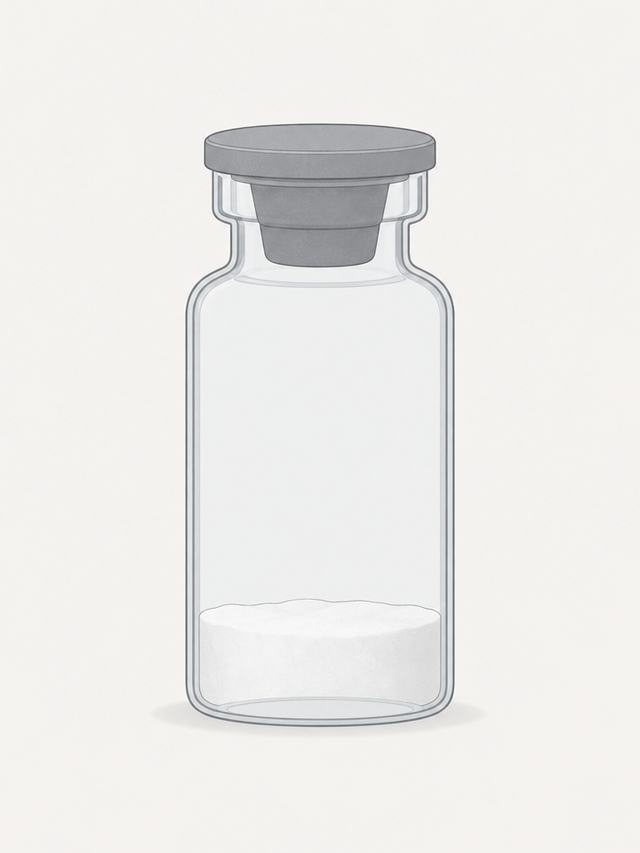
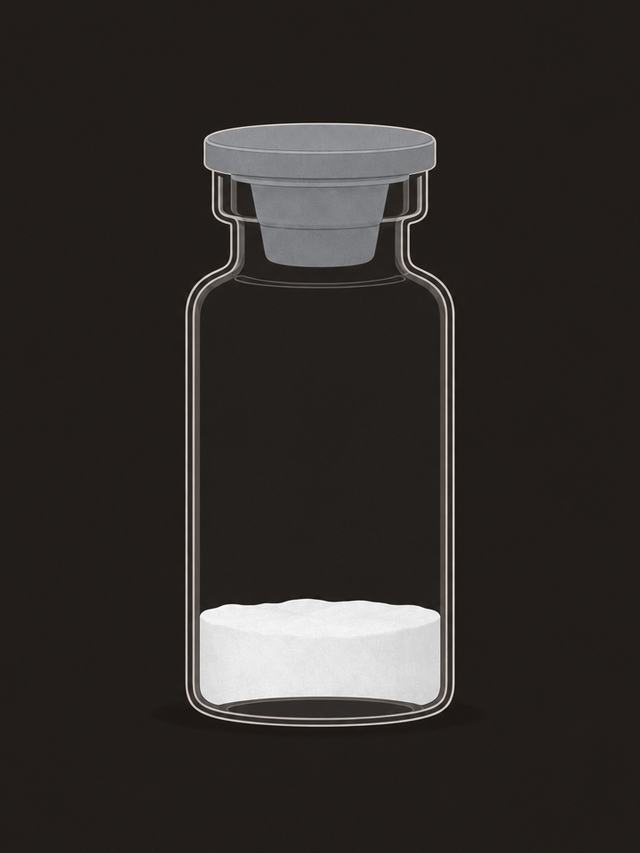
Key
- Marker 1: May not be what the label says The FDA warns that one name can cover different salt forms, or even a different active substance. A French lab found that products sold as TB-500 did not always match their description.
- Marker 2: The amount may differ from the label A 2026 study in Australia tested 3 products sold as retatrutide. They held from about half to almost twice the amount on the label. The TB-500 certificates the FDA saw did not check the amount.
- Marker 3: May hold near-copies and leftover chemicals Making a peptide can leave chains that are too short or slightly wrong, plus leftover solvents and other chemicals. Most certificates the FDA saw gave the purity but did not say which impurities were there.
- Marker 4: May not be tested for bacterial toxins (endotoxin) For anything injected, the FDA says this test is key. The certificates it saw for BPC-157 and TB-500 did not have it.
- Marker 5: May not be tested for germs For injections, the FDA says germ tests are key too. The certificates it saw for BPC-157, KPV and TB-500 showed no germ tests.
- Marker 6: Clumps may make immune reactions more likely Peptides can stick together into clumps. The FDA says clumps and impurities may raise the risk of an immune reaction, from harmless to life-threatening. No study has tested this for BPC-157, KPV or TB-500.
In words
The picture shows one small glass vial with a grey rubber stopper and some white powder at the bottom. It has no label. Six numbers show what may be wrong with a vial like this when it is bought online. Number 1, on the glass where a label would be: it may not be what the label says. The FDA warns that one name can cover different salt forms, or even a different active substance. A French lab found that products sold as TB-500 did not always match their description. Number 2, on the powder: the amount may differ from the label. A 2026 study in Australia tested 3 products sold as retatrutide. They held from about half to almost twice the amount on the label. The TB-500 certificates the FDA saw did not check the amount. Number 3, on the powder: making a peptide can leave chains that are too short or slightly wrong, plus leftover solvents and other chemicals. Most certificates the FDA saw gave the purity but did not say which impurities were there. Number 4, inside the vial: it may not have been tested for bacterial toxins, called endotoxin. For anything injected, the FDA says this test is key, and the certificates it saw for BPC-157 and TB-500 did not have it. Number 5, inside the vial: it may not have been tested for germs. For injections the FDA says germ tests are key too, and the certificates it saw for BPC-157, KPV and TB-500 showed no germ tests. Number 6, on the powder: peptides can stick together into clumps. The FDA says clumps and impurities may raise the risk of an immune reaction, from harmless to life-threatening. No study has tested this for BPC-157, KPV or TB-500. That is why number 6 has a different colour: it is a possible risk, not a proven one.
Based on: FDA Briefing Document for BPC-157-Related Bulk Drug Substances (BPC-157 (free base) and BPC-157 acetate), Pharmacy Compounding Advisory Committee meeting, 23–24 July 2026; FDA Briefing Document for KPV-Related Bulk Drug Substances (KPV (free base) and KPV acetate), Pharmacy Compounding Advisory Committee meeting, 23-24 July 2026; FDA Briefing Document for TB-500-Related Bulk Drug Substances (TB-500 (free base) and TB-500 acetate), Pharmacy Compounding Advisory Committee meeting, 23–24 July 2026; Piatkowski et al. (2026); Delcourt et al. (2023)
AI-generated illustration (gpt-image-2.5-sunburst-2026-09-08, 21 October 2026) CC BY 4.0 Image details The picture contains no text; the numbers and labels are added by this site.
In detail: How each problem happens , about 3 minutes to read
The wrong substance
One name can cover a different salt form, or even a different active substance.4,5 A salt form is the same molecule paired with a small partner molecule. Regulators treat it as a different active ingredient.5 A Belgian lab found a different growth factor (EGF) in a product thought to hold IGF-1.6 An Australian test of one product sold as retatrutide found semaglutide and no retatrutide.7
The wrong amount
How much peptide goes into each vial depends on how well the maker weighs and fills. Belgian public-health labs found that the amount of drug per vial varied a lot.8
Extra chemicals from making the peptide
Peptides are built one amino acid at a time. If one step does not finish, the chain misses a piece. These are called deletion sequences. Other steps can leave chains that are too short, have an extra piece, or have a wrong building block.1,9 Solvents and other chemicals from the process can also stay behind.1 A proper factory removes most of them by purifying the product, then tests what is left.1,10 A review of peptide impurities also found products polluted with other, unrelated peptides, a sign of poor manufacturing.9
Metals
Making a peptide can involve metals that speed up the chemical reactions (catalysts). So EU guidance asks makers to test for metals.1 Belgian labs tested ten peptide products from suspected illegal online pharmacies. Several held arsenic at up to ten times the limit for injected medicines. One held lead.8
Germs and toxins from germs
A vial can hold living germs. A Belgian lab found a bacterium called Bacillus cereus in two illegal peptide products meant for injection.11 Toxins from germs are a separate problem. Endotoxin is part of the outer wall of some bacteria. It is set free when the bacteria die. It is a major cause of fever reactions to medicines with germs in them.12 So a vial can have no living germs and still hold endotoxin.13
Breakdown and clumps
Peptides break down over time, faster with heat. Parts of the chain can react with air or water.1,14 Peptide chains can also stick together into clumps. Clumped peptide can lose its activity (Evidence level: Shown in cells or tissue in the laboratory), and clumps in protein medicines have been linked to immune reactions (Evidence level: Seen in humans in case reports or small uncontrolled studies).15,16 How a product was stored and shipped is usually unknown. See sterile technique.
What labs found in real products
Have real products been tested?
Most of the powder was not semaglutide
7.7–14.37%
of the powder was semaglutide. The seller's papers said it was at least 99% pure.
What was counted 3 vials sold as semaglutide without a prescription, bought from illegal online pharmacies and tested in Hungary Source Ashraf et al. (2024)10 Evidence Cells
The amount did not match the label
51.3–190%
of the amount on the label, in 3 products sold as retatrutide
What was counted 3 products labelled as retatrutide, submitted anonymously and tested in Australia in 2026 Source Piatkowski et al. (2026)17 Evidence Cells
Some held a toxic metal
up to 10×
the arsenic limit for drugs you inject, in some samples
What was counted The 10 peptide products most often found on the Belgian market, from 3 suspected illegal online pharmacies Source Janvier et al. (2018)8 Evidence Cells
Most of these studies tested only a few products. They do not tell you how often a given product is bad. They show that problems are common enough to find.
In detail: All the studies we found, and what each one tested , about 2 minutes to read
| Who tested | What | What they found |
|---|---|---|
| University of Pécs, Hungary (2024) | 3 vials sold as semaglutide, from illegal online pharmacies | More semaglutide than the label said (29–39% more), yet it made up only 8–14% of the powder. No living germs. A raised level of toxins from germs in one. The paper is unclear about the other two. 3 other orders never arrived.10,13 |
| University of Queensland, Australia (2026) | 3 products sold as retatrutide | All held retatrutide, at 51%, 165% and 190% of the label. Lead was found, at a level the authors judged well below the limit. Germs and toxins were not tested.17 |
| Belgian public-health labs (2018) | The 10 peptide products most often found in Belgium | A large spread in amount per vial. Purity as low as 5% for some peptides. Arsenic up to ten times the limit; lead in one sample.8 |
| Belgian public-health labs (2018) | 2 illegal peptide products for injection | The bacterium Bacillus cereus.11 |
| Anti-doping lab, Cologne (2014) | 337 black-market products from Germany, 2010–2013 | 12.8% held peptide hormones or growth factors. The authors call several substances fake or non-approved.18 |
| Anti-Doping Switzerland and Cologne (2017) | 1,190 doping products seized at the Swiss border, most labelled as muscle-building (anabolic) drugs | Fewer than 20% held the substance on the label in the stated amount.19 |
These studies tested seized products or a few test buys, not a random sample. So they cannot say how often a product on the market is bad. They tested products sold to the public, not the authorised medicines with the same names.
Fake pens that held insulin
What about fake weight-loss pens?
- The pen or vial looks like semaglutide, but holds insulin instead.20,21
- Insulin lowers blood sugar, even when it is already normal. Semaglutide alone does not cause a serious drop in healthy people.22,23
- Blood sugar drops. You may shake, sweat and feel hungry, then become confused or drowsy.23
- Without sugar, this can end in a coma. Two people treated in Dutch hospitals needed sugar through a drip for up to two days.22
In detail: Where fake pens with insulin were found , about 1 minute to read
- Germany and Austria, 2023. Fake pens labelled as Ozempic were found at wholesalers. Tests found no semaglutide in them, and an official German lab found insulin. Some fakes had reached patients in Austria.20,25
- United Kingdom, 2023. The medicines regulator seized fake pens. People were treated in hospital for very low blood sugar, which suggested the pens held insulin.24
- The Netherlands, 2026. Dutch hospital doctors described two people in a coma from insulin. Both had injected semaglutide obtained without a prescription.22
- Italy, 2026. A woman went into a coma from low blood sugar. Lab tests showed her vial, bought online as semaglutide, held insulin.21
- Across Europe. A study looked at the EU side-effect database from 2018 to the end of 2025. It found 234 reports about possible fake semaglutide. Low blood sugar was reported more often than with the real medicine.26
- Now. Insulin pens were stolen from a Dutch wholesaler. On 20 October 2026 the Dutch inspectorate warned that they may be sold online, possibly as an obesity medicine.27
The World Health Organization also warned that a fake pen may hold another substance, such as insulin.28
What a lab certificate shows, and what it does not
My product came with a lab report. Is that enough?
A certificate of analysis is a lab report on a sample. It is only as good as the tests it includes, and the lab that did them.
| A typical seller’s lab report | What EU guidance asks for a peptide medicine | |
|---|---|---|
| Proves it is the right substance, with two different methods? | Unknown Some list an identity test. Many show only a purity figure.29,4 | Yes At least two different methods are advised.1 |
| Says how much peptide is in the vial? | No Most give only a purity figure.29,4 | Yes The content is measured.1 |
| Names the impurities one by one? | No Impurities were not named.29 | Yes Each impurity is reported, down to small amounts.1 |
| Tests for germs and toxins from germs? | No None of the example reports the FDA described showed germ tests.29,30,4 | Yes Both are on the list.1 |
In detail: Why '99% pure' can mislead , about 2 minutes to read
Most reports show a purity figure from HPLC. HPLC pushes a dissolved sample through a column. Different molecules come out at different times, and a detector draws a peak for each. Purity is the size of the main peak compared with all the peaks the detector can see. So the result depends on what the detector can see.29,4,31,1
That leaves gaps:
- It does not say what the main peak is. A wrong molecule can give a clean peak. Identity needs another method, such as mass spectrometry, which weighs the molecules.1
- It misses what the detector cannot see. A US study tested two peptides bought for research. By weight, 20% and 43% of them was a sugar alcohol (mannitol). The usual test cannot see it.31
- It is not the amount of peptide in the powder. In the Hungarian study, the test showed one clean semaglutide peak. Yet semaglutide was only 8–14% of the powder, while the papers claimed at least 99% purity.10
- Two molecules can hide in one peak. EU guidance warns about impurities that come out at the same time as the peptide.1
- It tests no germs, no toxins from germs and no metals. Those need separate tests.1
In detail: Who made the report, and why that matters , about 1 minute to read
- Which sample? A report describes the sample the lab received. Products differ from vial to vial, so it cannot speak for yours.8,17
- Which lab? Labs can be accredited to an international standard, ISO/IEC 17025. An outside body then checks how the lab works.32 A report from a lab you cannot find or check is weak evidence.
- Who paid? A report the seller chooses to show you comes from someone who gains when it looks good. The example reports the FDA found came from sellers’ own websites.29
Mistakes with units and syringes
Can I get the amount wrong even if the product is fine?
Some people injected many times the amount they meant to
5 to 20×
the amount they meant to inject, in reports to the US regulator
Who took part People in the US using compounded semaglutide from multi-dose vials; reports to the FDA, up to July 2024 Source FDA alerts health care providers, compounders and patients of dosing errors associated with compounded injectable semaglutide products33 Evidence Humans, limited
This site gives no amounts and no mixing sums. A doctor or pharmacist can check your understanding of a prescribed medicine.
In detail: Why these mistakes happen , about 1 minute to read
A pen from a pharmacy gives a fixed dose with each click. A vial does not. You draw up the liquid yourself, so every step can go wrong.34
- Three units mean different things. Milligrams (mg) measure the amount of substance. Millilitres (mL) measure the amount of liquid. The “units” on an insulin syringe are marks for volume, made for insulin. They say nothing about how much peptide is in that liquid.33,34
- The strength of the liquid differs. Products come in different strengths. So the same mark on a syringe can hold a very different amount of peptide.33
- What happened. Some people needed hospital care, and some health workers also got the conversion wrong.33 A US poison centre described two people who injected ten times the intended dose and were sick for days.34
Warning signs in the product, the use and the seller
How can I spot a risky product or seller?
| In the product | In how it is used | In the seller |
|---|---|---|
| No expiry date, or the date has passed35 | A vial is shared, or a used needle went into it36 | Sells a prescription medicine without a prescription35,2 |
| Broken seal, damaged packaging, or a label you cannot read35 | An opened GLP-1 type vial is used for more than 28 days5 | Labels it “for research” or “not for human use”, yet gives instructions for injecting5 |
| It looks different from the medicine it claims to be35,25 | A product that arrived warm is used anyway5 | No licensed pharmacist you can ask questions35 |
| Cloudy liquid, bits in it, or powder that will not dissolve clearly37,38 | Amounts are worked out with syringe units without help33 | Asks for extra payment to “clear customs”13 |
| Only the seller’s own lab report, with purity and nothing else29 | Injections given by someone with no medical training39 | No information about where the product was made3 |
These signs help you spot danger. They cannot help you find a good product outside a pharmacy. Nothing you can see shows what is inside.2
If you already have a product
I already have a product. What can I check?
If your product did not come from a pharmacy: check before you use it
These checks can show that something is wrong. None of them can show that a product is good or free of germs.2,10,40
Tick each box when you have checked it.
-
A lab report proves little if:
- its batch number is not the one on your vial;
- it does not name the lab, or has no date or signature;
- it shows only purity (HPLC), with no test of what it is, such as mass spectrometry;
- it has no test for germs (sterility) or for toxins from germs (endotoxin).
Even a full report covers only one sample. A report from the seller comes from someone who gains if it looks good. It cannot show that your vial is clean.43,1,29,4,8
A doctor can also check you for problems that a clean-looking vial can hide.47 A clean vial is not proof of a clean product. Germs, toxins from germs and the wrong substance are invisible.10,40 Read sterile technique, monitoring and if something goes wrong.
Stop-now warning signs
Call your local emergency number now
- Pain at the injection spot that is much worse than it looks, or dark, purple or grey patches or blisters there This can be a rare, fast-spreading infection of the deep layers under the skin (necrotising fasciitis).
- Swelling of the lips, tongue or throat, trouble breathing or swallowing, wheezing, a hoarse voice, or feeling faint, soon after an injection This can be a severe allergic reaction (anaphylaxis), which is life-threatening and gets worse very quickly.
- Shaking, sweating or sudden hunger that turns into confusion or drowsiness Very low blood sugar can cause a fit or loss of consciousness; take something sugary if you can still swallow safely.
- Severe, constant pain in the upper belly that spreads to the back, often with vomiting This can be an inflamed pancreas (pancreatitis), a known risk of GLP-1 medicines such as semaglutide and tirzepatide.
Get medical help today
- Redness, heat, swelling or pain around the injection spot that keeps growing or getting worse This can be a skin infection (cellulitis), which needs antibiotics before it spreads.
- Red lines that run from the injection spot towards the armpit or groin The infection may be spreading along the lymph vessels, and from there into the blood. If you also have a fever with a fast heartbeat or fast breathing, call your local emergency number.
- A painful, warm lump that fills with pus This is probably an abscess: it often needs draining by a doctor, so do not squeeze it.
- You were pricked by a needle that someone else had used Blood on a used needle can pass on HIV and hepatitis B or C, and preventive treatment works best within hours.
- Vomiting so often that you cannot keep fluids down, or passing very little urine Losing too much fluid can damage the kidneys.
- Yellow skin, or yellow whites of the eyes This can be a sign of a liver problem, gallstones or an inflamed pancreas.
- Dark, red or cola-coloured urine together with muscle pain, tenderness or weakness Damaged muscle can release a protein that harms the kidneys (rhabdomyolysis).
Stop and contact a doctor
- A lump at an injection spot that does not go away, or keeps growing A doctor should check whether it is an abscess, a reaction to the product or something else.
- An itchy, raised rash, or puffy eyes or lips, while breathing stays normal Your body may be reacting to the product, and using it again can bring the reaction back.
Sources
Every claim on this page links to one of these sources. Scholarly sources link to their DOI; regulatory sources to the regulator's own page.
In detail: All 51 sources, numbered as in the text , about 8 minutes to read
- (2025). Guideline on the Development and Manufacture of Synthetic Peptides (EMA/CHMP/CVMP/QWP/367182/2025). European Medicines Agency. Regulator ema.europa.eu (opens an external site) — accessed 22 October 2026 ↩
- (2026). Online medicijnen. Regulator igj.nl (opens an external site) — accessed 22 October 2026 ↩
- (2025). IGJ en CBG waarschuwen voor illegaal online aanbod van medicijnen. Regulator igj.nl (opens an external site) — accessed 22 October 2026 ↩
- (2026). FDA Briefing Document for TB-500-Related Bulk Drug Substances (TB-500 (free base) and TB-500 acetate), Pharmacy Compounding Advisory Committee meeting, 23–24 July 2026. Regulator fda.gov (opens an external site) — accessed 20 October 2026 ↩
- (2026). FDA's concerns with unapproved GLP-1 drugs used for weight loss. Regulator fda.gov (opens an external site) — accessed 20 October 2026 ↩
- (2017). Identification of epidermal growth factor (EGF), in an unknown pharmaceutical preparation suspected to contain insulin like growth factor 1 (IGF-1). Drug Testing and Analysis 9:831-837. Research article doi:10.1002/dta.2029 (opens an external site) ↩
- (2026). Unapproved GLP-1 Drugs Retatrutide and Zenagamtide Sold Online Are No Bargain. JAMA. Research article doi:10.1001/jama.2026.20514 (opens an external site) ↩
- (2018). Impurity profiling of the most frequently encountered falsified polypeptide drugs on the Belgian market. Talanta 188:795-807. Research article doi:10.1016/j.talanta.2018.06.023 (opens an external site) ↩
- (2014). Related impurities in peptide medicines. Journal of Pharmaceutical and Biomedical Analysis 101:2-30. Review doi:10.1016/j.jpba.2014.06.012 (opens an external site) ↩
- (2024). Multifactor Quality and Safety Analysis of Semaglutide Products Sold by Online Sellers Without a Prescription: Market Surveillance, Content Analysis, and Product Purchase Evaluation Study. Journal of Medical Internet Research 26:e65440. Research article doi:10.2196/65440 (opens an external site) ↩
- (2018). Are injectable illegal polypeptide drugs safe? Case report demonstrating the presence of haemolytic Bacillus cereus in 2 illegal peptide drugs. Drug Testing and Analysis 10:791-795. Research article doi:10.1002/dta.2304 (opens an external site) ↩
- (2020). Current technologies to endotoxin detection and removal for biopharmaceutical purification. Biotechnology and Bioengineering 117:2588-2609. Review doi:10.1002/bit.27362 (opens an external site) ↩
- (2024). Safety and Risk Assessment of No-Prescription Online Semaglutide Purchases. JAMA Network Open 7:e2428280. Research article doi:10.1001/jamanetworkopen.2024.28280 (opens an external site) ↩
- (2010). Stability of protein pharmaceuticals: an update. Pharmaceutical Research 27:544-575. Review doi:10.1007/s11095-009-0045-6 (opens an external site) ↩
- (2017). Factors affecting the physical stability (aggregation) of peptide therapeutics. Interface Focus 7:20170030. Review doi:10.1098/rsfs.2017.0030 (opens an external site) ↩
- (2006). Effects of protein aggregates: an immunologic perspective. The AAPS Journal 8:E501-E507. Review doi:10.1208/aapsj080359 (opens an external site) ↩
- (2026). Composition and Labelling Accuracy of Products Sold as Retatrutide in Australia. Drug and Alcohol Review 45:e70231. Research article doi:10.1111/dar.70231 (opens an external site) ↩
- (2014). Identification of black market products and potential doping agents in Germany 2010-2013. European Journal of Clinical Pharmacology 70:1303-1311. Research article doi:10.1007/s00228-014-1743-5 (opens an external site) ↩
- (2017). Qualitative and Semiquantitative Analysis of Doping Products Seized at the Swiss Border. Substance Use & Misuse 52:742-753. Research article doi:10.1080/10826084.2016.1263665 (opens an external site) ↩
- (2024). Fälschung des Arzneimittels Ozempic® (updates 11.10.2023 – 15.02.2024). Regulator bfarm.de (opens an external site) — accessed 20 October 2026 ↩
- (2026). Hypoglycaemic coma induced by a falsified semaglutide product: a case report. European Journal of Hospital Pharmacy 33:486-489. Research article doi:10.1136/ejhpharm-2025-004656 (opens an external site) ↩
- (2026). Insulin intoxications caused by falsified semaglutide. Nederlands Tijdschrift voor Geneeskunde 170:D9116. Research article PMID 42390457 (opens an external site) ↩
- (2023). Low blood sugar (hypoglycaemia). Web page nhs.uk (opens an external site) — accessed 20 October 2026 ↩
- (2023). MHRA warns of unsafe fake weight loss pens. GOV.UK. Regulator gov.uk (opens an external site) — accessed 20 October 2026 ↩
- (2023). EMA alerts EU patients and healthcare professionals to reports of falsified Ozempic pens. Regulator ema.europa.eu (opens an external site) — accessed 20 October 2026 ↩
- (2026). Unmasking counterfeit semaglutide: analysis of real-world safety data from EudraVigilance. Frontiers in Pharmacology 17:1805842. Research article doi:10.3389/fphar.2026.1805842 (opens an external site) ↩
- (2026). IGJ waarschuwt Europese autoriteiten voor gestolen medicijnen. Regulator igj.nl (opens an external site) — accessed 22 October 2026 ↩
- (2024). WHO issues warning on falsified medicines used for diabetes treatment and weight loss. Regulator who.int (opens an external site) — accessed 20 October 2026 ↩
- (2026). FDA Briefing Document for BPC-157-Related Bulk Drug Substances (BPC-157 (free base) and BPC-157 acetate), Pharmacy Compounding Advisory Committee meeting, 23–24 July 2026. Regulator fda.gov (opens an external site) — accessed 20 October 2026 ↩
- (2026). FDA Briefing Document for KPV-Related Bulk Drug Substances (KPV (free base) and KPV acetate), Pharmacy Compounding Advisory Committee meeting, 23-24 July 2026. Regulator fda.gov (opens an external site) — accessed 20 October 2026 ↩
- (2020). NMR reveals an undeclared constituent in custom synthetic peptides. Journal of Pharmaceutical and Biomedical Analysis 178:112915. Research article doi:10.1016/j.jpba.2019.112915 (opens an external site) ↩
- (2026). National Voluntary Laboratory Accreditation Program (NVLAP). Web page nist.gov (opens an external site) — accessed 22 October 2026 ↩
- (2024). FDA alerts health care providers, compounders and patients of dosing errors associated with compounded injectable semaglutide products. Regulator fda.gov (opens an external site) — accessed 20 October 2026 ↩
- (2023). Administration errors of compounded semaglutide reported to a poison control center-Case series. Journal of the American Pharmacists Association 63:1643-1645. Research article doi:10.1016/j.japh.2023.06.017 (opens an external site) ↩
- (2020). BeSafeRx: Considering an Online Pharmacy?. Regulator fda.gov (opens an external site) — accessed 22 October 2026 ↩
- (2010). WHO best practices for injections and related procedures toolkit (WHO/EHT/10.02). World Health Organization, Geneva. Report who.int (opens an external site) — accessed 20 October 2026 ↩
- (2026). Wegovy (semaglutide): EPAR — overview and product information. Official product information ema.europa.eu (opens an external site) — accessed 20 October 2026 ↩
- (2026). EGRIFTA SV (tesamorelin for injection): prescribing information and instructions for use. Official product information dailymed.nlm.nih.gov (opens an external site) — accessed 20 October 2026 ↩
- (2026). Emerging risks of health optimisation: refractory nausea associated with peptide injections reported to contain retatrutide. BMJ Case Reports 19:e276106. Research article doi:10.1136/bcr-2026-276106 (opens an external site) ↩
- (2013). Fungal infections associated with contaminated methylprednisolone injections. The New England Journal of Medicine 369:1598-1609. Research article doi:10.1056/NEJMoa1213978 (opens an external site) ↩
- (2026). Sterile Water for Injection, USP: prescribing information. Official product information dailymed.nlm.nih.gov (opens an external site) — accessed 20 October 2026 ↩
- (2001). Directive 2001/83/EC on the Community code relating to medicinal products for human use (consolidated text). Official Journal of the European Communities, L 311. Law eur-lex.europa.eu (opens an external site) — accessed 20 October 2026 ↩
- (2000). ICH Q7 Good manufacturing practice for active pharmaceutical ingredients (CPMP/ICH/4106/00). European Medicines Agency, scientific guideline. Regulator ema.europa.eu (opens an external site) — accessed 22 October 2026 ↩
- (2024). Preventing Unsafe Injection Practices. Regulator cdc.gov (opens an external site) — accessed 20 October 2026 ↩
- (2025). Poisoning. Web page nhs.uk (opens an external site) — accessed 22 October 2026 ↩
- (2024). Ik ga naar de huisarts: wat kan ik van tevoren doen en verwachten?. Web page thuisarts.nl (opens an external site) — accessed 22 October 2026 ↩
- (2026). Toxicity linked to unapproved peptide product labelled Retatrutide (health alert). Regulator health.vic.gov.au (opens an external site) — accessed 22 October 2026 ↩
- (2024). Medisch beroepsgeheim: wat en waarom. Web page knmg.nl (opens an external site) — accessed 20 October 2026 ↩
- (2024). Cellulitis. Web page nhs.uk (opens an external site) — accessed 20 October 2026 ↩
- (2026). Sepsis. Web page nhs.uk (opens an external site) — accessed 20 October 2026 ↩
- (2023). Anaphylaxis. Web page nhs.uk (opens an external site) — accessed 20 October 2026 ↩
Further reading
- (2021). The occurrence of non-anatomical therapeutic chemical-international nonproprietary name molecules in suspected illegal or illegally traded health products in Europe: A retrospective and prospective study. Drug Testing and Analysis 13:833-840. Research article doi:10.1002/dta.3001 (opens an external site)