Safety: lowering the risk if you use peptides
In short
About 3 minutes for the short version; 3 with every detail open.
- Unwell after an injection? Read the warning signs first. Life in danger? Call your local emergency number.
- The least risky route is a medicine your doctor prescribes.
- If you inject, these pages help you lower the risk.
- They give no doses, and they do not judge you.

Each section starts with the short answer. The rest is folded under “In detail”.
Why does this site give safety advice?
| Clean steps help prevent | Clean steps cannot fix |
|---|---|
| Abscesses | A product of unknown quality |
| Blood infections | Germs that were already inside the vial before it was opened |
| The spread of HIV and hepatitis |
These pages are for people who use peptides, or are about to. We do not encourage use, and we do not judge it. If you inject, we want it to cause as little harm as possible. If you already have a product, start with the checks before you use it.
The route with the fewest unknowns is a prescribed medicine from a pharmacy, with a doctor who follows you. A product sold online as a “research chemical” is of unknown quality. Even perfect technique cannot fix what is inside the vial.3,4 See talking to your doctor.
These pages give no doses, no mixing sums and no sources of supply.
In detail: How Dutch harm-reduction services work , about 1 minute to read
This is how Dutch harm-reduction services work with people who inject drugs. They give practical advice about new needles, not sharing equipment and safe disposal.2,5 Simple steps like these help prevent abscesses, blood infections and the spread of HIV and hepatitis.1,2 We apply the same approach to peptides.
The safety pages
Where should I start?
- Warning signs
The signs after a peptide injection that mean call your local emergency number, see a doctor today, or stop and call your GP. What to bring, and what to tell the doctor.
- Before you consider
Pregnancy, cancer, diabetes medicines, heart disease and more: when a peptide should not be used, the reason for each, and the rules for everyone.
- Sterile technique
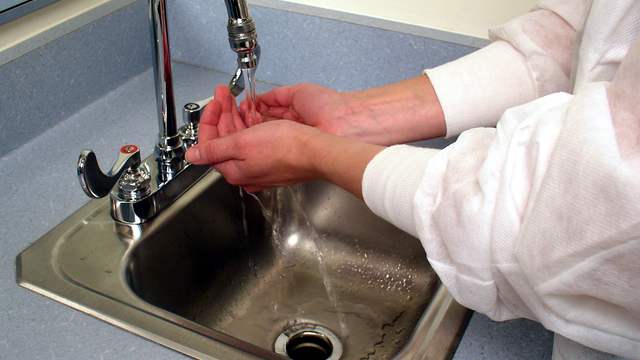
Clean hands, a clean surface, a new needle every time, and when to throw a vial away. How germs get in, and why a powder is not proof that a vial is sterile.
- Injection safety
Injecting under the skin, changing the spot each time, avoiding needle-stick injuries, and telling a normal reaction from an infection or an allergy.
- Sharps disposal
Where used needles go in the Netherlands, how to return a full container, what to do after a needle-stick injury, and short notes for Germany, Belgium, the UK and the US.
- Product risk
A vial can hold the wrong substance, the wrong amount, extra chemicals, germs or toxins. What lab tests of real products found, and what a lab certificate does not prove.
- Monitoring
Which blood tests and other checks to discuss with a doctor if you use a peptide, what each one can find and miss, and how to get them in the Netherlands.
- If something goes wrong
Where to get help in the Netherlands, what to tell and bring the doctor, why Dutch doctors keep it private, and how to report a side effect or an illegal seller.
Where this advice comes from
Who wrote the rules this advice follows?
| Source | Country | What we use it for |
|---|---|---|
| World Health Organization (WHO) | Worldwide | How to give injections with clean steps1 |
| US Centers for Disease Control and Prevention (CDC) | United States | How to use vials without spreading germs6 |
| NHS | United Kingdom | Signs of a skin infection, and when to get help7 |
| Thuisarts, the patient website of Dutch GPs | Netherlands | When to call your GP8 |
| RIVM | Netherlands | Hygiene, and what to do after a prick from a used needle9 |
The advice follows official guidance. Our sources include the World Health Organization, the US Centers for Disease Control and Prevention and the NHS. Dutch sources include Thuisarts (the patient website of Dutch GPs) and RIVM.1,6,7,8,9 Every page lists its sources. A medical reviewer has not yet checked these pages. Until then, each page shows a notice.
Sources
Every claim on this page links to one of these sources. Scholarly sources link to their DOI; regulatory sources to the regulator's own page.
In detail: All 9 sources, numbered as in the text , about 2 minutes to read
- (2010). WHO best practices for injections and related procedures toolkit (WHO/EHT/10.02). World Health Organization, Geneva. Report who.int (opens an external site) — accessed 20 October 2026 ↩
- (2026). Injecteren (spuiten/slammen): risico's verminderen. Web page drugsinfo.nl (opens an external site) — accessed 20 October 2026 ↩
- (2026). FDA's concerns with unapproved GLP-1 drugs used for weight loss. Regulator fda.gov (opens an external site) — accessed 20 October 2026 ↩
- (2013). Fungal infections associated with contaminated methylprednisolone injections. The New England Journal of Medicine 369:1598-1609. Research article doi:10.1056/NEJMoa1213978 (opens an external site) ↩
- (2023). Veilig injecteren van anabole steroïden. Web page mainline.nl (opens an external site) — accessed 20 October 2026 ↩
- (2024). Preventing Unsafe Injection Practices. Regulator cdc.gov (opens an external site) — accessed 20 October 2026 ↩
- (2024). Cellulitis. Web page nhs.uk (opens an external site) — accessed 20 October 2026 ↩
- (2026). Ik heb wondroos. Web page thuisarts.nl (opens an external site) — accessed 20 October 2026 ↩
- (2026). Hygiënerichtlijn voor piercen. Regulator rivm.nl (opens an external site) — accessed 20 October 2026 ↩