Growth-hormone axis
CJC-1295
A lab-made peptide that raises growth hormone for days. Not approved; two versions share one name.
Not an authorised medicine
At a glance
- Is it an approved medicine?
- No. Not approved as a medicine in the EU, the UK or the US.
- Has it been tested in people?
- A little. Only small safety studies in people.
- Is it allowed in sport?
- No. Banned in sport at all times. Anti-doping list (WADA), section S2
- What is the biggest risk?
- No one knows what long use does. Vials may hold another version. More about the risks
Status checked on . The details and sources are further down this page.
Stop and get help if you notice
- Chest pain, or a racing heart1
- Hives, swollen face or throat, hard to breathe1,24
- Hot, red, swollen injection site, or fever1,77
If it is severe, call your local emergency number.
All warning signs, further down this page Warning signs for any peptide
The 30-second version
About 8 minutes for the short version; 38 with every detail open.
- CJC-1295 is a lab-made peptide. It makes the body release more growth hormone for days.
- It is not an approved medicine in Europe, the UK or the US. It is banned in sport.
- Two different peptides are sold as CJC-1295. Only the version 'with DAC' was ever tested in people.
- Only three small studies in healthy adults were published. Most people had just one injection.
- More growth hormone can cause swelling, joint pain and higher blood sugar. Long-term effects are unknown.
Fact sheet
- Class
- Growth-hormone axis
- How it was given
- Injection under the skin in every human study
- How long it lasts
- Half-life about 6 to 8 days (with DAC)
- Without DAC
- A different peptide; no published study in people
- Human studies
- Three small studies in healthy adults, 2006 to 2009
- Status in the EU
- Not authorised
- Tested in people
- A little
Label facts, not dosing advice. Sources are in the sections below.
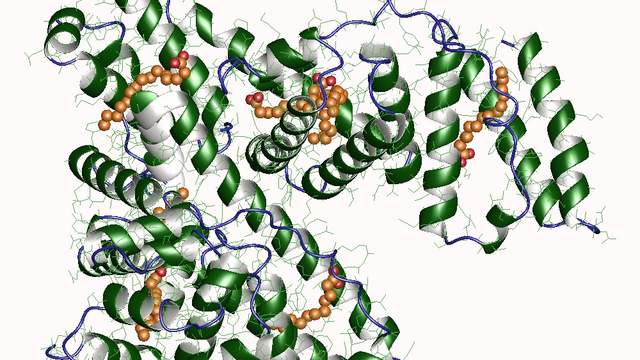

Each section starts with the short answer. The rest is folded under “In detail”.
Evidence profile
Four separate questions. Not a score.
- Human clinical evidence How far has it been tested in people?
- Phase I (safety, small) (step 3 of 6)
- Preclinical volume How much laboratory and animal research exists?
- Minimal (step 1 of 3)
- Source independence How many independent groups produced it?
- One group dominates (step 1 of 3)
- Safety characterisation How well do we know the harms in humans?
- Partial (step 2 of 3)
In detail: Why these grades: the reason for each step , about 2 minutes to read
- Human clinical evidence
- Phase 1. The highest published human evidence is two small randomised, placebo-controlled trials in 66 healthy adults (2006), plus two small studies without a comparison group in 12 and 11 healthy men, partly the same men. The developer's phase 2 trial in people with HIV was stopped in 2006 and never published, so under our rubric it does not count.
- Preclinical volume
- Minimal. By our count on 22 October 2026, four full papers report what CJC-1295 does in cells or animals (two from the developer's network, two from independent laboratories that used it as a tool), and three more describe how it is broken down. The developer's toxicology exists only as four conference abstracts; even counting them, the total is about 11, at the very bottom of the next band.
- Source independence
- Single group dominant. Every human study comes from the developer (ConjuChem) or its academic collaborator in Chicago, who co-authored the developer's trials; so do two of the four animal and cell papers. That is five of seven pharmacology and human studies. Two independent laboratories (NIH, 2009; Cedars-Sinai, 2020) confirmed in mice that it acts on the growth hormone system (more growth hormone or IGF-1), but no independent group has studied it in people.
- Safety characterisation
- Partial. The FDA counted 63 healthy adults in published studies, 46 of whom had a single injection, followed for weeks; no serious adverse reactions were reported. The one longer trial in patients was stopped in 2006 (the FDA reports, after a participant died) and its safety data were never published. There are no long-term, cancer or pregnancy data in people, and the animal toxicology exists only as abstracts.
We never add these up. A compound can have a large animal literature from one laboratory and no human data at all — that is a specific situation, and a single number would hide it. How we grade evidence
In detail: The molecule: amino-acid sequence and technical details , about 1 minute to read
H–Tyr-D-Ala-Asp-Ala-Ile-Phe-Thr-Gln-Ser-Tyr-Arg-Lys-Val-Leu-Ala-Gln-Leu-Ser-Ala-Arg-Lys-Leu-Leu-Gln-Asp-Ile-Leu-Ser-Arg-Lys*-NH2 (*maleimidopropionyl on Lys30: the DAC)
Read from the N-terminus (start) to the C-terminus (end).
- Modifications
- position 2: D-Ala: replaces L-Ala of human GHRH; D-alanine at this position resists cleavage by DPP-4
- position 8: Gln: replaces Asn of human GHRH, to avoid asparagine rearrangement or conversion to aspartic acid
- position 15: Ala: replaces Gly of human GHRH
- position 27: Leu: replaces Met of human GHRH, to prevent methionine oxidation
- position 30: Lys (added): its side-chain nitrogen carries a 3-maleimidopropionyl group, the drug affinity complex (DAC), which bonds covalently to a free thiol on albumin (Cys34) and other plasma proteins
- D-form (mirror-image) amino acid
- D-Ala (2)
- Full name
- CJC-1295 with drug affinity complex (DAC)
- Also called
- CJC-1295 DAC, DAC:GRF, CJC1295
- Class
- Growth-hormone axis
- Body systems
- Hormones, Metabolism
- Formula
- C165H269N47O46
- Molecular mass
- 3,647.2 Da
What it actually is
What is CJC-1295?
| CJC-1295 with DAC (the original) | “CJC-1295 without DAC” (Mod GRF 1-29) | |
|---|---|---|
| The same 29-amino-acid core? | Yes Part of human GHRH with four changes1,2 | Yes The same core, ending there1,3 |
| An extra lysine with a chemical hook (DAC)? | Yes Yes, at the end of the chain2,4 | No No hook1 |
| Bonds to albumin in the blood? | Yes Shown in rats4 | No It lacks the hook that forms the bond1 |
| How long it lasts in people measured? | Yes Half-life 5.8–8.1 days5 | Unknown No published measurement1 |
| Tested in people? | Yes Three small studies in healthy adults1 | No No published study1 |
| Approved as a medicine? | No Not in the EU, the UK or the US1,6 | No Not in the EU, the UK or the US1 |
The developer, ConjuChem in Montreal, used the name CJC-1295 for the version with DAC.4,1 Today the same name is also used for the version without it, even by the FDA, which calls the confusion “a safety risk for patients”.1 This page grades the version with DAC, because all the studies in people used it.
In detail: The molecule, piece by piece , about 2 minutes to read
Growth hormone releasing hormone (GHRH) is a hormone of 44 amino acids made in the hypothalamus, at the base of the brain. Its first 29 amino acids are enough for full activity.1 CJC-1295 starts from those 29 and changes four of them:1,4
- Position 2: alanine becomes its mirror image, D-alanine. Chains with D-alanine here resist DPP-4, the main blood enzyme that cuts and switches off GHRH.
- Position 8: asparagine becomes glutamine, to stop the chain from rearranging or turning into aspartic acid.
- Position 15: glycine becomes alanine.
- Position 27: methionine becomes leucine, to prevent damage by oxidation.
The version with DAC then adds a 30th amino acid, a lysine. Its side chain carries a maleimide group, a small reactive ring.2,7 After injection this ring forms a permanent chemical bond (a covalent bond) with a free sulfur group on the blood protein albumin, at a spot called cysteine 34.4 It can also bond to other blood proteins that carry a free sulfur group.8,1
The full sequence is Tyr-D-Ala-Asp-Ala-Ile-Phe-Thr-Gln-Ser-Tyr-Arg-Lys-Val-Leu-Ala-Gln-Leu-Ser-Ala-Arg-Lys-Leu-Leu-Gln-Asp-Ile-Leu-Ser-Arg-Lys, with an amide at the end and the maleimide on the last lysine. Its formula is C165H269N47O46 and its mass 3647.2 Da. Without the extra lysine the formula is C152H252N44O42 and the mass 3367.9 Da.7,3,1
The developer made the version with DAC by solid-phase synthesis, adding one amino acid at a time to a chain held on resin beads; the FDA found no information on how the version without DAC is made. This kind of synthesis can leave shortened or wrongly built chains, solvents and other leftovers.1
In detail: Who made it, and why development stopped , about 1 minute to read
ConjuChem ran a research programme to make GHRH last longer, because natural GHRH works for only a short time.5,9 In 2005 it described three versions with a maleimide hook and picked CJC-1295 as the most promising.4,1 Studies in healthy adults followed in 2006.5,9
In December 2005 the company started a phase 2 trial in adults with HIV, with sites that included Germany; both trial registries list it as ended early, without a reason or results.10,11 According to the FDA’s 2024 review, ConjuChem withdrew CJC-1295 from clinical trials in 2006 after a participant in that trial died (see the risk profile below).1 No later trial has been registered.10
The version without DAC first appears in the scientific literature in a 2010 report. In 2009 Norwegian police and customs seized an unknown product, and a doping laboratory found a 29-amino-acid peptide in it that matched one then sold as CJC-1295.12,1 The FDA calls this the first mention of CJC-1295 without DAC in the scientific literature.1
In detail: Why the name is a problem , about 2 minutes to read
The FDA found “at least nine different names” for five different CJC-1295 substances: two active molecules (with and without DAC), each sold as a free base or as a salt (acetate or trifluoroacetate, TFA).1 The confusion runs through every layer:
- Requests to the FDA. Two groups asked for CJC-1295 to be allowed in pharmacy compounding. One request named the acetate salt, gave the chemistry of the free peptide without DAC and cited studies of the version with DAC. The other gave a chemical name that matched no form of CJC-1295.1
- Databases. The FDA noted that the official substance record mixed up the names and structures of the two versions.1 In PubChem, one record of the version without DAC carries the names “CJC 1295 with DAC” and “CJC-1295-no DAC acetate” at the same time.3
- Science. Some anti-doping researchers write “CJC-1295” for the version without DAC and “CJC-1295 with drug affinity complex” for the original.13
- Products. Both versions are sold online for “research use”, alone and in blends with ipamorelin, GHRP-2, GHRP-6, hexarelin or tesamorelin. The listings the FDA reviewed did not say which salt they contained, and some blends did not say which version.1 Powders seized in Denmark held versions of these peptides with an extra amino acid, whose effects are unknown.14
This matters because the two are different molecules, and the evidence belongs to only one of them. The FDA warns that what is known about how the version with DAC acts “cannot be extrapolated” to the version without it.1 See product risk and what “research use only” means.
Proposed mechanism
How does it work?
| Step | Where | What happens | Shown in |
|---|---|---|---|
| 1 | Hypothalamus (base of the brain) | Releases GHRH in bursts | People |
| 2 | Blood | CJC-1295 with DAC bonds to albumin and stays for days | Rats (bond); people (long half-life) |
| 3 | Pituitary gland | CJC-1295 switches on the GHRH receptor on growth hormone cells, as GHRH does | Cells in a dish |
| 4 | Pituitary gland | Growth hormone comes out in pulses; the low points between pulses rise | People |
| 5 | Liver | Makes more IGF-1, which stays high for days | People |
| 6 | Brain and pituitary | Growth hormone and IGF-1 normally brake the system (negative feedback, partly through somatostatin) | People (natural hormones) |
| 7 | Muscle, fat, bone, healing | Any effect on health | Not shown |
In healthy adults, one injection kept growth hormone higher for 6 days or more and IGF-1 higher for 9 to 11 days.5 Growth hormone still came in pulses, but the low points between pulses rose sharply.9 Whether this helps or harms health has not been tested.
In detail: Step by step: the chain and what each step rests on , about 5 minutes to read
Each step is labelled with how well the link from the previous step is established.
-
A chemical hook bonds it to albumin
The extra lysine at the end carries a maleimide group, the drug affinity complex (DAC). In rats, CJC-1295 was found bonded to the blood protein albumin within 15 minutes and stayed in the blood beyond 72 hours. Its half-life of 5.8 to 8.1 days in people fits this bond, but the bond itself was shown in rats.
-
It switches on the GHRH receptor in the pituitary
Even when bonded to albumin, CJC-1295 made rat pituitary cells in a dish release growth hormone. The GHRH receptor sits on somatotrophs, the cells in the front of the pituitary gland that make growth hormone.
-
cAMP rises inside the cell
The GHRH receptor works mainly through the messenger cAMP. In mouse pituitary cells, CJC-1295 raised cAMP and the release of growth hormone.
-
More growth hormone, still in pulses
In 12 healthy men, one injection did not change the size or number of growth hormone pulses, but the low points between pulses rose 7.5-fold and average growth hormone rose by 46%.
-
The liver makes more IGF-1
Growth hormone tells the liver to make IGF-1. In healthy adults, IGF-1 rose 1.5- to 3-fold for 9 to 11 days after one injection, and stayed above baseline for up to 28 days after several.
-
The pituitary itself can grow
GHRH also makes growth hormone cells multiply. In mice, CJC-1295 increased the number of these cells and made the pituitary heavier; in one study it also raised markers of DNA damage there.
-
Effects on muscle, fat, healing or ageing: not shown
No published study measured any health outcome in people. The only trial in patients, on belly fat in people with HIV, was stopped in 2006 and never reported.
Staying in the blood
In rats, CJC-1295 appeared bonded to albumin in the blood within 15 minutes and was still there after 24 hours (Evidence level: Shown in animal studies); the peptide was found in the blood beyond 72 hours, whereas GHRH(1-29) given the same way was found for only about an hour.4,1 In healthy adults its half-life was 5.8 to 8.1 days (Evidence level: Shown in controlled human trials).5 The idea behind the hook: the kidneys’ filter lets through only small amounts of albumin, so a small peptide tied to it is not filtered out quickly.17,4 But the FDA points out that nobody has compared the versions with and without DAC directly, and that the four amino-acid changes may also slow breakdown. How much of the long life is due to the hook is therefore not shown.1
The receptor and the signal
GHRH acts on somatotrophs, the cells in the front of the pituitary gland that make growth hormone. Its receptor works mainly through the messenger cAMP, and GHRH also makes these cells multiply.18 Bonded to albumin, CJC-1295 still made rat pituitary cells in a dish release growth hormone (Evidence level: Shown in cells or tissue in the laboratory).4 In mouse pituitary cells it raised cAMP and growth hormone release (Evidence level: Shown in cells or tissue in the laboratory), in an independent laboratory.19
Growth hormone and IGF-1 in people
In 12 healthy men aged 20 to 40, one injection left the size and number of growth hormone pulses unchanged, but the low points between pulses rose 7.5-fold. Average growth hormone rose by 46% and IGF-1 by 45% (Evidence level: Seen in humans in case reports or small uncontrolled studies).9 Growth hormone levels change through the day, so IGF-1, which the liver makes mainly in response to growth hormone and which stays steadier, is the usual way to track the effect.20,19
What the chain does not show
The chain stops at hormone levels. No study followed it on to muscle, fat, bone, healing or sleep in people.1 The FDA also notes that the maleimide hook could bond to proteins other than albumin; whether that has any effect is unknown.1 For the version without DAC, the FDA found no study at all of what it does in cells, animals or people.1
In detail: Why the body normally limits growth hormone , about 1 minute to read
Natural growth hormone comes in bursts. GHRH from the hypothalamus drives each burst, and somatostatin, another hormone from the brain, holds it back. A burst of growth hormone then feeds back on the brain: it switches on somatostatin and damps GHRH. IGF-1 adds a slower brake.15,16
A long-acting GHRH analogue pushes on one part of this loop all the time. In the Chicago study the pulses were kept, which suggests that over that week the brakes still worked.9 But a drug that stays in the blood for about a week keeps pushing whatever the IGF-1 level (Evidence level: Proposed, not demonstrated in any experiment), and nobody has studied what months of this do to the loop, or to the pituitary itself.5,1
What the evidence actually shows
Does it work?
IGF-1 rose for more than a week after one injection
1.5–3×
rise in IGF-1, lasting 9 to 11 days after one injection
Who took part Teichman 2006: two small placebo-controlled trials in healthy adults aged 21–61 Source Teichman et al. (2006)5 Evidence Human trials
Growth hormone kept its pulses, with higher low points
7.5×
more growth hormone between bursts, one week after a single dose
Who took part Ionescu 2006: 12 healthy men aged 20–40, no comparison group Source Ionescu & Frohman (2006)9 Evidence Humans, limited
Very few people have had it in a study
63 people
had it in published studies. All were healthy; 46 had only one injection.
Who took part FDA count, 2024: three studies, 2006–2009; 87 in 100 were men Source FDA Briefing Document for CJC-1295-Related Bulk Drug Substances (CJC-1295 (free base), CJC-1295 acetate, CJC-1295 with drug affinity complex (DAC) (free base), CJC-1295 DAC acetate and CJC-1295 DAC trifluoroacetate), Pharmacy Compounding Advisory Committee meeting, 4 December 20241 Evidence Humans, limited
These are effects on hormone levels, not on health. No published study measured muscle, fat, strength, healing, sleep or ageing in people.1 The FDA found no data on effectiveness for any form of CJC-1295 in growth hormone deficiency, the use it reviewed.1
In detail: Every study in one table , about 5 minutes to read
11 studies: 4 in humans, 5 in animals, 0 in cells, 2 reviews or other.
| Study | Species | n | Design | Funding | Research group | What it found | What it did not show |
|---|---|---|---|---|---|---|---|
| U.S. Food and Drug Administration 2004 1 | Mixed | not reported | Animal experiment (controlled) | Industry | Originating group | In rats and dogs given repeated injections for up to 14 days: bleeding, inflammation and some tissue death at the injection site, slightly fewer red blood cells and higher cholesterol; dogs also vomited. A rat pregnancy study found no malformations; a 6-month monkey study reported no immune effects. | Known only from four conference abstracts by the developer, as summarised by the FDA; the form of the peptide is not stated, and the FDA called the monkey data vague. No study of cancer risk exists. |
| Jetté et al. 2005 4 | Mixed | not reported | Animal experiment (controlled) | Industry | Originating group | Bonded to albumin, CJC-1295 still made rat pituitary cells release growth hormone and resisted the enzyme DPP-4. In rats it released 4 times as much growth hormone over 2 hours as GHRH(1-29). It was still in the blood after 72 hours, and in one rat it was seen bound to albumin from 15 minutes to beyond 24 hours. | The developer's own study; animal numbers not stated in the abstract; the albumin bond was shown in the blood of one rat. It does not separate the effect of the hook from that of the four amino-acid changes. |
| Alba et al. 2006 22 | Mice | not reported | Animal experiment (controlled) | Not disclosed | Originating group | Mice born without their own GHRH grew to normal weight and length with daily CJC-1295 for 5 weeks; injections every 2 or 3 days helped less. Their pituitaries made more growth hormone RNA and had more growth hormone cells. | A model of deficiency, not of healthy adults; animal numbers not given in the abstract; two developer employees were co-authors. |
| ClinicalTrials.gov 2006 10 | Humans | not reported | Phase II trial (controlled, blinded) | Industry | Originating group | Planned as a 12-week randomised, placebo-controlled trial in adults with HIV and extra fat around the organs. It was stopped in 2006; the FDA, citing online reports, says a participant had a heart attack and died. | No results were ever published or posted, and the registry gives no reason for stopping. What it found, good or bad, is unknown. |
| Ionescu & Frohman 2006 9 | Humans | 12 | Open-label study (uncontrolled) | Mixed | Mixed | One week after one injection, growth hormone still came in pulses of unchanged size and number, but the low points between pulses were 7.5 times higher; average growth hormone rose 46% and IGF-1 45%. | 12 healthy men aged 20–40, one night of sampling before and one after, no placebo group. Heart rate rose with the dose. Drug from the developer; the senior author co-wrote the developer's trials. |
| Teichman et al. 2006 5 | Humans | 66 | Phase I trial (controlled, blinded) | Industry | Originating group | In healthy adults aged 21–61, one injection raised growth hormone 2- to 10-fold for 6 days or more and IGF-1 1.5- to 3-fold for 9–11 days, depending on the dose. Half-life was 5.8–8.1 days. After repeated injections IGF-1 stayed above baseline for up to 28 days. No serious adverse reactions were reported. | Small and short (28 and 49 days), in healthy volunteers, run by the developer. It measured hormone levels, not health. Side effects were common, and only 11 people in total had placebo. |
| Gautam et al. 2009 23 | Mice | not reported | Animal experiment (controlled) | Government | Independent group | Daily CJC-1295 for 8 weeks restored normal growth, pituitary size, growth hormone and IGF-1 in young dwarf mice lacking a receptor in the brain; it also made young normal mice heavier. | CJC-1295 was a lab tool to test a question about the brain; 5–8 mice per group; the peptide was a gift from the developer. |
| Sackmann-Sala et al. 2009 21 | Humans | 11 | Open-label study (uncontrolled) | Mixed | Mixed | In blood from 11 of the same young men, five blood proteins changed a week after one injection; the authors propose them as markers of growth hormone action. | A search for markers, not a test of benefit or harm; no placebo; partly funded by the developer and WADA; side effects not reported. |
| Henninge et al. 2010 12 | — | not reported | Product testing | Not disclosed | Independent group | An unknown product seized by Norwegian police and customs in 2009 contained a 29-amino-acid peptide matching one then sold as CJC-1295: the version without the DAC lysine. | One product; identity only, with no test of purity, amount or sterility. |
| Gajda et al. 2019 14 | — | not reported | Product testing | Not disclosed | Independent group | Powders seized by Danish customs contained growth-hormone-releasing peptides with an extra glycine added at the start of the chain, among them a modified GRF(1-29). | A few forensic cases. It shows that products can hold variants no study has tested, not how often this happens. |
| Ben-Shlomo et al. 2020 19 | Mice | 31 | Animal experiment (controlled) | Mixed | Independent group | In mouse pituitary cells it raised cAMP and growth hormone. In adult mice treated for 8 weeks (16 on CJC-1295, 15 on salt water), the pituitary was 47% heavier, IGF-1 was higher, and markers of DNA damage in the pituitary rose. | Mice, not people. Pituitaries were weighed in 10 treated and 9 control mice, and the comet test of DNA damage used 3 and 3. It shows a possible route to harm, not that tumours form. |
The table includes two forensic analyses of seized products, because what a vial contains is part of the evidence a reader needs.12,14
In detail: Studies in people, one by one , about 2 minutes to read
The developer’s trials in healthy adults (2006)
Teichman and colleagues ran two randomised, placebo-controlled, double-blind trials with rising doses in healthy adults aged 21 to 61, lasting 28 and 49 days.5 The FDA’s summary gives 42 people in the first (35 on CJC-1295, 7 on placebo) and 24 in the second (20 and 4).1 After one injection, growth hormone rose 2- to 10-fold for 6 days or more and IGF-1 rose 1.5- to 3-fold for 9 to 11 days, more at higher doses; after two or three injections IGF-1 stayed above baseline for up to 28 days (Evidence level: Shown in controlled human trials).5 IGF-1 went above the normal range for age and sex only at the highest single dose tested.1 The authors called it “safe and relatively well tolerated” and its effects cumulative.5 Side effects were common, though (see the risk profile below).
The Chicago studies (2006 and 2009)
Ionescu and Frohman sampled blood every 20 minutes through one night in 12 healthy men, before and one week after a single injection.9,1 Growth hormone pulses kept their size and frequency while the low points rose; IGF-1 rose by 45% and stayed within the normal range in every man.9,1 This mattered for the developer’s case. Its researchers argued that a long-acting GHRH would give the body a more natural pattern of growth hormone than a daily injection of growth hormone itself.1,9 A later analysis of blood from 11 of these men found five blood proteins that changed, proposed as markers of growth hormone action.21
The trial in patients that was never published
The developer’s phase 2 trial in people with HIV was the only test in patients. It was stopped in 2006, and no results were ever posted or published.10,11,1 So whether CJC-1295 reduced fat around the organs, the trial’s aim, is unknown.
Why these studies cannot show benefit
All the published studies were in healthy people, short, and measured hormones. The FDA judged that, without studies in people with growth hormone deficiency and without measures such as body composition or growth, they “do not support effectiveness”.1 A raised IGF-1 is a surrogate endpoint: a change in a blood test that may or may not lead to a change in health.
In detail: Cell and animal studies , about 2 minutes to read
The developer’s 2005 paper is the foundation: bonded to albumin, CJC-1295 resisted DPP-4 and still released growth hormone from rat pituitary cells (Evidence level: Shown in cells or tissue in the laboratory), and in rats it raised growth hormone 4-fold over 2 hours compared with GHRH(1-29) (Evidence level: Shown in animal studies).4
In mice born without GHRH, which grow poorly, daily CJC-1295 for 5 weeks gave normal body weight and length and increased the number of growth hormone cells in the pituitary (Evidence level: Shown in animal studies); injections every 2 or 3 days worked less well. Two developer employees were co-authors.22
Two independent laboratories later used CJC-1295 as a tool. At the NIH, 8 weeks of daily CJC-1295 restored normal growth, pituitary size, growth hormone and IGF-1 in dwarf mice lacking a receptor in the brain (Evidence level: Shown in animal studies); the peptide was a gift from the developer.23 At Cedars-Sinai, a laboratory studying pituitary tumours treated 16 adult mice with CJC-1295 for 8 weeks and 15 with salt water. The treated mice had pituitaries 47% heavier (weighed in 10 and 9 mice), higher IGF-1 and more markers of DNA damage in the pituitary (Evidence level: Shown in animal studies).19 That finding is discussed under the risk profile.
In detail: Who paid for the evidence , about 1 minute to read
ConjuChem ran its own trials in people and co-wrote two of the four animal and cell papers. Its academic collaborator, Lawrence Frohman, co-wrote those trials and the Chicago studies, which used the developer’s drug; the 2009 analysis was partly funded by the developer.5,22,21 That does not make the results wrong: the NIH and Cedars-Sinai mouse studies, with no developer authors, also found more growth hormone or IGF-1.23,19 But the questions asked were the developer’s, and the one study that could have shown benefit or harm in patients was never published.
In detail: What is genuinely promising, and what the gap costs , about 1 minute to read
The idea behind CJC-1295 was reasonable. A medicine that raises the body’s own growth hormone, while keeping its natural pulses and the body’s brakes, could be gentler than injecting growth hormone itself (Evidence level: Proposed, not demonstrated in any experiment); that was the developer’s case, and it was never tested.1 A related approved medicine shows that this route can work for a specific use: tesamorelin, another GHRH analogue, is authorised in the US to reduce excess belly fat in adults with HIV.24 The early hormone data for CJC-1295 were consistent and confirmed in independent mice.5,23
The gap has a real cost. Development stopped in 2006, the one patient trial was never published, and nobody has tested the version without DAC at all.10,1 Twenty years later, people who use CJC-1295 have hormone data from a few dozen healthy volunteers, mostly after one injection, and no answer to the questions that matter to them.
What is genuinely unknown
What is still not known?
-
Longest published human study (healthy adults)
49 days; a few injections at most
-
Developer's trial in people with HIV
Not known: planned 12 weeks; no results
-
Longest general toxicity tests (rats, dogs)
14 days; abstracts only
-
Longer use in people
Not known: never studied
Sources Teichman et al. (2006); ClinicalTrials.gov (2006); FDA Briefing Document for CJC-1295-Related Bulk Drug Substances (CJC-1295 (free base), CJC-1295 acetate, CJC-1295 with drug affinity complex (DAC) (free base), CJC-1295 DAC acetate and CJC-1295 DAC trifluoroacetate), Pharmacy Compounding Advisory Committee meeting, 4 December 20245,10,1 Checked
In detail: All open questions, with their sources , about 1 minute to read
As of 22 October 2026, these are specifically unknown:
- Any benefit in people. No published study measured a health outcome, and the one trial in patients was never reported.1,10
- The version without DAC. No published study of what it does in cells, animals or people, or of how long it lasts.1
- Repeated use. Three in four people in the published studies had one injection; nobody was followed for longer than seven weeks.1,5
- Cancer and the pituitary. No carcinogenicity study exists, and no published study has examined the pituitary gland in people who used CJC-1295.1
- The 2006 death. Whether CJC-1295 played any part cannot be judged, because no data from the trial were published.1
- Antibodies. The developer reported no “significant” antibodies, without describing the test; the FDA notes that antibodies could also react with the body’s own GHRH.1
- Pregnancy, children and older people. No human data.1
- Interactions with any medicine, and with the other peptides it is often blended with.1
- What products contain. We found no published survey of the content, purity or sterility of products sold as CJC-1295.
Regulatory status
Is it legal?
| Netherlands and the EU | United States | |
|---|---|---|
| Approved as a medicine? | No No EU or Dutch authorisation; EMA and CBG data hold no record of it.6,25 | No Not FDA-approved.1 |
| Legal to sell or supply as a medicine? | No Dutch law forbids supplying a medicine without a marketing authorisation, with narrow exceptions.26 | No Pharmacies may not compound with it unless the FDA adds it to a list by a rule; no such rule exists.1,27,28 |
| Backed by expert advisers? | Unknown No EU or Dutch body has assessed it.6 | No In December 2024, FDA advisers voted against pharmacy use for every form: 0–13, or 1–12 for one salt.29 |
| Allowed in sport? | No Banned at all times under section S2.30 | No The same worldwide rule applies.30 |
In detail: Status in each country, and in sport , about 2 minutes to read
| Jurisdiction | Status | Note | Checked |
|---|---|---|---|
| European Union | Not authorised | No authorised product and no record in EMA's medicines data (checked 22 October 2026). 79,6,1 | |
| Netherlands | Not authorised | Not authorised; no product in the CBG database. Supplying an unauthorised medicine is prohibited (Geneesmiddelenwet art. 40). 25,34,26 | |
| Germany | Not authorised | Not authorised (AMG § 21). The Anti-Doping Act names CJC-1295 and mod-GRF. The 2005 phase 2 trial had a German arm, which ended early. 35,6,1,36,11 | |
| Belgium | Not authorised | Not authorised; the 1964 Medicines Act requires a national or EU licence, and none exists. 39,6,1 | |
| United Kingdom | Not authorised | Not authorised; supplying an unauthorised medicinal product is prohibited by the Human Medicines Regulations 2012. 40,1 | |
| United States | Not authorised | Not FDA-approved. In December 2024 FDA advisers voted 0–13 against letting pharmacies compound it (one salt form 1–12). 1,29,44,80,28 | |
| Sport (WADA) | Prohibited in sport · S2, at all times | Prohibited at all times under S2 (growth hormone releasing factors); named since the 2015 List and in the 2027 List. 30,31,32,33 |
All statuses were checked on 22 October 2026.
Sport (WADA)
CJC-1295 is named on the World Anti-Doping Agency’s Prohibited List under S2.2.4, “growth hormone releasing factors”, as an example of GHRH analogues. It is prohibited at all times, in and out of competition, and S2 substances are non-Specified Substances.30 The 2027 List, in force from 1 January 2027, keeps the same entry.31 CJC-1295 has been named since the 2015 List; WADA said then that the named examples were already prohibited under earlier Lists.32,33 S2 also covers “other substances with similar chemical structure or similar biological effect(s)”, so the version without DAC is prohibited too.30 See sport and doping.
In detail: The European Union, the Netherlands, Germany, Belgium and the United Kingdom , about 2 minutes to read
European Union
No CJC-1295 product has an EU marketing authorisation, and EMA’s medicines data, which include refused and withdrawn applications, hold no record of it. Tesamorelin, the related GHRH analogue approved in the US, appears there only as an application withdrawn in 2012.6 The FDA found no approved product containing any form of CJC-1295 in Belgium, Germany, the UK or the other countries it checked, and none in the European Pharmacopoeia.1
Netherlands
The CBG database lists no CJC-1295 product.25 A product presented as treating or preventing disease, or meant to change body functions through a drug effect, is a medicine under the Geneesmiddelenwet, and selling, supplying or importing a medicine without a marketing authorisation is prohibited, with narrow exceptions.34,26
Germany
Finished medicines need a national licence or an EU authorisation (AMG § 21); CJC-1295 has neither.35,6 The Anti-Doping Act lists GHRH and its analogues, naming CJC-1295 and mod-GRF, among the substances that may not be acquired, possessed or brought into Germany in more than a small amount for doping in sport.36,37,38 The developer’s phase 2 trial had a German arm, which the EU register lists as ended early.11
Belgium
A medicine may be placed on the market only with a national or EU marketing authorisation (Medicines Act of 25 March 1964, art. 6 § 1). CJC-1295 has neither.39,6,1
United Kingdom
Selling or supplying an unauthorised medicinal product is prohibited (Human Medicines Regulations 2012, regulation 46), and no CJC-1295 product is authorised.40,1 It is not a controlled drug under the Misuse of Drugs Act.41
In detail: The United States: the December 2024 advisory vote , about 2 minutes to read
CJC-1295 is not FDA-approved, has no US Pharmacopeia monograph and is part of no approved medicine, so a US pharmacy could compound with it only if the FDA added it to the 503A bulks list by rulemaking.1,42,27
Two groups had nominated it for that list and then withdrew; the FDA evaluated all five CJC-1295 substances anyway, for growth hormone deficiency, and proposed not to list any of them.43,1 It gave four reasons: the substances are not well characterised, partly because of the naming confusion; little is known about their use in compounding; animal studies raise safety concerns; and there are no effectiveness data, while approved treatments for growth hormone deficiency exist.1
On 4 December 2024 the FDA’s Pharmacy Compounding Advisory Committee agreed. It voted 0–13 against listing CJC-1295 (free base), 1–12 against its acetate salt, and 0–13 against each of the three DAC forms. One member pointed to the lack of evidence of effectiveness.29 The committee only advises; the FDA makes the final decision after hearing it, and here the advice matched the FDA’s own proposal.1 By 22 October 2026 the Federal Register held no rule on CJC-1295.28
The FDA’s safety-risk page lists CJC-1295 among substances previously in category 2 whose nominations were withdrawn. It names immune reactions, impurities, and “serious adverse events … including increased heart rate and systemic vasodilatory reaction”.44 The FDA’s own 2024 review, by contrast, noted that the published studies reported no serious adverse events.1
CJC-1295 was not among the seven peptides that the same committee considered on 23–24 July 2026.45 That meeting is explained on the BPC-157 page. See also US law.
Risk profile
What are the risks?
| What people reported (first developer trial, one injection) | CJC-1295 (35 people) | Placebo (7 people) |
|---|---|---|
| Any side effect | 33 of 35 | 2 of 7 |
| Reaction at the injection site (redness, hardness, pain, itching) | about 70 in 100 | rare |
| Headache | 63 in 100 | 14 in 100 (1 person) |
| Diarrhoea | 43 in 100 | none |
| Flushing, warmth or a short drop in blood pressure | 30 in 100 | none |
Source 1
No serious side effects were reported in these short studies of healthy adults.5 But most people had one injection, and the only longer trial, in patients, was stopped and never published.1,10 What months of raised growth hormone might do is known only from growth hormone itself and from a related approved medicine (see below).
In detail: Side effects in the studies, in detail , about 2 minutes to read
All figures below are from the FDA’s 2024 summary of the published studies.1
- Injection site. Redness, hardness, pain or itching in about 70 in 100 people after one injection, worse and longer-lasting at higher doses, and in everyone who had repeated injections. Short-lived hives at the injection site in almost 30 in 100.
- Flushing and blood pressure. Flushing, warmth and a short drop in blood pressure in 30 in 100 after one injection. With repeated injections, flushing came within 30 minutes and passed within 1 to 2 hours, in 40 to 100 in 100 depending on the dose. Two people had dizziness and low blood pressure after their first injection.
- Heart rate. Heart rate rose with the dose in the Chicago study.9,1
- Gut and head. Headache in 63 in 100 (14 in 100 on placebo); loose stools or diarrhoea, more at higher doses; nausea or stomach pain in 20 in 100 with repeated injections.
- Nerves and muscles. One person had brief involuntary leg-muscle contractions and some loss of coordination after a second injection.
The authors found no consistent changes in blood or urine tests, glucose, liver tests or heart tracings.1 The FDA says some of these effects need further study, for example in people at risk of falls or with heart disease. The studies included only healthy adults.1
In detail: The 2006 trial that was stopped , about 1 minute to read
The developer’s phase 2 trial in people with HIV was registered in December 2005 and listed as terminated in 2006, without a reason.10 The FDA’s 2024 review recounts, from what it calls anecdotal reports on the internet, that 192 people had enrolled. Two hours after his 11th weekly injection, one participant had chest discomfort; a heart tracing (ECG) showed an acute heart attack, and he died about an hour later. The attending doctor’s most likely explanation was undiagnosed narrowing of the heart arteries with a sudden blockage. The trial was stopped and its data were never published.1
One death in a trial does not show that a drug caused it. Here the attending doctor’s most likely explanation was heart disease that had not been found before. But no one outside the company has seen the trial’s data, so whether CJC-1295 played any part cannot be settled. CJC-1295 raised heart rate and caused flushing with low blood pressure in healthy volunteers, and its effects in people with heart disease were never studied.1
In detail: Too much growth hormone: what it does, and why , about 2 minutes to read
CJC-1295 has never been studied for long enough to show the effects of months of raised growth hormone. Tesamorelin, an approved medicine that also copies GHRH, has been studied for 26 to 52 weeks, and its label lists the risks below.24 The FDA found nothing to suggest that CJC-1295 would avoid the risks listed for growth hormone medicines.1
-
Swelling from fluid (oedema)
6 in 100 Tesamorelin
2 in 100 Placebo
-
Muscle pain
6 in 100 Tesamorelin
2 in 100 Placebo
-
Joint pain
13 in 100 Tesamorelin
11 in 100 Placebo
-
Long-term blood sugar in the diabetes range
5 in 100 Tesamorelin
1 in 100 Placebo
Each square is one person in 100. Source EGRIFTA SV (tesamorelin for injection)24 Evidence Human trials
- Fluid retention. Raised growth hormone makes the body hold on to fluid. The tissues swell and feel tight, which can show as swollen ankles or hands, painful joints and carpal tunnel syndrome. The tesamorelin label says these effects pass, or go away when treatment stops.24 In carpal tunnel syndrome, pressure on a nerve in the wrist makes the hand and fingers tingle, go numb or hurt.46
- Higher blood sugar. Growth hormone releases fat from fat stores, and the extra fatty acids in the blood make muscle and liver respond less to insulin (insulin resistance). Blood sugar then rises.47 On tesamorelin, long-term blood sugar (HbA1c) reached the diabetes range in 5% of patients against 1% on placebo.24
- IGF-1 above the normal range. After 26 weeks of tesamorelin, 47% of patients had IGF-1 levels more than two standard deviations above normal; the label says the effects of long-term raised IGF-1 are unknown.24 In the short CJC-1295 studies, IGF-1 went above the normal range only at the highest single dose tested.1
- Other risks in growth hormone labels. All US growth hormone labels warn about tumours, glucose intolerance and diabetes, raised pressure inside the skull, fluid retention, effects on the adrenal and thyroid glands, and pancreatitis.1
In detail: Why a cancer risk is theorised , about 2 minutes to read
The worry rests on established biology plus a few animal findings with CJC-1295:
- Growth hormone and IGF-1 are growth signals. The tesamorelin label calls IGF-1 “a growth factor” and growth hormone “a known growth factor”, and rules out its use in people with active cancer.24 In observational studies, people with higher IGF-1 levels had somewhat more prostate and premenopausal breast cancer; the links were modest and varied by cancer type.48
- Too much GHRH makes the pituitary grow. In a young woman whose pancreatic tumour released GHRH, the pituitary’s growth hormone cells multiplied and she developed acromegaly; removing the tumour brought her hormones back to normal.49 Mice engineered to make human GHRH grew “enormous pituitary glands”.50 The FDA cites these mice as the reason long-term cancer studies of CJC-1295 would be needed.1
- CJC-1295 did this in mice. After 8 weeks of CJC-1295, mouse pituitaries were 47% heavier than in mice given salt water (weighed in 10 and 9 mice), with more signs of DNA damage (Evidence level: Shown in animal studies). The authors link the constant cAMP signal to DNA damage in pituitary tumour cells.19 In mice born without GHRH, CJC-1295 made growth hormone cells multiply (Evidence level: Shown in animal studies).22
So the concern is that months of CJC-1295 could enlarge the pituitary, or help an existing, perhaps undiagnosed, tumour grow. There are honest limits to it. The mouse study was short and small, DNA damage is not cancer, and we found no reported case of a tumour after CJC-1295. But no one has looked: there are no carcinogenicity studies and no long-term follow-up of people.1
In detail: What the animal tests showed , about 1 minute to read
The developer’s toxicology is known only from conference abstracts, as summarised by the FDA.1
- Injection site. Bleeding, inflammation and some tissue death at the injection site in rats and dogs given repeated injections for up to 14 days; in dogs also pain, redness, swelling and thickened skin.
- Blood. About 5 to 16% fewer red blood cells; higher cholesterol in both species.
- Behaviour. Less food intake and activity in rats; vomiting and less activity in dogs.
- Pregnancy. In one rat study, mothers ate more and gained more weight and the fetuses were slightly heavier; no malformations were seen.
- Immune system. A 6-month monkey study reported no immune effects; the FDA called its data vague.
The FDA concluded that these studies “may pose safety risks” for the DAC versions, and that no toxicity data exist at all for the version without DAC.1
In detail: Risks from the product itself , about 1 minute to read
- The wrong version. A vial labelled “CJC-1295” may hold the version with DAC, the version without it, a blend, or a variant whose effects are unknown.1,12,14 The two versions are different molecules, and the FDA says what is known about how one acts cannot be applied to the other.1
- Impurities and clumps. Certificates of analysis that the FDA reviewed reported purity, but not specific impurities, clumps of peptide (aggregates) or bacterial endotoxin, which matter most for anything injected.1
- Salt forms. The developer’s own early study used a trifluoroacetate (TFA) salt, and the FDA notes that TFA is known to be toxic and can make peptides more likely to trigger the immune system. The listings the FDA reviewed did not say which salt they sold.1
- Immune reactions. Injected peptides can trigger antibodies, from harmless ones to severe reactions. CJC-1295 is 86% identical to the body’s own GHRH, so antibodies against it could also act against your own hormone.1
See product risk.
If someone is going to do this anyway
This section exists to reduce harm. It gives no doses, schedules or sourcing advice, and it is not a recommendation to use this compound.
How can someone lower the risk?
If your product did not come from a pharmacy: check before you use it
These checks can show that something is wrong. None of them can show that a product is good or free of germs.51,52,53
Tick each box when you have checked it.
-
A lab report proves little if:
- its batch number is not the one on your vial;
- it does not name the lab, or has no date or signature;
- it shows only purity (HPLC), with no test of what it is, such as mass spectrometry;
- it has no test for germs (sterility) or for toxins from germs (endotoxin).
Even a full report covers only one sample. A report from the seller comes from someone who gains if it looks good. It cannot show that your vial is clean.59,60,61,62,63
Talk to a doctor first
A doctor can check for the conditions where extra growth hormone matters most: cancer, diabetes or prediabetes, heart disease and pregnancy. A doctor can also measure IGF-1 and blood sugar before and during use. IGF-1 is the usual way to see how hard the growth hormone system is being pushed.24,20 See talking to your doctor and monitoring.
Stop-now warning signs
Call your local emergency number now
- Confusion or slurred speech, very fast breathing, or pale, blue or blotchy skin, often with fever or shivering These can be signs of sepsis: the body's reaction to an infection has started to damage its own organs.
- Fainting and not waking up within a minute, or fainting with chest pain, a racing heart or a fit This can be a dangerous heart rhythm or a severe allergic reaction.
- Pain at the injection spot that is much worse than it looks, or dark, purple or grey patches or blisters there This can be a rare, fast-spreading infection of the deep layers under the skin (necrotising fasciitis).
- Swelling of the lips, tongue or throat, trouble breathing or swallowing, wheezing, a hoarse voice, or feeling faint, soon after an injection This can be a severe allergic reaction (anaphylaxis), which is life-threatening and gets worse very quickly.
- Pain, pressure or tightness in the chest, or pain that spreads to the arm, neck, jaw or back This can be a heart attack, which needs treatment in hospital straight away.
- Sudden, severe shortness of breath: gasping, or not able to finish a sentence This can be a serious problem with the heart, the lungs or an allergic reaction.
- A racing, pounding or irregular heartbeat that does not settle, or that comes with chest pain, breathlessness or fainting This can be a dangerous heart rhythm.
- A sudden, severe headache with blurred vision, chest pain, confusion or vomiting Blood pressure may be dangerously high, which can damage the brain, heart, kidneys and eyes.
- An erection that lasts more than 3 hours, or a painful erection that will not go down Blood trapped in the penis can damage it for good if it is not treated quickly.
- Sudden weakness or numbness on one side, a drooping face, or slurred or confused speech These are signs of a stroke, which needs treatment in hospital straight away, even if the signs pass.
- A headache that starts suddenly and is extremely painful, or a headache with a stiff neck, confusion or a fit This can be a stroke or another emergency in the brain.
- Sudden loss of sight in one or both eyes This can be a stroke or damage to the nerve of the eye, and sight can be lost for good.
- A fit (seizure): jerking movements, or suddenly not responding A fit can be caused by very low blood sugar or a problem in the brain, and needs checks straight away.
Get medical help today
- Fever, shivering or feeling very ill in the days after an injection Germs from the needle, the skin or the product may have reached your blood. If you also have a fast heartbeat or fast breathing, call your local emergency number.
- Redness, heat, swelling or pain around the injection spot that keeps growing or getting worse This can be a skin infection (cellulitis), which needs antibiotics before it spreads.
- Red lines that run from the injection spot towards the armpit or groin The infection may be spreading along the lymph vessels, and from there into the blood. If you also have a fever with a fast heartbeat or fast breathing, call your local emergency number.
- A painful, warm lump that fills with pus This is probably an abscess: it often needs draining by a doctor, so do not squeeze it.
- You were pricked by a needle that someone else had used Blood on a used needle can pass on HIV and hepatitis B or C, and preventive treatment works best within hours.
Stop and contact a doctor
- You fainted, but woke up quickly and now feel well Fainting is often harmless, but a doctor should check the cause.
- A new mole, or a mole that changes size, shape or colour, itches or bleeds A changing mole can be skin cancer, and tanning peptides such as melanotan II have been linked to new and changing moles in case reports.
- A lump at an injection spot that does not go away, or keeps growing A doctor should check whether it is an abscess, a reaction to the product or something else.
- An itchy, raised rash, or puffy eyes or lips, while breathing stays normal Your body may be reacting to the product, and using it again can bring the reaction back.
- Palpitations that keep coming back, even if they pass and you then feel well A doctor can check whether your heart rhythm is normal.
In detail: Checks that make sense, and why , about 1 minute to read
A doctor can help you choose which of these fit you:
- IGF-1, before you start and during use, because it shows how much the growth hormone system is being pushed. Growth hormone itself changes too fast to measure in one blood test. The tesamorelin label asks for regular IGF-1 checks.20,24
- Fasting blood sugar or HbA1c, because growth hormone makes the body respond less to insulin.47,24
- Blood pressure and heart rate, because heart rate rose and blood pressure briefly dropped in the studies.1
- Cancer screening that is due for your age, and any lump or unexplained symptom checked first, because IGF-1 and growth hormone are growth signals.24,48
- Telling the doctor exactly what you use, including blends, so that test results are read correctly.
In detail: When to stop and see a doctor (not an emergency) , about 1 minute to read
- Swollen ankles, feet or hands, or a feeling of tightness in the skin: fluid retention.24,75
- Tingling or numbness in the fingers, or new joint or muscle pain: possible carpal tunnel syndrome or other effects of fluid retention.24
- Feeling very thirsty, peeing a lot, or feeling unusually tired: possible high blood sugar.76
- Hives or itching at the injection site that keep coming back: a possible immune reaction.1
- A new lump anywhere.24
In detail: Who should not use it, and who needs a doctor first , about 1 minute to read
These groups should not use it:
- Anyone with cancer now. Growth hormone and IGF-1 are growth signals. The approved GHRH analogue tesamorelin must not be used with active cancer.24
- Anyone pregnant, breastfeeding or trying to conceive. There are no human data, and only one rat study of CJC-1295 in pregnancy, known from an abstract.1 Tesamorelin must not be used in pregnancy. In rats, tesamorelin caused fluid on the brain in the offspring.24
- Children and teenagers, who are still growing. There are no data.1
- Athletes who can be tested, because it is prohibited at all times.30
These groups face extra risk and need a doctor’s advice first:
- People who have had cancer. The tesamorelin label asks for careful thought before use after past cancer.24
- People with diabetes or prediabetes, because blood sugar can rise.47,24
- People with heart disease. Heart rate rose and blood pressure dropped in healthy volunteers, and effects on the heart were never studied.1
In detail: Possible interactions (none has been studied) , about 1 minute to read
- Diabetes medicines. If blood sugar rises, the dose of these medicines may need to change; the tesamorelin label says so.24
- Steroid replacement for underactive adrenal glands. The tesamorelin label says the dose may need to go up.24
- Medicines broken down by liver enzymes (such as steroids, sex hormones, some epilepsy medicines and ciclosporin). Growth hormone may change how fast the liver clears them.24
- Blends and other products that raise growth hormone, such as ipamorelin or GHRP blends. They may add to the same effects. If something goes wrong, no one can tell which part caused it.1
In detail: Clean injecting and reporting side effects , about 1 minute to read
Needles and syringes are sterile single-use items, and infections have spread when this was not respected.77 Use a new sterile needle and syringe every time, and see sterile technique and injection safety. In the Netherlands, side effects of any product can be reported to Lareb.78 If something goes wrong, see what to do if something goes wrong.
Sources
Every claim on this page links to one of these sources. Scholarly sources link to their DOI; regulatory sources to the regulator's own page.
In detail: All 80 sources, numbered as in the text , about 13 minutes to read
- (2024). FDA Briefing Document for CJC-1295-Related Bulk Drug Substances (CJC-1295 (free base), CJC-1295 acetate, CJC-1295 with drug affinity complex (DAC) (free base), CJC-1295 DAC acetate and CJC-1295 DAC trifluoroacetate), Pharmacy Compounding Advisory Committee meeting, 4 December 2024. Regulator fda.gov (opens an external site) — accessed 22 October 2026 ↩
- (2026). Global Substance Registration System: CJC-1295 (UNII 62RC32V9N7). GSRS. Dataset gsrs.ncats.nih.gov (opens an external site) — accessed 22 October 2026 ↩
- (2026). PubChem Compound Summary for CID 56841945 (tetrasubstituted GRF(1-29) amide, the peptide sold as 'CJC-1295 without DAC'). PubChem. Dataset pubchem.ncbi.nlm.nih.gov (opens an external site) — accessed 22 October 2026 ↩
- (2005). Human growth hormone-releasing factor (hGRF)1-29-albumin bioconjugates activate the GRF receptor on the anterior pituitary in rats: identification of CJC-1295 as a long-lasting GRF analog. Endocrinology 146:3052-3058. Research article doi:10.1210/en.2004-1286 (opens an external site) ↩
- (2006). Prolonged stimulation of growth hormone (GH) and insulin-like growth factor I secretion by CJC-1295, a long-acting analog of GH-releasing hormone, in healthy adults. The Journal of Clinical Endocrinology and Metabolism 91:799-805. Clinical trial doi:10.1210/jc.2005-1536 (opens an external site) ↩
- (2026). Medicines data download (JSON report of all EPARs: authorised, refused, withdrawn and suspended medicines). Dataset ema.europa.eu (opens an external site) — accessed 20 October 2026 ↩
- (2026). PubChem Compound Summary for CID 91971820 (CJC-1295). PubChem. Dataset pubchem.ncbi.nlm.nih.gov (opens an external site) — accessed 22 October 2026 ↩
- (2019). An immuno polymerase chain reaction screen for the detection of CJC-1295 and other growth-hormone-releasing hormone analogs in equine plasma. Drug Testing and Analysis 11:804-812. Research article doi:10.1002/dta.2554 (opens an external site) ↩
- (2006). Pulsatile secretion of growth hormone (GH) persists during continuous stimulation by CJC-1295, a long-acting GH-releasing hormone analog. The Journal of Clinical Endocrinology and Metabolism 91:4792-4797. Clinical trial doi:10.1210/jc.2006-1702 (opens an external site) ↩
- (2006). NCT00267527: A multicenter, randomized, placebo-controlled, double-blind, phase 2 study to evaluate the efficacy and safety of CJC 1295 administered for 12 weeks in HIV infected patients with HIV associated visceral obesity. Trial registration clinicaltrials.gov (opens an external site) — accessed 22 October 2026 ↩
- (2005). EudraCT 2005-003797-25: A multicenter, randomized, placebo-controlled, double-blind phase 2 study to evaluate the efficacy and safety of CJC-1295 (Germany). Trial registration clinicaltrialsregister.eu (opens an external site) — accessed 22 October 2026 ↩
- (2010). Identification of CJC-1295, a growth-hormone-releasing peptide, in an unknown pharmaceutical preparation. Drug Testing and Analysis 2:647-650. Research article doi:10.1002/dta.233 (opens an external site) ↩
- (2021). Advances in the detection of growth hormone releasing hormone synthetic analogs. Drug Testing and Analysis 13:1871-1887. Research article doi:10.1002/dta.3183 (opens an external site) ↩
- (2019). Glycine-modified growth hormone secretagogues identified in seized doping material. Drug Testing and Analysis 11:350-354. Research article doi:10.1002/dta.2489 (opens an external site) ↩
- (2001). Neurophysiological regulation and target-tissue impact of the pulsatile mode of growth hormone secretion in the human. Growth Hormone & IGF Research 11 Suppl A:S25-S37. Review doi:10.1016/s1096-6374(01)80005-8 (opens an external site) ↩
- (2025). Negative Feedback Loops and Hormonal Factors that Regulate GH Secretion. Endocrinology 166:bqaf139. Review doi:10.1210/endocr/bqaf139 (opens an external site) ↩
- (2008). Properties of the glomerular barrier and mechanisms of proteinuria. Physiological Reviews 88:451-487. Review doi:10.1152/physrev.00055.2006 (opens an external site) ↩
- (2000). Regulation of the pituitary somatotroph cell by GHRH and its receptor. Recent Progress in Hormone Research 55:237-266. Review PMID 11036940 (opens an external site) ↩
- (2020). DNA damage and growth hormone hypersecretion in pituitary somatotroph adenomas. The Journal of Clinical Investigation 130:5738-5755. Research article doi:10.1172/JCI138540 (opens an external site) ↩
- (2024). IGF-1 (Insulin-Like Growth Factor-1) Test. Web page medlineplus.gov (opens an external site) — accessed 22 October 2026 ↩
- (2009). Activation of the GH/IGF-1 axis by CJC-1295, a long-acting GHRH analog, results in serum protein profile changes in normal adult subjects. Growth Hormone & IGF Research 19:471-477. Research article doi:10.1016/j.ghir.2009.03.001 (opens an external site) ↩
- (2006). Once-daily administration of CJC-1295, a long-acting growth hormone-releasing hormone (GHRH) analog, normalizes growth in the GHRH knockout mouse. American Journal of Physiology. Endocrinology and Metabolism 291:E1290-E1294. Research article doi:10.1152/ajpendo.00201.2006 (opens an external site) ↩
- (2009). Neuronal M3 muscarinic acetylcholine receptors are essential for somatotroph proliferation and normal somatic growth. Proceedings of the National Academy of Sciences of the United States of America 106:6398-6403. Research article doi:10.1073/pnas.0900977106 (opens an external site) ↩
- (2026). EGRIFTA SV (tesamorelin for injection): prescribing information and instructions for use. Official product information dailymed.nlm.nih.gov (opens an external site) — accessed 20 October 2026 ↩
- (2026). Geneesmiddeleninformatiebank (database of medicines authorised in the Netherlands). Regulator geneesmiddeleninformatiebank.nl (opens an external site) — accessed 20 October 2026 ↩
- (2007). Geneesmiddelenwet, artikel 40 (verbod op geneesmiddelen zonder handelsvergunning, en de uitzonderingen). wetten.overheid.nl (BWBR0021505), version in force from 9 September 2025. Law wetten.overheid.nl (opens an external site) — accessed 22 October 2026 ↩
- (2026). Bulk Drug Substances Used in Compounding Under Section 503A of the FD&C Act. Regulator fda.gov (opens an external site) — accessed 20 October 2026 ↩
- (2026). Federal Register document search for 'CJC-1295', 22 October 2026: no proposed or final rule. Federal Register. Dataset federalregister.gov (opens an external site) — accessed 22 October 2026 ↩
- (2025). Final Summary Minutes of the Pharmacy Compounding Advisory Committee Meeting, December 4, 2024. Regulator fda.gov (opens an external site) — accessed 22 October 2026 ↩
- (2025). World Anti-Doping Code International Standard: Prohibited List 2026. Regulator wada-ama.org (opens an external site) — accessed 20 October 2026 ↩
- (2026). World Anti-Doping Code International Standard: Prohibited List 2027 (in effect 1 January 2027). Regulator wada-ama.org (opens an external site) — accessed 20 October 2026 ↩
- (2014). The 2015 Prohibited List, International Standard (in effect 1 January 2015). Regulator wada-ama.org (opens an external site) — accessed 22 October 2026 ↩
- (2014). 2015 Prohibited List: Summary of Major Modifications and Explanatory Notes. Regulator wada-ama.org (opens an external site) — accessed 22 October 2026 ↩
- (2007). Geneesmiddelenwet (BWBR0021505). wetten.overheid.nl. Law wetten.overheid.nl (opens an external site) — accessed 20 October 2026 ↩
- (2026). Arzneimittelgesetz (AMG), § 21 Zulassungspflicht. gesetze-im-internet.de. Law gesetze-im-internet.de (opens an external site) — accessed 20 October 2026 ↩
- (2023). Gesetz gegen Doping im Sport (Anti-Doping-Gesetz – AntiDopG), Anlage (zu § 2 Absatz 3). gesetze-im-internet.de. Law gesetze-im-internet.de (opens an external site) — accessed 20 October 2026 ↩
- (2026). Gesetz gegen Doping im Sport (Anti-Doping-Gesetz – AntiDopG), § 2 Unerlaubter Umgang mit Dopingmitteln. gesetze-im-internet.de. Law gesetze-im-internet.de (opens an external site) — accessed 20 October 2026 ↩
- (2023). Verordnung zur Festlegung der nicht geringen Menge von Dopingmitteln (Dopingmittel-Mengen-Verordnung – DmMV) vom 10. März 2023. gesetze-im-internet.de (BGBl. 2023 I Nr. 67, S. 5). Law gesetze-im-internet.de (opens an external site) — accessed 22 October 2026 ↩
- (1964). Wet van 25 maart 1964 op de geneesmiddelen voor menselijk gebruik, artikel 6 § 1 (vergunning voor het in de handel brengen vereist). ejustice.just.fgov.be. Law ejustice.just.fgov.be (opens an external site) — accessed 20 October 2026 ↩
- (2012). The Human Medicines Regulations 2012 (SI 2012/1916), regulation 46: Requirement for authorisation. legislation.gov.uk. Law legislation.gov.uk (opens an external site) — accessed 20 October 2026 ↩
- (1971). Misuse of Drugs Act 1971, Schedule 2 (Controlled drugs), Part III: Class C drugs. legislation.gov.uk. Law legislation.gov.uk (opens an external site) — accessed 22 October 2026 ↩
- (2026). 21 U.S. Code § 353a – Pharmacy compounding (FD&C Act § 503A). United States Code. Law law.cornell.edu (opens an external site) — accessed 22 October 2026 ↩
- (2025). December 4, 2024: Meeting of the Pharmacy Compounding Advisory Committee (updated meeting time and public participation information). Regulator fda.gov (opens an external site) — accessed 22 October 2026 ↩
- (2026). Certain Bulk Drug Substances for Use in Compounding that May Present Significant Safety Risks. Regulator fda.gov (opens an external site) — accessed 20 October 2026 ↩
- (2026). FDA Briefing Document Introduction, Pharmacy Compounding Advisory Committee meeting, 23–24 July 2026. Regulator fda.gov (opens an external site) — accessed 20 October 2026 ↩
- (2024). Carpal tunnel syndrome. Web page nhs.uk (opens an external site) — accessed 22 October 2026 ↩
- (2009). Effects of growth hormone on glucose, lipid, and protein metabolism in human subjects. Endocrine Reviews 30:152-177. Review doi:10.1210/er.2008-0027 (opens an external site) ↩
- (2004). Insulin-like growth factor (IGF)-I, IGF binding protein-3, and cancer risk: systematic review and meta-regression analysis. The Lancet 363:1346-1353. Meta-analysis doi:10.1016/S0140-6736(04)16044-3 (opens an external site) ↩
- (1982). Somatotroph hyperplasia. Successful treatment of acromegaly by removal of a pancreatic islet tumor secreting a growth hormone-releasing factor. The Journal of Clinical Investigation 70:965-977. Research article doi:10.1172/jci110708 (opens an external site) ↩
- (1988). Dramatic pituitary hyperplasia in transgenic mice expressing a human growth hormone-releasing factor gene. Molecular Endocrinology 2:606-612. Research article doi:10.1210/mend-2-7-606 (opens an external site) ↩
- (2026). Online medicijnen. Regulator igj.nl (opens an external site) — accessed 22 October 2026 ↩
- (2024). Multifactor Quality and Safety Analysis of Semaglutide Products Sold by Online Sellers Without a Prescription: Market Surveillance, Content Analysis, and Product Purchase Evaluation Study. Journal of Medical Internet Research 26:e65440. Research article doi:10.2196/65440 (opens an external site) ↩
- (2013). Fungal infections associated with contaminated methylprednisolone injections. The New England Journal of Medicine 369:1598-1609. Research article doi:10.1056/NEJMoa1213978 (opens an external site) ↩
- (2020). BeSafeRx: Considering an Online Pharmacy?. Regulator fda.gov (opens an external site) — accessed 22 October 2026 ↩
- (2026). Sterile Water for Injection, USP: prescribing information. Official product information dailymed.nlm.nih.gov (opens an external site) — accessed 20 October 2026 ↩
- (2010). WHO best practices for injections and related procedures toolkit (WHO/EHT/10.02). World Health Organization, Geneva. Report who.int (opens an external site) — accessed 20 October 2026 ↩
- (2001). Directive 2001/83/EC on the Community code relating to medicinal products for human use (consolidated text). Official Journal of the European Communities, L 311. Law eur-lex.europa.eu (opens an external site) — accessed 20 October 2026 ↩
- (2026). Wegovy (semaglutide): EPAR — overview and product information. Official product information ema.europa.eu (opens an external site) — accessed 20 October 2026 ↩
- (2000). ICH Q7 Good manufacturing practice for active pharmaceutical ingredients (CPMP/ICH/4106/00). European Medicines Agency, scientific guideline. Regulator ema.europa.eu (opens an external site) — accessed 22 October 2026 ↩
- (2025). Guideline on the Development and Manufacture of Synthetic Peptides (EMA/CHMP/CVMP/QWP/367182/2025). European Medicines Agency. Regulator ema.europa.eu (opens an external site) — accessed 22 October 2026 ↩
- (2026). FDA Briefing Document for BPC-157-Related Bulk Drug Substances (BPC-157 (free base) and BPC-157 acetate), Pharmacy Compounding Advisory Committee meeting, 23–24 July 2026. Regulator fda.gov (opens an external site) — accessed 20 October 2026 ↩
- (2026). FDA Briefing Document for TB-500-Related Bulk Drug Substances (TB-500 (free base) and TB-500 acetate), Pharmacy Compounding Advisory Committee meeting, 23–24 July 2026. Regulator fda.gov (opens an external site) — accessed 20 October 2026 ↩
- (2018). Impurity profiling of the most frequently encountered falsified polypeptide drugs on the Belgian market. Talanta 188:795-807. Research article doi:10.1016/j.talanta.2018.06.023 (opens an external site) ↩
- (2026). FDA's concerns with unapproved GLP-1 drugs used for weight loss. Regulator fda.gov (opens an external site) — accessed 20 October 2026 ↩
- (2010). Stability of protein pharmaceuticals: an update. Pharmaceutical Research 27:544-575. Review doi:10.1007/s11095-009-0045-6 (opens an external site) ↩
- (2024). Preventing Unsafe Injection Practices. Regulator cdc.gov (opens an external site) — accessed 20 October 2026 ↩
- (2025). Poisoning. Web page nhs.uk (opens an external site) — accessed 22 October 2026 ↩
- (2026). Hypoglycaemic coma induced by a falsified semaglutide product: a case report. European Journal of Hospital Pharmacy 33:486-489. Research article doi:10.1136/ejhpharm-2025-004656 (opens an external site) ↩
- (2024). Ik ga naar de huisarts: wat kan ik van tevoren doen en verwachten?. Web page thuisarts.nl (opens an external site) — accessed 22 October 2026 ↩
- (2026). Toxicity linked to unapproved peptide product labelled Retatrutide (health alert). Regulator health.vic.gov.au (opens an external site) — accessed 22 October 2026 ↩
- (2024). Medisch beroepsgeheim: wat en waarom. Web page knmg.nl (opens an external site) — accessed 20 October 2026 ↩
- (2024). Cellulitis. Web page nhs.uk (opens an external site) — accessed 20 October 2026 ↩
- (2026). Sepsis. Web page nhs.uk (opens an external site) — accessed 20 October 2026 ↩
- (2023). Anaphylaxis. Web page nhs.uk (opens an external site) — accessed 20 October 2026 ↩
- (2026). Oedema (swelling). Web page nhs.uk (opens an external site) — accessed 22 October 2026 ↩
- (2026). High blood sugar (hyperglycaemia). Web page nhs.uk (opens an external site) — accessed 22 October 2026 ↩
- (2024). Safe Injection Practices to Prevent Transmission of Infections to Patients. Regulator cdc.gov (opens an external site) — accessed 20 October 2026 ↩
- (2026). Netherlands Pharmacovigilance Centre Lareb — report a side effect. Web page lareb.nl (opens an external site) — accessed 20 October 2026 ↩
- (2026). Medicines (search of centrally authorised medicines and EPARs). Regulator ema.europa.eu (opens an external site) — accessed 20 October 2026
- (2026). Bulk Drug Substances Nominated for Use in Compounding Under Section 503A of the Federal Food, Drug, and Cosmetic Act (categories 1–3), updated 14 May 2026. Regulator fda.gov (opens an external site) — accessed 20 October 2026