Incretin (GLP-1 family)
Tirzepatide
A weekly injection on prescription for type 2 diabetes and weight. Online “research” vials are not the same.
Authorised medicine
At a glance
- Is it an approved medicine?
- Yes. Approved in the EU. Only with a doctor’s prescription.
- Has it been tested in people?
- Yes. Large trials in many people, checked by regulators.
- Is it allowed in sport?
- Not banned. It is not on the anti-doping list.
- What is the biggest risk?
- Feeling sick is common at first. Pancreas and gallbladder problems are rarer. More about the risks
Status checked on . The details and sources are further down this page.
Stop and get help if you notice
- Severe belly pain, often spreading to your back1
- Sweaty, confused or drowsy (low blood sugar)1
- Swollen lips or throat, or trouble breathing1
If it is severe, call your local emergency number.
All warning signs, further down this page Warning signs for any peptide
The 30-second version
About 8 minutes for the short version; 40 with every detail open.
- Tirzepatide is an approved EU medicine called Mounjaro. It treats type 2 diabetes and helps manage weight.
- It copies two gut hormones, GIP and GLP-1. It lowers high blood sugar and makes you less hungry.
- Large trials show lower blood sugar and big weight loss. Much of the weight returns after stopping.
- Many people feel sick or get diarrhoea at first. Rarer risks are gallstones and an inflamed pancreas.
- Online 'research' tirzepatide is not the approved medicine. Nobody checks what is in it, or how much.
Fact sheet
- Class
- Incretin (GLP-1 family)
- How it is taken
- Injection under the skin
- How often
- Once a week
- How long it lasts
- Half-life about five days
- What it acts on
- Two receptors: GIP and GLP-1
- Status in the EU
- Authorised since 2022
- Tested in people
- Yes
Label facts, not dosing advice. Sources are in the sections below.

Each section starts with the short answer. The rest is folded under “In detail”.
Evidence profile
Four separate questions. Not a score.
- Human clinical evidence How far has it been tested in people?
- Authorised by a regulator (step 6 of 6)
- Preclinical volume How much laboratory and animal research exists?
- Extensive (step 3 of 3)
- Source independence How many independent groups produced it?
- Broadly replicated (step 3 of 3)
- Safety characterisation How well do we know the harms in humans?
- Well characterised (step 3 of 3)
In detail: Why these grades: the reason for each step , about 2 minutes to read
- Human clinical evidence
- Authorised in the EU since 15 September 2022 (Mounjaro, type 2 diabetes; weight management added in December 2023) and in the US since 13 May 2022. The authorisations rest on the SURPASS and SURMOUNT phase 3 programmes and a completed cardiovascular outcome trial in 13,299 people.
- Preclinical volume
- Well over 50 primary cell and animal studies: a PubMed search on 20 October 2026 found 147 non-review records mentioning tirzepatide together with mice, rats or rodents in the title or abstract. The animal work matters now mainly for the debate about what the GIP half of the molecule does, and for the rat thyroid tumour finding.
- Source independence
- Every pivotal trial was paid for and largely run by Eli Lilly: a crude PubMed count on 20 October 2026 found only 13 of 134 randomised-trial records with no Lilly-affiliated author. The core effects (lower glucose and body weight) have been reproduced in independent health-record studies, and 134 of the 147 animal records have no Lilly-affiliated author, so independent replication is broad but rests mostly on observational and laboratory work.
- Safety characterisation
- Characterised in 14 completed phase 3 studies in which more than 15,000 adults received tirzepatide, a four-year outcome trial in 13,299 people, and post-marketing surveillance since 2022. Still open: use beyond about four years, stopping and restarting, effects on muscle in older people, pregnancy, and the human relevance of the rat thyroid tumours.
We never add these up. A compound can have a large animal literature from one laboratory and no human data at all — that is a specific situation, and a single number would hide it. How we grade evidence
In detail: The molecule: amino-acid sequence and technical details , about 1 minute to read
H–Tyr-Aib-Glu-Gly-Thr-Phe-Thr-Ser-Asp-Tyr-Ser-Ile-Aib-Leu-Asp-Lys-Ile-Ala-Gln-Lys*-Ala-Phe-Val-Gln-Trp-Leu-Ile-Ala-Gly-Gly-Pro-Ser-Ser-Gly-Ala-Pro-Pro-Pro-Ser-NH2 (*side chain on Lys)
Read from the N-terminus (start) to the C-terminus (end).
- Modifications
- position 2: Aib (2-aminoisobutyric acid), a non-coded amino acid
- position 13: Aib (2-aminoisobutyric acid), a second non-coded amino acid
- position 20: Lys: the side-chain amine carries 2x [2-(2-aminoethoxy)ethoxy]acetyl - gamma-Glu - a C20 fatty diacid (icosanedioic acid); enables albumin binding
- position 39: Ser: C-terminal amide
- non-standard amino acid
- Aib (2), Aib (13)
- International non-proprietary name
- tirzepatide
- Also called
- LY3298176
- Authorised products
- Mounjaro, Zepbound
- Class
- Incretin (GLP-1 family)
- Body systems
- Metabolism, Hormones, Heart and blood vessels, Gut
- Formula
- C225H348N48O68
- Molecular mass
- 4,813.53 Da
What it actually is
What is tirzepatide?
| Authorised (Mounjaro, Zepbound) | Outside the legal supply chain (“research” vials, fake pens) | |
|---|---|---|
| Contents known? | Yes Assessed by the regulator1 | No You do not know what is in it; fake pens have been seized2,3 |
| Amount per dose known? | Yes Fixed by the pen or single-dose vial1 | No Depends on your own measuring; the FDA has had reports of measuring errors4 |
| Made sterile? | Yes Made by a manufacturer named in the authorisation, which releases each batch1 | Unknown For fake pens found in the UK, sterility could not be assured5 |
| Risk information? | Yes Official label, updated1 | No None: how to use it, and what it does to your health, is unclear2 |
| Medical follow-up? | Yes Prescriber and pharmacist2 | No None |
In detail: The authorised products and their approval dates , about 2 minutes to read
Tirzepatide is a prescription medicine made by Eli Lilly. In the EU it has been authorised as Mounjaro since 15 September 2022 for type 2 diabetes in adults; weight management in adults was added on 11 December 2023, and type 2 diabetes from age 10 on 22 January 2026.1,6,7 In the US the same molecule is marketed as Mounjaro for diabetes (approved 13 May 2022) and as Zepbound for weight management (approved 8 November 2023; sleep apnoea added on 20 December 2024).8,9
In detail: The molecule, and where it came from , about 2 minutes to read
What the molecule is
Tirzepatide is a chain of 39 amino acids. The US label describes it as based on the sequence of GIP (glucose-dependent insulinotropic polypeptide), a hormone released by the upper small intestine after a meal.10,11 The chain starts Tyr-Aib-Glu-Gly-Thr-Phe. Three changes stand out:10,11,12
- Positions 2 and 13: Aib (2-aminoisobutyric acid), an amino acid that the body does not use to build proteins.
- Position 20: a lysine carrying two short spacers, a glutamic-acid linker and a 20-carbon fatty diacid. This tail binds to albumin in the blood.
- The end of the chain is an amide rather than an acid.
Semaglutide also carries Aib in the second position of its chain. Its developers designed it to be fully stable against breakdown, and its EU label says it resists the enzyme DPP-4.13,14 The tirzepatide labels do not state the purpose of its two Aib residues.10,1 The formula is C225H348N48O68 and the molecular mass 4813.53 Da.10 Its development code was LY3298176.15
Where it came from
The gut releases two “incretin” hormones after a meal, GIP and GLP-1; both make the pancreas release more insulin.16 In 1993 a study of 9 people with type 2 diabetes and 9 matched controls found that GIP’s maximum insulin effect was 54% lower in diabetes, while GLP-1 kept most of its effect (Evidence level: Seen in humans in case reports or small uncontrolled studies).17 Lilly’s chemists later built GLP-1 activity into a GIP-based chain, citing evidence that the response to GIP largely returns once glucose is brought down. The result is a “dual agonist”: one molecule that switches on two receptors.11,18
In detail: Pens, vials and why “tirzepatide” is not one thing , about 1 minute to read
In the EU, Mounjaro comes as single-dose pens, single-dose vials of ready-made solution, and multi-dose KwikPens.1 The evidence on this page belongs to these products: a known substance and amount, sterile, with an updated label. A powder in a vial sold online as “research tirzepatide” has none of these guarantees; the UK regulator states that GLP-1 powders in vials are not authorised.19
The comparison at the top of this section sets out the differences row by row.
How it works
What does it do in the body?
Tirzepatide switches on two gut-hormone receptors for days at a time. Most of its effects, wanted and unwanted, follow from where those receptors are found.1
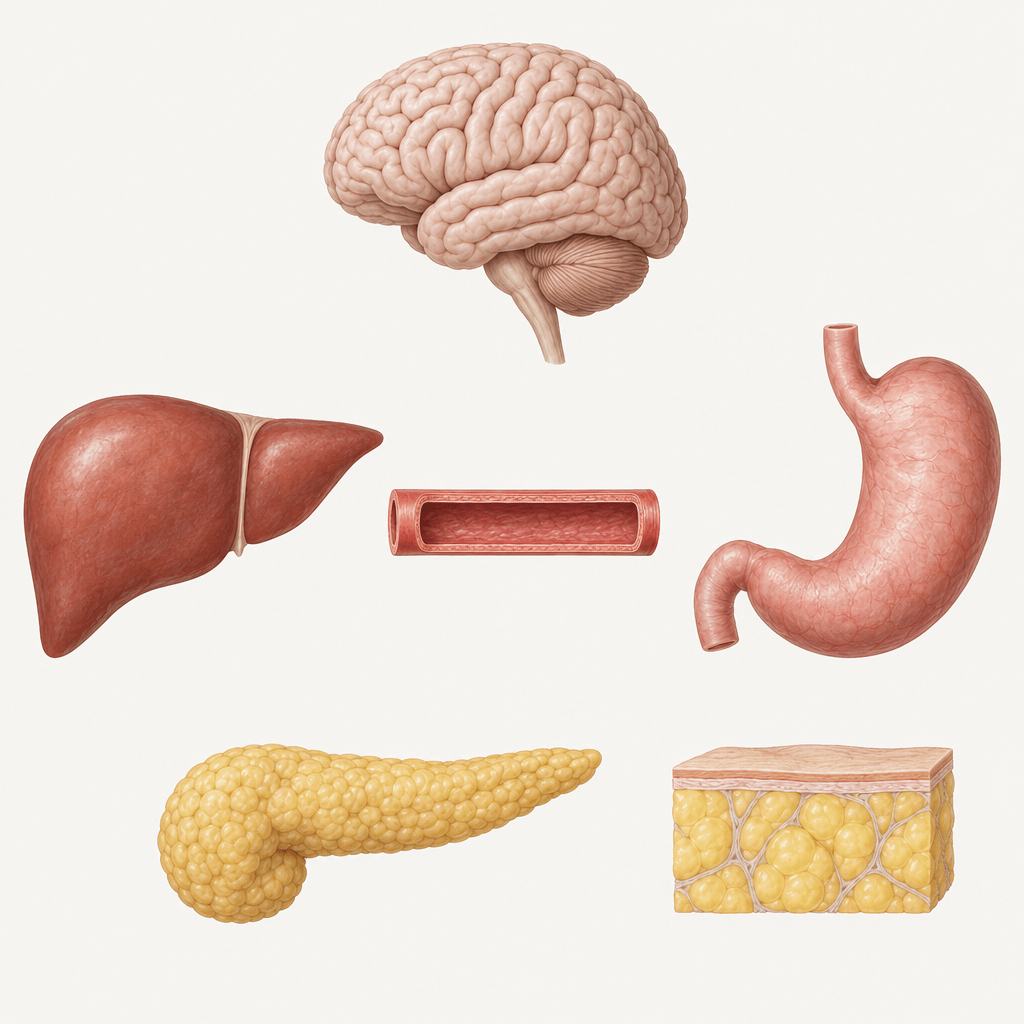
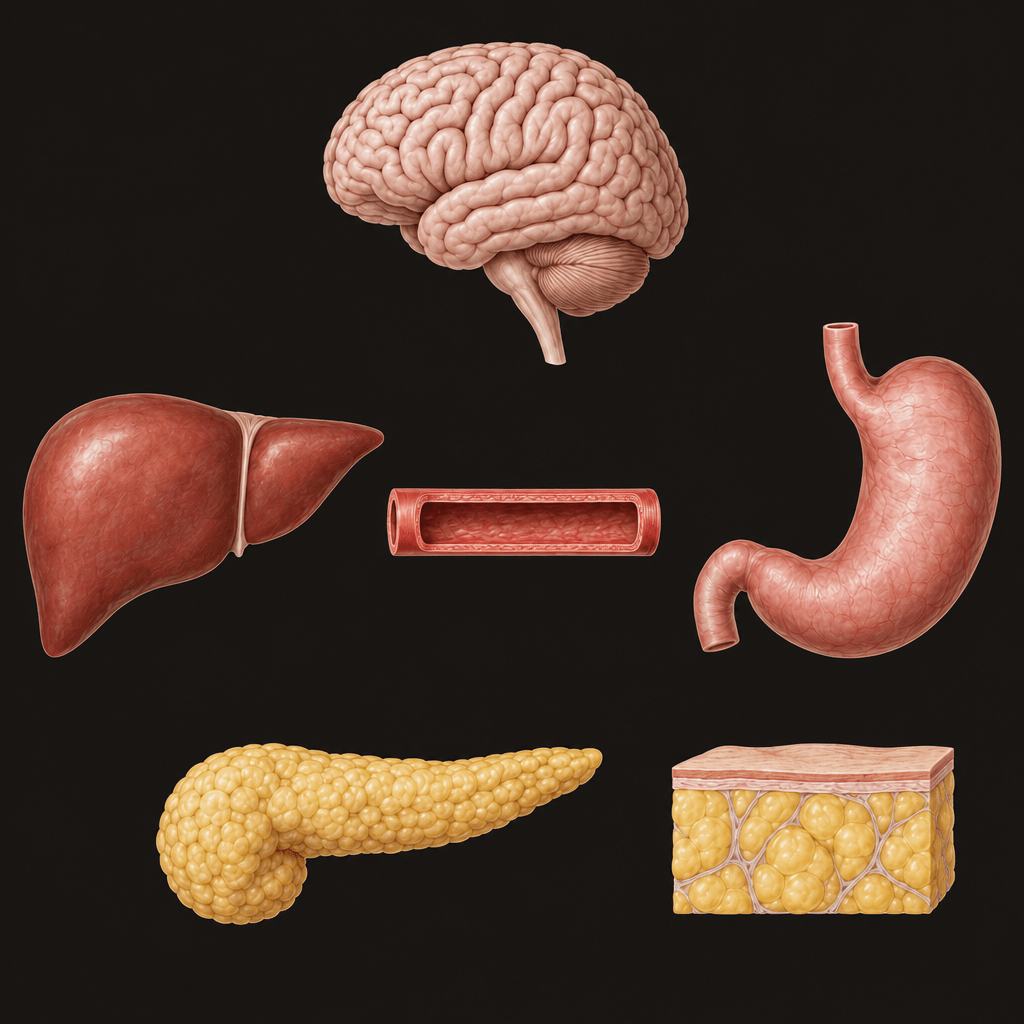
The figure shows first how tirzepatide works in a single cell, then what happens in each organ, and how well each effect is shown.
How it works in a cell
- A receptor is a kind of switch on the outside of a cell. Tirzepatide fits into the GLP-1 receptor and the GIP receptor.
- Each receptor then switches on a messenger inside the cell, called cAMP.
- cAMP makes the cell respond. What it does depends on the cell, as the cards show.
Organ by organ: where it acts, and what happens there
-
Pancreas
 Close-up: Beta cell, which makes insulin
- GLP-1 receptor
- GIP receptor
More insulin when blood sugar is high, and less glucagon.1,23
Shown in people
-
Brain
Close-up: Nerve cell- GLP-1 receptor
- GIP receptor
Less hunger: adults with type 2 diabetes ate less at a test lunch.24,1
Shown in people
Shown in animals: which brain cells it reaches, and what GIP adds there.1,26
-
Stomach
Close-up: Muscle and nerve cells in the stomach wall- GLP-1 receptor
Food leaves the stomach more slowly at first. This fades over time.1,22
Shown in people
-
Fat tissue
Close-up: Fat cell- GIP receptor
A body scan of adults with obesity or overweight showed that most weight lost was fat.1
Shown in people
Shown in animals: through the GIP receptor, fat tissue took up more sugar, so insulin worked better.25,1
-
Muscle
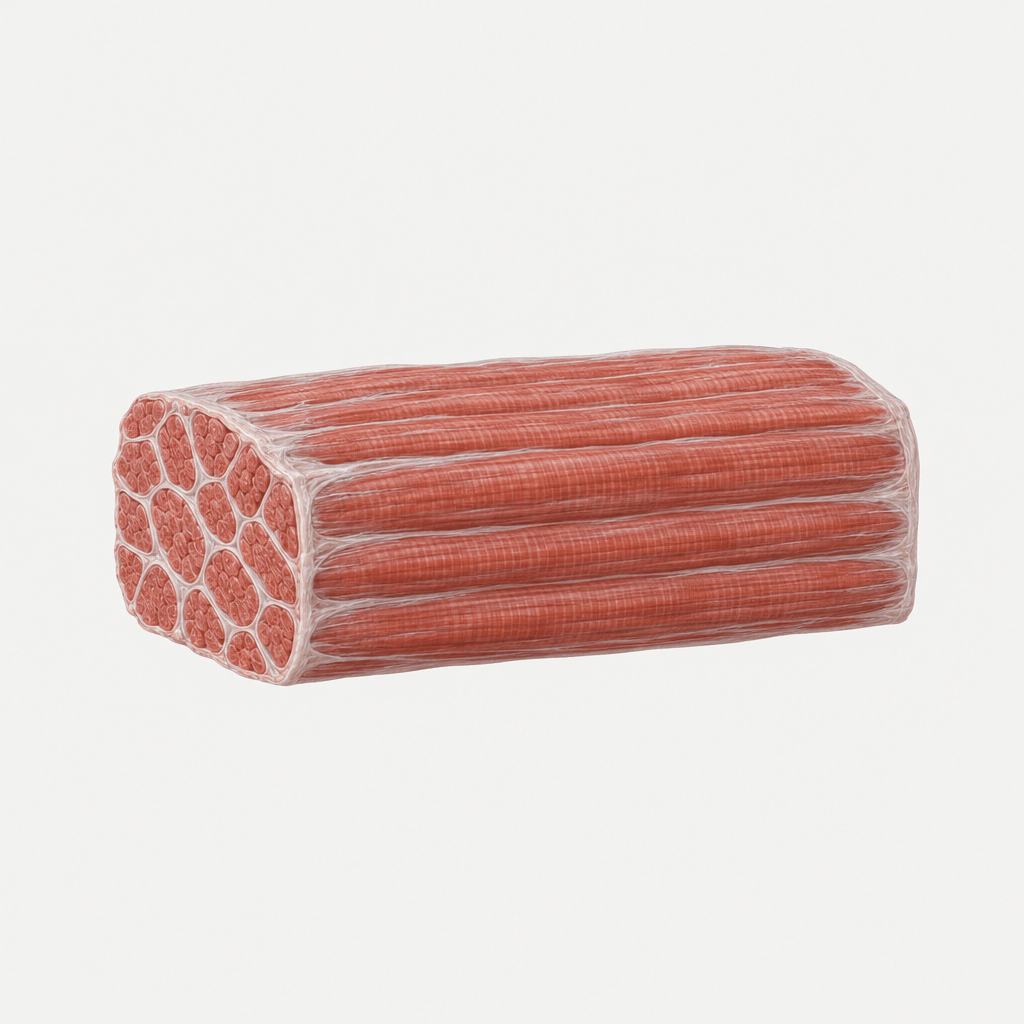
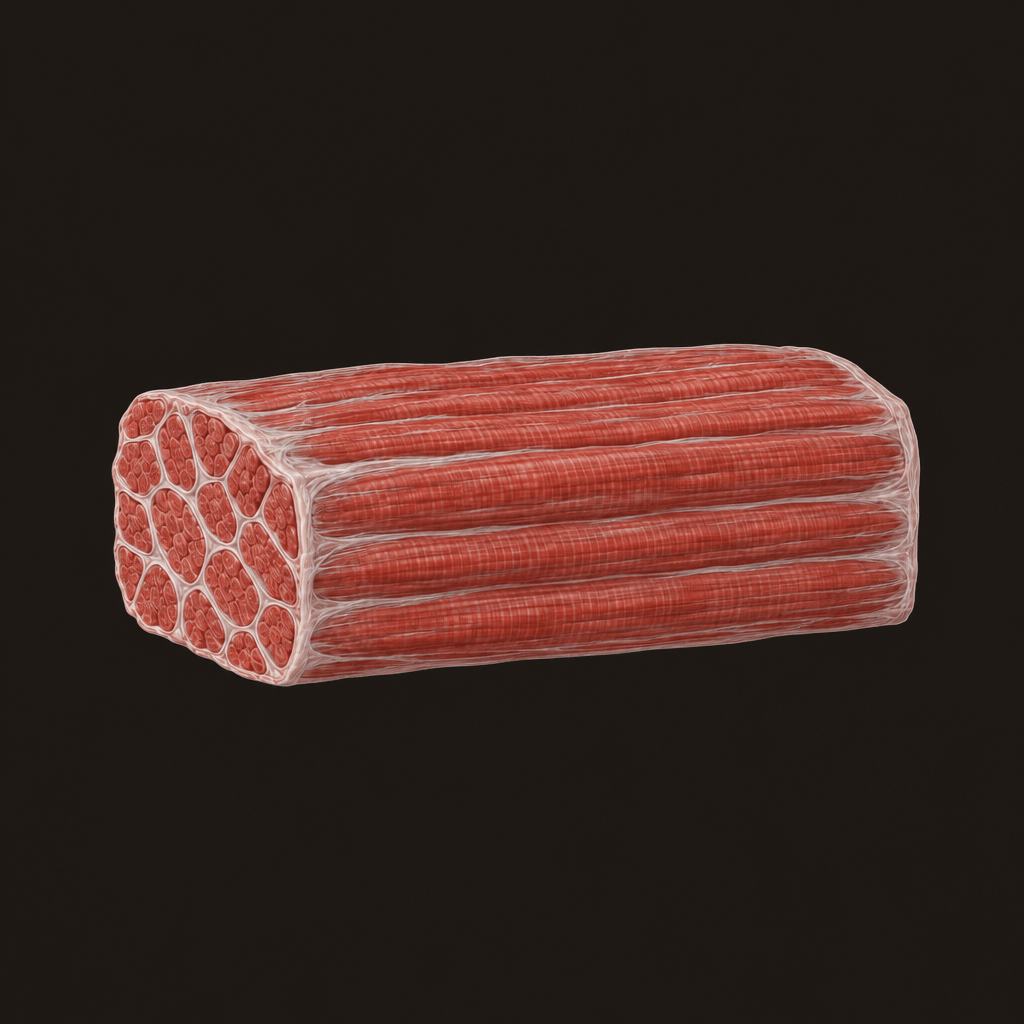 Close-up: Muscle fibre No receptor drawn: this card shows what changed with weight loss
In adults with obesity or overweight, lean mass, which includes muscle, fell too, but less than fat.1,48
Shown in people
Not known: whether this matters for strength and falls in older people.1,48
Lines: solid = shown in people long dashes = shown in animals or in cells in the lab short grey dashes = not known
Pictures: AI-generated illustration (gpt-image-2.5-sunburst-2026-09-08, 21 October 2026) CC BY 4.0 Image details AI-generated illustration (gpt-image-2.5-sunburst-2026-09-08, 22 October 2026) CC BY 4.0 Image details The pictures contain no text. The words and the cell drawings are added by this site.
In detail: The two receptors in one table: where they are found and what they do , about 2 minutes to read
| Receptor | Where it is found | What switching it on does | How well this is shown |
|---|---|---|---|
| GLP-1 receptor | Pancreas, brain, gut, heart, blood vessels, immune cells, kidney | More insulin and less glucagon when glucose is high; slower stomach emptying; less hunger | In people (the same receptor as semaglutide) |
| GIP receptor | Pancreas, brain, gut, heart, blood vessels, immune cells, kidney, and also fat tissue | More insulin when glucose is high; effects on fat storage and on appetite | Insulin effect in people; fat and brain effects in animals and cells |
| Both together | Larger falls in HbA1c and weight than GLP-1 drugs in head-to-head trials | In people for the result; the share due to GIP is not known |
In two open-label trials against semaglutide, weight fell more with tirzepatide: in 1,879 adults with type 2 diabetes (SURPASS-2) and in 751 adults with obesity (SURMOUNT-5). HbA1c fell more too, in the diabetes trial.20,21 How much the GIP part adds is not known: we found no study in people that tests it.11,16
In the wall of the stomach and gut, GLP-1 receptors sit on muscle and nerve cells. In animal studies, the slower stomach also ran through nerves to the brain (Evidence level: Shown in animal studies).22
In detail: Step by step: the chain of effects and its evidence , about 5 minutes to read
Each step is labelled with how well the link from the previous step is established.
-
Built on GIP, engineered to last about five days
Tirzepatide is a 39-amino-acid peptide based on the sequence of GIP, a gut hormone. A C20 fatty diacid on lysine 20 lets it bind to albumin in the blood (99% bound). Bound to albumin it is cleared slowly: its half-life in people is about five days, which is why it is injected once a week.
-
Switches on two receptors, unevenly
In cell assays tirzepatide binds the GIP receptor about as strongly as natural GIP, and the GLP-1 receptor about five times more weakly than natural GLP-1. It barely acts on the related glucagon receptor. Estimates of receptor occupancy at clinical doses favour the GIP receptor. These numbers come from cells, not from human tissue.
-
cAMP rises; the GLP-1 receptor signal is biased
Both receptors switch on the Gs protein, so cAMP rises inside the cell. At the GLP-1 receptor, tirzepatide favours cAMP over recruiting beta-arrestin and pulls fewer receptors into the cell than GLP-1 does. Work in isolated mouse islets suggests this bias may help insulin release. Shown in cell lines and mouse islets only.
-
More insulin and less glucagon when glucose is high; better insulin sensitivity
In a 28-week randomised trial in 117 people with type 2 diabetes, tirzepatide improved insulin secretion and insulin sensitivity more than semaglutide at a diabetes dose, and lowered glucagon after meals. Because cAMP amplifies insulin release that glucose has started, its own risk of low blood sugar is low.
-
What the GIP half adds: shown only in animals
In mice, GIP receptor activation improved insulin sensitivity through fat tissue, added weight loss through GIP receptors in the brain, and reduced nausea caused by GLP-1 drugs in shrews. But long exposure to a GIP agonist also switched off GIP receptors on fat cells, and GIP-blocking antibodies cause weight loss too. Which effect dominates in people is not known.
-
Less hunger, less food, slower stomach at first
In the same 117-person trial, tirzepatide reduced appetite and energy intake, by about as much as semaglutide. It slows stomach emptying, an effect the EU label says fades over time. The early slowing is one proposed cause of the nausea, and the reason tablets and anaesthesia need thought.
-
Lower HbA1c and weight; heart outcomes no worse than dulaglutide
In phase 3 trials the combined result is lower HbA1c and weight loss of about 15 to 21% on average over 72 weeks in people with obesity. In 13,299 people with type 2 diabetes and heart disease, major cardiovascular events were not more frequent than with dulaglutide. How much of the benefit needs GIP rather than GLP-1 alone is not settled.
What each step rests on
Staying in the blood. The EU label gives an elimination half-life of about five days, 99% albumin binding and 80% absorption from the injection site, measured in people.1 The chain is mechanical: the fatty-acid tail binds albumin, and the EU label says this prolongs the half-life. Albumin is too large for the kidneys to filter, and tirzepatide is removed mainly by being broken down. So the drug is cleared slowly, and side effects do not end the day it is stopped.1,11
Two receptors, unevenly. In cell assays, tirzepatide bound the GIP receptor as strongly as natural GIP, and the GLP-1 receptor about five times more weakly than natural GLP-1 (Evidence level: Shown in cells or tissue in the laboratory).11,1 At the GLP-1 receptor it favoured cAMP signalling over recruiting β-arrestin, and caused less receptor internalisation than GLP-1 (Evidence level: Shown in cells or tissue in the laboratory). Experiments in isolated mouse islets suggest that this bias may help insulin release (Evidence level: Shown in animal studies). The authors, mostly company scientists, propose their receptor-occupancy estimates mainly for generating hypotheses.18
Insulin, glucagon and sensitivity in people. In a 28-week, double-blind, randomised trial in 117 people with type 2 diabetes, tirzepatide improved insulin secretion and insulin sensitivity more than placebo and more than semaglutide at 1 mg, and lowered glucagon after meals (Evidence level: Shown in controlled human trials).23 Because cAMP amplifies an insulin release that glucose has already started, tirzepatide on its own rarely causes low blood sugar (see the risks section).1
Appetite and the stomach. In the same trial, tirzepatide and semaglutide reduced appetite and energy intake at a test lunch by similar amounts, yet tirzepatide reduced weight and fat mass more (Evidence level: Shown in controlled human trials); the lunch did not explain the difference.24 The EU label says the delay in stomach emptying diminishes over time.1
In detail: The open question: what does the GIP half do? , about 2 minutes to read
Here the evidence is weakest. The results point in two directions, and most of them come from animals:
- GIP agonism helps. In obese mice without GLP-1 receptors, tirzepatide still improved insulin sensitivity, through more glucose uptake into fat tissue (Evidence level: Shown in animal studies).25 In mice, a GIP agonist lowered food intake through GIP receptors in the brain, and the extra weight loss of a GIP/GLP-1 co-agonist disappeared in mice lacking those brain receptors (Evidence level: Shown in animal studies).26 In mice, rats and musk shrews, GIP receptor activation reduced nausea and vomiting caused by a GLP-1 drug (Evidence level: Shown in animal studies).27
- GIP blocking also helps. Antibodies that block the GIP receptor protected obese mice against weight gain and caused weight loss in obese monkeys (Evidence level: Shown in animal studies).28 Long exposure to a GIP agonist switched off GIP receptor activity in mouse fat cells, so the agonist ended up acting like a blocker (Evidence level: Shown in animal studies).29 In people, a different medicine that combines a GLP-1 agonist with a GIP-blocking antibody was tested in a phase 2 trial in 465 adults with obesity: mean weight fell 12.3% to 16.2% over 52 weeks, versus 2.5% with placebo (Evidence level: Shown in controlled human trials).30
What the evidence actually shows
Does it work?
Weight fell by about 15 to 21% on average
15.0–20.9%
average weight lost in 72 weeks, depending on the dose, against 3.1% with placebo
Who took part SURMOUNT-1: 2,539 adults with obesity or overweight, without diabetes Source Jastreboff et al. (2022)31 Evidence Established
Long-term blood sugar (HbA1c) fell by about 2 points
1.87–2.07
percentage points lower HbA1c in 40 weeks, against a small rise with placebo
Who took part SURPASS-1: 478 adults with type 2 diabetes on diet and exercise alone Source Rosenstock et al. (2021)32 Evidence Established
Heart attacks, strokes and heart deaths: not more often than with an older medicine
12.2 in 100
had one in about four years, against 13.1 in 100 with dulaglutide
Who took part SURPASS-CVOT: 13,299 people with type 2 diabetes and atherosclerotic heart or blood-vessel disease Sources Nicholls et al. (2025); Mounjaro (tirzepatide)33,1 Evidence Human trials
Much of the lost weight came back after stopping
14.0%
weight gain in 52 weeks after switching to placebo; those who stayed on it lost 5.5% more
Who took part SURMOUNT-4: 670 adults with obesity or overweight, without diabetes, who had first lost 20.9% on average in 36 weeks Source Aronne et al. (2024)34 Evidence Human trials
Every pivotal trial here was funded by Eli Lilly, with many company authors. A crude PubMed count on 20 October 2026 found 134 randomised-trial records on tirzepatide, of which only 13 had no Lilly-affiliated author.35 That does not make the results false, but the questions, comparators and doses were mostly the manufacturer’s choice. Independent evidence comes mainly from health-record studies and other groups’ laboratory work.36,28,26
In detail: Every key study in one table , about 8 minutes to read
23 studies: 16 in humans, 5 in animals, 1 in cells, 1 reviews or other.
| Study | Species | n | Design | Funding | Research group | What it found | What it did not show |
|---|---|---|---|---|---|---|---|
| Coskun et al. 2018 11 | Mixed | 142 | Phase I trial (controlled, blinded) | Industry | Originating group | Describes the molecule, its receptor binding and its effects in mice. In a phase 1 study (142 people given tirzepatide, dulaglutide or placebo, as single doses or for 4 weeks), the half-life was about 5 days, glucose and weight fell, and side effects were mainly in the stomach and gut. | Single doses or four weeks; small groups; healthy volunteers plus 53 people with type 2 diabetes; developer's own study. |
| Frias et al. 2018 37 | Humans | 318 | Phase II trial (controlled, blinded) | Industry | Originating group | In 318 people with type 2 diabetes over 26 weeks, HbA1c fell by up to 1.94 percentage points versus 0.06 with placebo and 1.21 with dulaglutide; weight fell by up to 11.3 kg. | Phase 2, 26 weeks; stomach and gut side effects rose steeply with dose (up to 66%). |
| Killion et al. 2018 28 | Mixed | not reported | Animal experiment (controlled) | Industry | Independent group | Antibodies that block the GIP receptor protected obese mice against weight gain and caused weight loss in obese monkeys, more so when combined with a GLP-1 drug. | Did not test tirzepatide; a competitor's programme; animals only. Shows that blocking, not only activating, the GIP receptor can lower weight. |
| Killion et al. 2020 29 | Mice | not reported | Animal experiment (controlled) | Industry | Independent group | Long-term exposure to a GIP receptor agonist switched off GIP receptor activity in mouse fat cells, so in these cells the agonist acted like a blocker. | Did not test tirzepatide; mice and cultured cells; a competitor's programme. |
| Willard et al. 2020 18 | Cells (lab) | not reported | Laboratory (cells) (controlled) | Mixed | Originating group | In cell lines, tirzepatide acted like natural GIP at the GIP receptor but favoured cAMP over beta-arrestin at the GLP-1 receptor and caused less receptor internalisation. Estimated receptor occupancy at clinical doses favoured the GIP receptor. | Cells and isolated mouse islets; occupancy is a calculation, not a measurement in people; mostly company scientists. |
| Borner et al. 2021 27 | Mixed | not reported | Animal experiment (controlled) | Mixed | Mixed | In mice, rats and musk shrews, activating the GIP receptor reduced vomiting and nausea-like behaviour caused by a GLP-1 drug, while food intake and weight still fell. | Animal models of nausea; partly funded by the manufacturer; tirzepatide trials still report much nausea. |
| Samms et al. 2021 25 | Mice | not reported | Animal experiment (controlled) | Industry | Originating group | In obese mice lacking the GLP-1 receptor, so without GLP-1-driven weight loss, tirzepatide still improved insulin sensitivity by increasing glucose uptake into fat tissue. | Mice only; all authors were company employees; does not show the same mechanism in people. |
| Rosenstock et al. 2021 32 | Humans | 478 | Phase III trial (controlled, blinded) | Industry | Originating group | In 478 adults with type 2 diabetes on diet and exercise alone, HbA1c fell by 1.87 to 2.07 percentage points over 40 weeks versus a rise of 0.04 with placebo, without clinically significant low blood sugar. | 40 weeks; early disease and low baseline risk; manufacturer-run. |
| Frías et al. 2021 20 | Humans | 1,879 | Phase III trial (controlled) | Industry | Originating group | In 1,879 adults with type 2 diabetes on metformin, HbA1c fell by 2.01 to 2.30 percentage points with tirzepatide versus 1.86 with semaglutide over 40 weeks; weight differences were 1.9 to 5.5 kg. | Open-label; semaglutide was used at a lower dose than those later authorised; manufacturer-run. |
| Del Prato et al. 2021 38 | Humans | 2,002 | Phase III trial (controlled) | Industry | Originating group | In 2,002 adults with type 2 diabetes and high cardiovascular risk, HbA1c fell more than with insulin glargine at 52 weeks, with less low blood sugar (6 to 9% versus 19%). Major cardiovascular events were not increased (HR 0.74, 95% CI 0.51–1.08). | Open-label; too few events to judge heart benefit; manufacturer-run. |
| Zhang et al. 2021 26 | Mice | not reported | Animal experiment (controlled) | Mixed | Independent group | In mice, a long-acting GIP lowered food intake and weight through GIP receptors in the brain. The extra weight loss of a GIP/GLP-1 co-agonist over GLP-1 alone disappeared in mice without brain GIP receptors. Yet mice lacking brain GIP receptors were also protected from diet-induced weight gain. | Did not test tirzepatide itself (the co-agonist was a different molecule); mice only; brain circuits in people not studied. |
| Heise et al. 2022 23 | Humans | 117 | Randomised controlled trial (controlled, blinded) | Industry | Originating group | In 117 people with type 2 diabetes over 28 weeks, tirzepatide improved a combined measure of insulin secretion and sensitivity more than placebo and more than semaglutide at a diabetes dose, and lowered glucagon. | Mechanistic trial with a lower semaglutide dose than the weight-loss product; manufacturer-funded and partly run by company staff. |
| Jastreboff et al. 2022 31 | Humans | 2,539 | Phase III trial (controlled, blinded) | Industry | Originating group | In 2,539 adults with obesity or overweight without diabetes, mean weight fell 15.0%, 19.5% and 20.9% at the three doses versus 3.1% with placebo over 72 weeks. | Weight is a surrogate for health outcomes; 72 weeks; stomach and gut side effects may have partly unblinded participants; manufacturer-run. |
| Rodriguez et al. 2024 36 | Humans | 18,386 | Observational study (controlled) | Not disclosed | Independent group | In US health records of 18,386 matched adults with overweight or obesity, those starting tirzepatide lost more weight than those starting semaglutide (difference 6.9 percentage points at 12 months); stomach and gut side effects were similar. | Observational; diabetes formulations used on or off label; more than half stopped treatment early; cannot rule out confounding. |
| Aronne et al. 2024 34 | Humans | 670 | Phase III trial (controlled, blinded) | Industry | Originating group | After 36 weeks of open-label tirzepatide (mean loss 20.9%), 670 adults were randomised: those who continued lost a further 5.5% over 52 weeks, while those switched to placebo regained 14.0%. | Only people who tolerated the drug were randomised; manufacturer-run. |
| Malhotra et al. 2024 43 | Humans | 469 | Phase III trial (controlled, blinded) | Industry | Originating group | In two trials (469 adults with obesity and moderate to severe sleep apnoea), breathing interruptions fell by 20.0 and 23.8 more events per hour with tirzepatide than with placebo over 52 weeks. | People with type 2 diabetes were excluded; in trial 2 the breathing machine was stopped a week before measurement; manufacturer-run. |
| Packer et al. 2025 45 | Humans | 731 | Phase III trial (controlled, blinded) | Industry | Originating group | In 731 adults with obesity and heart failure with preserved ejection fraction, cardiovascular death or worsening heart failure occurred in 9.9% with tirzepatide and 15.3% with placebo (HR 0.62); symptom scores improved. | Few events; the benefit came from heart-failure events, not deaths (8 versus 5 cardiovascular deaths); the EMA was unsure the effect is more than weight loss. |
| Jastreboff et al. 2025 41 | Humans | 1,032 | Phase III trial (controlled, blinded) | Industry | Originating group | In the 1,032 SURMOUNT-1 participants with prediabetes treated for 176 weeks, type 2 diabetes was diagnosed in 1.3% with tirzepatide and 13.3% with placebo; 17 weeks after stopping, 2.4% versus 13.7%. | A subgroup of one trial; weight loss itself prevents diabetes, so this does not separate drug from weight; manufacturer-run. |
| Aronne et al. 2025 21 | Humans | 751 | Phase III trial (controlled) | Industry | Originating group | In 751 adults with obesity without diabetes, weight fell 20.2% with tirzepatide and 13.7% with semaglutide over 72 weeks, each at the highest dose tolerated. | Open-label, so behaviour and reporting could be influenced; run and paid for by the maker of one of the two drugs. |
| Nicholls et al. 2025 33 | Humans | 13,299 | Phase III trial (controlled, blinded) | Industry | Originating group | In 13,299 people with type 2 diabetes and atherosclerotic disease followed for a median of about four years, heart attack, stroke or cardiovascular death occurred in 12.2% with tirzepatide and 13.1% with dulaglutide (HR 0.92, 95.3% CI 0.83–1.01): not worse, and not shown to be better. | No placebo group; benefit against no treatment is inferred from dulaglutide's own earlier trial; manufacturer-run. |
| Hannon et al. 2025 39 | Humans | 99 | Phase III trial (controlled, blinded) | Industry | Originating group | In 99 children and adolescents aged 10 to 17 with type 2 diabetes, HbA1c fell by 2.23 percentage points versus a rise of 0.05 with placebo at 30 weeks. | Small; 30 weeks blinded plus an open-label extension; the EU label reports more vomiting, belly pain and low blood sugar than in adults when added to metformin alone. |
| McCall et al. 2026 97 | Humans | not reported | Post-marketing surveillance (controlled) | Not disclosed | Independent group | Of 81,078 US adverse-event reports for GLP-1 medicines (2018–2024), 707 involved compounded products. These had higher reporting odds for preparation errors, contamination and hospitalisation than branded products. | Voluntary reports cannot give rates or prove cause; liraglutide, semaglutide and tirzepatide were pooled. |
| Horn et al. 2026 42 | Humans | 378 | Phase III trial (controlled, blinded) | Industry | Originating group | After 60 weeks of tirzepatide, 378 adults were randomised to continue, to a lower dose, or to placebo. At week 112 weight was 21.9%, 16.6% and 9.9% below the starting weight. | US only; rescue treatment was allowed after week 84, which complicates comparison; manufacturer-run. |
Below is what the key studies tested, in whom, and what they could not show. The cell and animal studies explain the mechanism; they do not show that the medicine works in people.
In detail: Type 2 diabetes, and the heart trial , about 2 minutes to read
Type 2 diabetes
Tirzepatide lowers HbA1c in type 2 diabetes (Evidence level: Established in large trials and authorised use). In SURPASS-1, a double-blind phase 3 trial in 478 adults on diet and exercise alone, HbA1c fell by 1.87 to 2.07 percentage points over 40 weeks versus a rise of 0.04 with placebo, without clinically significant low blood sugar.32 In the earlier phase 2 trial (318 people), stomach and gut side effects rose with dose, from 23.1% to 66.0%.37
SURPASS-2 compared tirzepatide with semaglutide 1 mg in 1,879 adults on metformin over 40 weeks. HbA1c fell by 2.01 to 2.30 percentage points with tirzepatide and 1.86 with semaglutide; weight differences were 1.9 to 5.5 kg (Evidence level: Shown in controlled human trials).20 The trial was open-label, and semaglutide was used at a lower dose than those later authorised. Against insulin glargine (SURPASS-4, 2,002 adults at high cardiovascular risk), HbA1c fell more and low blood sugar was less frequent (6–9% versus 19%).38 In 99 young people aged 10 to 17 (SURPASS-PEDS), HbA1c fell by 2.23 percentage points over 30 weeks.39
The heart: SURPASS-CVOT
SURPASS-CVOT randomised 13,299 people with type 2 diabetes and atherosclerotic disease to tirzepatide or dulaglutide, an older GLP-1 medicine that had itself reduced cardiovascular events in an earlier trial. Over a median of about four years, heart attack, stroke or cardiovascular death occurred in 12.2% with tirzepatide and 13.1% with dulaglutide (HR 0.92, 95.3% CI 0.83–1.01) (Evidence level: Shown in controlled human trials). That met the test for “not worse”; it did not show “better”.33 All-cause death was 8.5% versus 10.1% in the US label, a result not controlled for multiple testing.10
The regulators went further than the trial’s own conclusion. The EMA accepted that Mounjaro reduces serious cardiovascular events in this group, and the FDA added an indication to reduce this risk.40,8 That conclusion leans on dulaglutide’s earlier benefit. Without a placebo group, the size of the benefit against no treatment is an inference, not a measurement.
In detail: Weight management, stopping, and the comparison with semaglutide , about 2 minutes to read
Weight management, and what happens after stopping
SURMOUNT-1 randomised 2,539 adults with obesity or overweight, without diabetes. Mean weight fell 15.0%, 19.5% and 20.9% at the three doses versus 3.1% with placebo over 72 weeks (Evidence level: Established in large trials and authorised use); 4.3% to 7.1% stopped because of side effects, versus 2.6% on placebo.31 Among the 1,032 participants with prediabetes, treated for 176 weeks, type 2 diabetes was diagnosed in 1.3% versus 13.3%.41 Weight loss itself lowers diabetes risk, so this does not show an effect beyond weight.
Much of the weight returns when treatment stops (Evidence level: Shown in controlled human trials). In SURMOUNT-4, 670 adults who had lost a mean 20.9% over 36 weeks were randomised: those who continued lost a further 5.5%, those switched to placebo regained 14.0% over 52 weeks.34 In SURMOUNT-MAINTAIN, 378 adults were randomised after 60 weeks to continue, to a lower dose (5 mg) or to placebo; at week 112 their weight was 21.9%, 16.6% and 9.9% below the starting weight.42
Head to head with semaglutide
SURMOUNT-5 randomised 751 adults with obesity but no diabetes to the highest tolerated dose of tirzepatide or of semaglutide for 72 weeks. Mean weight fell 20.2% with tirzepatide and 13.7% with semaglutide; waist size fell 18.4 cm and 13.0 cm.21 The trial was open-label and run by the maker of one of the two drugs. An independent US health-record study of 18,386 matched adults pointed the same way (6.9 percentage points more weight loss at 12 months), but cannot rule out confounding.36 Neither shows which drug suits a given person.
In detail: Sleep apnoea, heart failure and the liver , about 1 minute to read
In two SURMOUNT-OSA trials (469 adults with obesity and moderate to severe sleep apnoea), breathing interruptions per hour fell by 20.0 and 23.8 events more than with placebo over 52 weeks (Evidence level: Shown in controlled human trials).43,44 In SUMMIT, 731 adults with obesity and heart failure with preserved ejection fraction (HFpEF), cardiovascular death or worsening heart failure occurred in 9.9% versus 15.3% (HR 0.62) (Evidence level: Shown in controlled human trials), driven by heart-failure events; cardiovascular deaths were few and not lower (8 versus 5 in the paper; the EU label gives 10 versus 5).45,1 The EMA was not sure this is more than an effect of weight loss.46 In a phase 2 trial in 190 people with the liver disease MASH and moderate or severe scarring, MASH resolved without worse scarring in 44% to 62% with tirzepatide versus 10% with placebo at 52 weeks (Evidence level: Shown in controlled human trials); the authors call for larger and longer trials.47
What is genuinely unknown
What is still not known?
-
Heart outcome trial (SURPASS-CVOT)
a median of about four years
-
Weight trial, people with prediabetes (SURMOUNT-1)
176 weeks
-
Longer use
Not known: not covered by the trials
Sources Nicholls et al. (2025); Mounjaro (tirzepatide); Jastreboff et al. (2025)33,1,41
In detail: All seven open questions, with their sources , about 1 minute to read
- Use beyond about four years. The longest trial, SURPASS-CVOT, followed people for a median of about four years.33
- How to stop. In the trials, switching to placebo led to substantial weight regain. A lower dose kept part of the loss in one trial. No trial has yet shown a way to stop entirely and keep the benefit.34,42
- What GIP adds in people. Animal studies point both ways; we found no human study that separates the two receptors.29,25
- Thyroid tumours. Tirzepatide caused thyroid C-cell tumours in rats; the EU label calls the human relevance unknown.1
- Muscle and function. The EU label reports that fat mass fell more than lean mass in a body-composition substudy; whether lean-mass loss matters for strength and falls in older people is open.1,48
- Pregnancy. Animal studies showed foetal harm at doses toxic to the mother; human data are very limited.1
- Anti-drug antibodies. Between about half and two-thirds of treated people develop them across the trials. No effect on efficacy was found, but allergic and injection-site reactions were more frequent in people who had them. What this means over many years is not known.1,10
Regulatory status
Is it legal?
-
EU, Mounjaro: type 2 diabetes in adults
since 15 September 2022
-
EU, Mounjaro: weight management in adults
since 11 December 2023
-
EU, Mounjaro: type 2 diabetes from age 10
since 22 January 2026
-
US, Mounjaro: type 2 diabetes
since 13 May 2022
-
US, Zepbound: weight management
since 8 November 2023
Sources Mounjaro (tirzepatide); Mounjaro; Mounjaro; Drugs@FDA; Drugs@FDA1,6,7,8,9 Checked
In detail: Status in each country and in sport , about 2 minutes to read
| Jurisdiction | Status | Note | Checked |
|---|---|---|---|
| European Union | Authorised Since | Authorised (centralised): Mounjaro 15 Sep 2022; weight management added 11 Dec 2023; children 10+ with type 2 diabetes 22 Jan 2026. Prescription only. 1,7,6 | |
| Netherlands | Authorised Since | Authorised via the EU. Reimbursed only for type 2 diabetes under Bijlage 2 conditions; not reimbursed for weight management, assessment under way. 1,57,55,56 | |
| Germany | Authorised Since | Authorised via the EU. Statutory insurance excludes medicines used mainly for weight loss (§ 34 SGB V). 1,59 | |
| Belgium | Authorised Since | Authorised via the EU; prescription only. Belgian reimbursement rules not verified here. 1,60 | |
| United Kingdom | Authorised | Licensed (Mounjaro) for diabetes and weight management; prescription only. Falsified Mounjaro KwikPens found in 2026. 19,5 | |
| United States | Authorised Since | FDA-approved: Mounjaro 13 May 2022; Zepbound 8 Nov 2023; sleep apnoea (Zepbound) 20 Dec 2024; children (Mounjaro) 19 Dec 2025; cardiovascular events (Mounjaro) 27 Aug 2026. Shortage resolved 19 Dec 2024. 8,9,10,61 | |
| Sport (WADA) | Not on the Prohibited List | Not on the 2026 or 2027 Prohibited List. On the Monitoring Program since 2026 (in and out of competition). 49,50,53,54 |
Statuses were checked on 20 October 2026.
Sport (WADA)
Tirzepatide is not named on the 2026 Prohibited List or on the 2027 List that takes effect on 1 January 2027. The S0 class for non-approved substances does not apply to an approved medicine.49,50,51 It was added to the WADA Monitoring Program in 2026 and stays on it in 2027, in and out of competition: laboratories look for it to detect misuse patterns, but it is not banned.52,53,54
In detail: The European Union and the Netherlands , about 3 minutes to read
European Union
Mounjaro is authorised through the centralised procedure, valid in every member state; the marketing authorisation holder is Eli Lilly Nederland B.V.1 The EMA assessed three further uses and in each case added the trial data to the label without a separate indication, because the use was already covered: sleep apnoea (December 2024), HFpEF (January 2026) and cardiovascular risk reduction (June 2026).44,46,40 Mounjaro is under additional monitoring, so that new safety information is picked up quickly.1
Netherlands
The EU authorisation applies directly; tirzepatide is prescription-only. Reimbursement is narrow:
- Type 2 diabetes: reimbursed only under the conditions of Bijlage 2 of the Regeling zorgverzekering, for adults. One route is a BMI of 30 or more when metformin plus a sulfonylurea, or metformin plus basal insulin, is not enough. The other is very high cardiovascular risk, added to an SGLT2 inhibitor and metformin.55
- Weight management: not reimbursed. The Zorginstituut is assessing it in steps, first for people with a BMI of 30 or more with related disease, or a BMI of 35 or more. The first scientific discussion was on 5 October 2026; consultation is expected in early November 2026.56
Dutch GP guidelines, as summarised in the Farmacotherapeutisch Kompas, advise against tirzepatide for type 2 diabetes without very high cardiovascular risk, because there is little experience with it and the costs are very high. The GP guideline on obesity also advises against it in primary care. In hospital care, the same summary says obesity medicines can be considered earlier, but it names liraglutide, naltrexone/bupropion and semaglutide, not tirzepatide. The same summary notes that the Dutch multidisciplinary obesity guideline (2023) was written before tirzepatide was on the market, and that guidance in other countries leaves more room to prescribe it.57 This gap has costs and reasons. An authorised weight medicine with strong trial results exists, but people who cannot pay do not get it, while the CBG warns against buying these medicines online without a prescription.2 Equally, the costs are real. When it assessed semaglutide (Wegovy) in 2024, the Zorginstituut estimated that 4.1 million people in the Netherlands met the EU weight criteria, which are the same as Mounjaro’s. Costs could in theory reach €10 billion a year; its practical estimate was €1.3 billion a year. That is why it now assesses new obesity medicines first for the people with the most health problems, still an estimated group of more than 1 million.58,56
In detail: Germany, Belgium, the United Kingdom and the United States , about 2 minutes to read
Germany
Authorised through the EU procedure.1 German law excludes from statutory health insurance medicines used mainly for weight loss, appetite control or weight regulation (§ 34 SGB V).59
Belgium
Authorised through the EU procedure; Belgian law requires a marketing authorisation, national or European, before a medicine is placed on the market.1,60 We could not verify Belgian reimbursement rules on an official source on 20 October 2026.
United Kingdom
The MHRA lists Mounjaro as licensed for diabetes and for weight management, prescription only.19 In February 2026 it warned that falsified Mounjaro KwikPens labelled 15 mg had been supplied through one UK online pharmacy.5 In October 2026 it reported seizing more than 12,000 fake retatrutide and tirzepatide pens in one raid.3
United States
The approval dates are in the table above.8,9 The US labels carry a boxed warning about rat thyroid C-cell tumours and contraindicate use with a personal or family history of medullary thyroid carcinoma or MEN 2; the EU label lists only hypersensitivity.10,1 In February 2026 the Zepbound label removed its warning on suicidal behaviour and ideation.61
Tirzepatide injection was on the FDA shortage list from 2022, which let pharmacies compound copies. The FDA declared the shortage resolved on 2 October 2024 and, after re-evaluation, on 19 December 2024; the grace period ended for pharmacies after a court ruling on 5 March 2025, and for outsourcing facilities on 19 March 2025.62 On 30 April 2026 the FDA proposed to keep tirzepatide off the list of bulk substances that outsourcing facilities may compound from, finding no clinical need; no final decision had been published by 20 October 2026.63,64 Tirzepatide was not among the peptides the FDA’s compounding advisory committee considered in July 2026.65
Risk profile
What are the risks?
Stomach and gut problems were common
55.6–60.8%
had stomach or gut problems. With placebo it was 30.3%
Who took part A placebo-controlled weight trial in adults without type 2 diabetes; the range covers its three doses (EU product information) Source Mounjaro (tirzepatide)1 Evidence Human trials
One in four to one in three felt sick
24.6–33.3%
had nausea. With placebo it was 9.5%
Who took part The same weight trial (EU product information) Source Mounjaro (tirzepatide)1 Evidence Human trials
Few stopped because of it
1.9–4.4%
stopped for good because of stomach or gut problems, against 0.5% with placebo
Who took part The same weight trial (EU product information) Source Mounjaro (tirzepatide)1 Evidence Human trials
Unless stated otherwise, risks and frequencies come from the EU product information.1
Tirzepatide’s insulin effect depends on glucose, but insulin and sulfonylureas act regardless of glucose.1,66 In the diabetes trials, clinically significant low blood sugar occurred in 10–14% when tirzepatide was added to a sulfonylurea and 14–19% when added to basal insulin. The label says the risk can be lowered by reducing the dose of those medicines.1
In detail: Low blood sugar, with a short animation , about 2 minutes to read
The short animation shows how the combination can push blood sugar too low, and what to do about it.
Your device asks for less motion, so this animation does not play. The picture shows the end result and the list explains every step.
-
Alone, a GLP-1-type medicine lowers high sugar. Near normal, it works less. Sugar rarely gets too low.
Evidence: In humans
-
Insulin lowers sugar too. So do tablets called sulfonylureas. They still work when sugar is normal or low.
Evidence: In humans
-
Used together, they can push blood sugar too low. This is called hypoglycaemia.
Evidence: In humans
-
So the prescriber may lower the insulin or tablet dose. The labels suggest this.
Evidence: In humans
-
Shaking, sweating or confused? Take sugar if the person can swallow. If not, call your local emergency number.
Evidence: In humans
In short: On its own, a GLP-1-type medicine such as semaglutide or tirzepatide rarely makes blood sugar too low. With insulin or a sulfonylurea tablet it can, so the prescriber may lower the insulin or tablet dose. Know the signs and take sugar at once. If the person cannot swallow, call your local emergency number.
Lines: solid = shown in people
Based on: Mounjaro (tirzepatide)1; Ozempic (semaglutide)67; Sola et al. (2015)66; American Diabetes Association Professional Practice Committee for Diabetes (2026)68
In detail: Stomach and gut: the details , about 1 minute to read
In the placebo-controlled weight trial in people without diabetes, stomach and gut problems occurred in 55.6% to 60.8% with tirzepatide versus 30.3% with placebo; nausea in 24.6% to 33.3% versus 9.5%. Most were mild or moderate and came while the dose was being raised; 1.9% to 4.4% stopped permanently because of them.1 Two mechanisms are proposed: the stomach empties more slowly, and in animals, GLP-1 drugs act on hindbrain areas that also process nausea signals (Evidence level: Shown in animal studies).1,27 Vomiting and diarrhoea can cause dehydration, which can lead to acute kidney failure; older people are more at risk.1 The US label also lists reports after approval of ileus (the bowel stops moving), blockage of the bowel and severe constipation.10
In detail: Gallbladder and pancreas , about 1 minute to read
Gallstones and inflammation of the gallbladder are uncommon side effects (up to 1 in 100). Inflammation of the gallbladder occurred in 0.6% versus 0.2% in the pooled weight trials; in the HFpEF trial, acute gallbladder disease occurred in 4.4% versus 2.7%. In the weight trials, the label notes, acute gallbladder events were more common in people who lost more weight.1 Across 76 trials of GLP-1 medicines (103,371 people), gallbladder and bile-duct disease was more frequent, more so in weight-loss trials, at higher doses and with longer use.69
Acute pancreatitis is an uncommon side effect (up to 1 in 100). Tirzepatide should be stopped if pancreatitis is suspected and not restarted if it is confirmed.1 The US label lists reports after approval of haemorrhagic and necrotising pancreatitis, sometimes fatal.10 In the trials, the pancreatic enzymes amylase and lipase rose by about 23% to 42% on average. Raised enzymes alone, without symptoms, do not predict pancreatitis. The EU label does not propose a mechanism for the pancreatitis cases.1
In detail: Thyroid tumours in rats, and why they may not carry over , about 1 minute to read
In a two-year study, tirzepatide caused thyroid C-cell tumours in rats at all doses tested, at exposures up to about the human one; a six-month study in a mouse strain found none. The EU label calls the human relevance unknown, and lists raised blood calcitonin as common in some trial groups.1,10 Rodent C-cells carry GLP-1 receptors, and GLP-1 agonists stimulated calcitonin release and C-cell growth in rats; human and monkey C-cells had few receptors (Evidence level: Shown in animal studies). That study tested liraglutide, not tirzepatide.70
In detail: Anaesthesia, the contraceptive pill and other tablets , about 1 minute to read
Slower stomach emptying means food may still be in the stomach during general anaesthesia or deep sedation, and could be breathed into the lungs. Tell the doctor about tirzepatide before any procedure.1,71
The same slowing reduces the absorption of some tablets, most at the start of treatment. A single dose lowered peak levels of a combined contraceptive pill by 55% to 66%. Here the regulators differ. The EU label considers this not clinically relevant and requires no change.1 The US labels and the UK regulator advise switching to a non-oral method, or adding a barrier method such as condoms, for four weeks after starting and after each dose increase.10,19 For tablets where small changes matter, such as warfarin or digoxin, the label advises monitoring.1
In detail: Muscle, eyes, mood, pregnancy and other effects , about 2 minutes to read
Muscle and eyes
Weight loss on tirzepatide is mostly fat: in a body-composition substudy, fat mass fell more than lean mass.1 Across GLP-1-based medicines, lean mass has made up from about 15% to 40–60% of the weight lost (Evidence level: Seen in humans in case reports or small uncontrolled studies); lean mass also includes organs and water, and the source is a narrative review.48 In people with diabetic retinopathy, a fast fall in glucose can temporarily worsen it; the label asks for close monitoring.1
Mood, pregnancy and other effects
Mounjaro was not part of the EMA’s 2024 review of suicidal thoughts with GLP-1 medicines, which found no causal link for the medicines it reviewed.72 The UK regulator, after its own safety review of GLP-1 medicines, concluded that the data do not support a causal link with depression or suicidal thoughts.19 If your mood changes on any medicine, tell your doctor.
In rats tirzepatide caused foetal malformations and growth reduction at doses toxic to the mother. The label does not recommend it in pregnancy, recommends contraception, and says to stop at least a month before a planned pregnancy.1
The label also lists a rise in heart rate (average increases of 2 to 6 beats per minute across trials), hair loss, dizziness, low blood pressure, tiredness, injection-site reactions, and rare allergic reactions including anaphylaxis and angioedema.1 Reports of lithium poisoning have been made when GIP/GLP-1 medicines were started or increased in people taking lithium.57
Using it safely and legally
How do I use it safely?
The authorised medicine is Mounjaro (Zepbound in the US) from a pharmacy, on prescription. A regulator assessed what is in it, the pen or single-dose vial fixes the amount, and the maker releases each batch.1 This section gives no doses: your prescriber decides the dose. Tell your doctor about other medicines you use.
The checks below are for any other product, such as an online “research” vial or a pen of unknown origin.
If your product did not come from a pharmacy: check before you use it
These checks can show that something is wrong. None of them can show that a product is good or free of germs.73,74,75
Tick each box when you have checked it.
-
A lab report proves little if:
- its batch number is not the one on your vial;
- it does not name the lab, or has no date or signature;
- it shows only purity (HPLC), with no test of what it is, such as mass spectrometry;
- it has no test for germs (sterility) or for toxins from germs (endotoxin).
Even a full report covers only one sample. A report from the seller comes from someone who gains if it looks good. It cannot show that your vial is clean.81,82,83,84,85
When to stop and get help
Stop-now warning signs
Call your local emergency number now
- Confusion or slurred speech, very fast breathing, or pale, blue or blotchy skin, often with fever or shivering These can be signs of sepsis: the body's reaction to an infection has started to damage its own organs.
- Fainting and not waking up within a minute, or fainting with chest pain, a racing heart or a fit This can be a dangerous heart rhythm or a severe allergic reaction.
- Pain at the injection spot that is much worse than it looks, or dark, purple or grey patches or blisters there This can be a rare, fast-spreading infection of the deep layers under the skin (necrotising fasciitis).
- Swelling of the lips, tongue or throat, trouble breathing or swallowing, wheezing, a hoarse voice, or feeling faint, soon after an injection This can be a severe allergic reaction (anaphylaxis), which is life-threatening and gets worse very quickly.
- Shaking, sweating or sudden hunger that turns into confusion or drowsiness Very low blood sugar can cause a fit or loss of consciousness; take something sugary if you can still swallow safely.
- Severe, constant pain in the upper belly that spreads to the back, often with vomiting This can be an inflamed pancreas (pancreatitis), a known risk of GLP-1 medicines such as semaglutide and tirzepatide.
Get medical help today
- Fever, shivering or feeling very ill in the days after an injection Germs from the needle, the skin or the product may have reached your blood. If you also have a fast heartbeat or fast breathing, call your local emergency number.
- Redness, heat, swelling or pain around the injection spot that keeps growing or getting worse This can be a skin infection (cellulitis), which needs antibiotics before it spreads.
- Red lines that run from the injection spot towards the armpit or groin The infection may be spreading along the lymph vessels, and from there into the blood. If you also have a fever with a fast heartbeat or fast breathing, call your local emergency number.
- A painful, warm lump that fills with pus This is probably an abscess: it often needs draining by a doctor, so do not squeeze it.
- You were pricked by a needle that someone else had used Blood on a used needle can pass on HIV and hepatitis B or C, and preventive treatment works best within hours.
- Vomiting so often that you cannot keep fluids down, or passing very little urine Losing too much fluid can damage the kidneys.
- Yellow skin, or yellow whites of the eyes This can be a sign of a liver problem, gallstones or an inflamed pancreas.
- Dark, red or cola-coloured urine together with muscle pain, tenderness or weakness Damaged muscle can release a protein that harms the kidneys (rhabdomyolysis).
Stop and contact a doctor
- You fainted, but woke up quickly and now feel well Fainting is often harmless, but a doctor should check the cause.
- A new mole, or a mole that changes size, shape or colour, itches or bleeds A changing mole can be skin cancer, and tanning peptides such as melanotan II have been linked to new and changing moles in case reports.
- A lump at an injection spot that does not go away, or keeps growing A doctor should check whether it is an abscess, a reaction to the product or something else.
- An itchy, raised rash, or puffy eyes or lips, while breathing stays normal Your body may be reacting to the product, and using it again can bring the reaction back.
In detail: The legal route, and why an online vial is different , about 2 minutes to read
For an authorised medicine, the legal route has the fewest unknowns.
The legal route in the Netherlands
Tirzepatide needs a prescription from a doctor and comes from a pharmacy. For type 2 diabetes it may be reimbursed under strict conditions. For weight management, as of 20 October 2026, basic health insurance does not pay.55,56 Dutch guidelines put lifestyle treatment first, such as a combined lifestyle programme (GLI).57 A prescriber can check whether the medicine suits you. They can look for interactions with your other medicines and follow you up. Without a prescriber, none of that happens.96 See talking to your doctor.
Why an online “research” vial is a different product
The FDA has warned companies that sold tirzepatide falsely labelled “for research purposes” or “not for human consumption”. It says these products are of unknown quality and may be harmful.4 The CBG’s summary: you do not know what is in it, how to use it, or what it will do to your health.2 See product risk.
By 31 May 2026 the FDA had received more than 730 adverse-event reports for compounded tirzepatide in the US. It says such reports are likely to be incomplete. It also reported products with fake pharmacy labels. Some reports came from people prescribed doses higher, more frequent or raised faster than the approved label allows.4 In US reports, compounded GLP-1 products were linked more often with preparation errors and contamination than branded ones.97 Multi-dose vials add risk: the FDA advises a new sterile needle and syringe every time, and discarding a vial 28 days after first use.4 See sterile technique.
In detail: Fake pens, and how to check yours , about 1 minute to read
In the UK, falsified Mounjaro KwikPens labelled 15 mg carried the batch number of a genuine 7.5 mg pen and had faulty dose knobs. Their sterility could not be assured, so infection or allergic reactions were possible.5 In October 2026 the UK regulator seized more than 12,000 fake retatrutide and tirzepatide pens.3
- Mounjaro is prescription-only, from a pharmacy. In the UK, fake pens were also supplied through one online pharmacy, so check every pen.
- Check the strength and batch number on the pen against the pack and the package leaflet.
- Do not use a pen that looks different, is damaged, or does not work properly. Ask a pharmacist.
- Report side effects to Lareb.
If a pen did not come from a pharmacy, the checks at the top of this section apply to it too.
In detail: Who should not use it, interactions, and useful checks , about 2 minutes to read
Who should not use it, and interactions
- Pregnancy, trying to conceive: animal studies showed harm to the unborn baby. Stop at least one month before a planned pregnancy.1
- The contraceptive pill: absorption may drop at the start and after each dose increase. Ask your prescriber about extra protection. The UK and US regulators advise adding a barrier method, such as condoms, for four weeks each time, or switching to a method that is not a pill.19,10
- Personal or family history of medullary thyroid carcinoma, or MEN 2: contraindicated in the US because of the rat finding; not a formal EU contraindication, so discuss it.10,1
- Previous pancreatitis or severe gastroparesis: not studied; use with caution, because tirzepatide is linked to pancreatitis and slows the stomach.1
- Insulin or sulfonylureas (such as gliclazide): higher risk of low blood sugar.1 Other GLP-1 medicines: the US label says that using them together with tirzepatide is not recommended.61
- Warfarin, digoxin, lithium: absorption or blood levels can change, mostly at the start and after a dose increase. Extra checks (such as INR or drug levels) are advised.1,57
Checks that make sense, and why
- Blood glucose, if you also use insulin or a sulfonylurea, because the combination can push sugar too low.1
- Kidney function after prolonged vomiting or diarrhoea, because dehydration can harm the kidneys.1
- Eyes, if you have diabetic retinopathy, because a fast fall in glucose can worsen it for a while.1
Sources
Every claim on this page links to one of these sources. Scholarly sources link to their DOI; regulatory sources to the regulator's own page.
In detail: All 98 sources, numbered as in the text , about 16 minutes to read
- (2026). Mounjaro (tirzepatide): EPAR — overview and product information. Official product information ema.europa.eu (opens an external site) — accessed 20 October 2026 ↩
- (2026). Standpunt: Gebruik diabetes- en afslankmedicijnen alleen zoals ze bedoeld zijn. Regulator cbg-meb.nl (opens an external site) — accessed 20 October 2026 ↩
- (2026). Counterfeit weight loss pens worth £2 million seized by MHRA and West Midlands Police. GOV.UK. Regulator gov.uk (opens an external site) — accessed 22 October 2026 ↩
- (2026). FDA's concerns with unapproved GLP-1 drugs used for weight loss. Regulator fda.gov (opens an external site) — accessed 20 October 2026 ↩
- (2026). Falsified Mounjaro KwikPen 15mg pre-filled pens (Drug Safety Update). GOV.UK. Regulator gov.uk (opens an external site) — accessed 20 October 2026 ↩
- (2026). Mounjaro: EPAR — procedural steps taken and scientific information after authorisation (archive). Regulator ema.europa.eu (opens an external site) — accessed 20 October 2026 ↩
- (2026). Mounjaro: EPAR — procedural steps taken and scientific information after authorisation. Regulator ema.europa.eu (opens an external site) — accessed 20 October 2026 ↩
- (2026). Drugs@FDA: NDA 215866 (Mounjaro, tirzepatide injection). Regulator accessdata.fda.gov (opens an external site) — accessed 20 October 2026 ↩
- (2026). Drugs@FDA: NDA 217806 (Zepbound, tirzepatide injection). Regulator accessdata.fda.gov (opens an external site) — accessed 20 October 2026 ↩
- (2026). MOUNJARO (tirzepatide) injection — prescribing information (revised 08/2026). Official product information accessdata.fda.gov (opens an external site) — accessed 20 October 2026 ↩
- (2018). LY3298176, a novel dual GIP and GLP-1 receptor agonist for the treatment of type 2 diabetes mellitus: From discovery to clinical proof of concept. Molecular Metabolism 18:3-14. Research article doi:10.1016/j.molmet.2018.09.009 (opens an external site) ↩
- (2026). PubChem Compound Summary for CID 166567236, Tirzepatide. PubChem. Dataset pubchem.ncbi.nlm.nih.gov (opens an external site) — accessed 20 October 2026 ↩
- (2015). Discovery of the once-weekly glucagon-like peptide-1 (GLP-1) analogue semaglutide. Journal of Medicinal Chemistry 58:7370-7380. Research article doi:10.1021/acs.jmedchem.5b00726 (opens an external site) ↩
- (2026). Wegovy (semaglutide): EPAR — overview and product information. Official product information ema.europa.eu (opens an external site) — accessed 20 October 2026 ↩
- (2026). ChEMBL compound CHEMBL4297839 (tirzepatide). ChEMBL. Dataset ebi.ac.uk (opens an external site) — accessed 20 October 2026 ↩
- (2020). GIP as a therapeutic target in diabetes and obesity: insight from incretin co-agonists. Journal of Clinical Endocrinology and Metabolism 105:e2710-e2716. Review doi:10.1210/clinem/dgaa327 (opens an external site) ↩
- (1993). Preserved incretin activity of glucagon-like peptide 1 [7-36 amide] but not of synthetic human gastric inhibitory polypeptide in patients with type-2 diabetes mellitus. Journal of Clinical Investigation 91:301-307. Research article doi:10.1172/JCI116186 (opens an external site) ↩
- (2020). Tirzepatide is an imbalanced and biased dual GIP and GLP-1 receptor agonist. JCI Insight 5:e140532. Research article doi:10.1172/jci.insight.140532 (opens an external site) ↩
- (2026). GLP-1 medicines for weight loss and diabetes: what you need to know. GOV.UK. Regulator gov.uk (opens an external site) — accessed 20 October 2026 ↩
- (2021). Tirzepatide versus semaglutide once weekly in patients with type 2 diabetes. New England Journal of Medicine 385:503-515. Clinical trial doi:10.1056/NEJMoa2107519 (opens an external site) ↩
- (2025). Tirzepatide as compared with semaglutide for the treatment of obesity. New England Journal of Medicine 393:26-36. Clinical trial doi:10.1056/NEJMoa2416394 (opens an external site) ↩
- (2019). Glucagon-like peptide 1 (GLP-1). Molecular Metabolism 30:72-130. Review doi:10.1016/j.molmet.2019.09.010 (opens an external site) ↩
- (2022). Effects of subcutaneous tirzepatide versus placebo or semaglutide on pancreatic islet function and insulin sensitivity in adults with type 2 diabetes: a multicentre, randomised, double-blind, parallel-arm, phase 1 clinical trial. The Lancet Diabetes & Endocrinology 10:418-429. Clinical trial doi:10.1016/S2213-8587(22)00085-7 (opens an external site) ↩
- (2023). Tirzepatide reduces appetite, energy intake, and fat mass in people with type 2 diabetes. Diabetes Care 46:998-1004. Clinical trial doi:10.2337/dc22-1710 (opens an external site) ↩
- (2021). GIPR agonism mediates weight-independent insulin sensitization by tirzepatide in obese mice. Journal of Clinical Investigation 131:e146353. Research article doi:10.1172/JCI146353 (opens an external site) ↩
- (2021). The glucose-dependent insulinotropic polypeptide (GIP) regulates body weight and food intake via CNS-GIPR signaling. Cell Metabolism 33:833-844.e5. Research article doi:10.1016/j.cmet.2021.01.015 (opens an external site) ↩
- (2021). GIP receptor agonism attenuates GLP-1 receptor agonist-induced nausea and emesis in preclinical models. Diabetes 70:2545-2553. Research article doi:10.2337/db21-0459 (opens an external site) ↩
- (2018). Anti-obesity effects of GIPR antagonists alone and in combination with GLP-1R agonists in preclinical models. Science Translational Medicine 10:eaat3392. Research article doi:10.1126/scitranslmed.aat3392 (opens an external site) ↩
- (2020). Chronic glucose-dependent insulinotropic polypeptide receptor (GIPR) agonism desensitizes adipocyte GIPR activity mimicking functional GIPR antagonism. Nature Communications 11:4981. Research article doi:10.1038/s41467-020-18751-8 (opens an external site) ↩
- (2025). Once-monthly maridebart cafraglutide for the treatment of obesity — a phase 2 trial. New England Journal of Medicine 393:843-857. Clinical trial doi:10.1056/NEJMoa2504214 (opens an external site) ↩
- (2022). Tirzepatide once weekly for the treatment of obesity. New England Journal of Medicine 387:205-216. Clinical trial doi:10.1056/NEJMoa2206038 (opens an external site) ↩
- (2021). Efficacy and safety of a novel dual GIP and GLP-1 receptor agonist tirzepatide in patients with type 2 diabetes (SURPASS-1): a double-blind, randomised, phase 3 trial. The Lancet 398:143-155. Clinical trial doi:10.1016/S0140-6736(21)01324-6 (opens an external site) ↩
- (2025). Cardiovascular outcomes with tirzepatide versus dulaglutide in type 2 diabetes. New England Journal of Medicine 393:2409-2420. Clinical trial doi:10.1056/NEJMoa2505928 (opens an external site) ↩
- (2024). Continued treatment with tirzepatide for maintenance of weight reduction in adults with obesity: the SURMOUNT-4 randomized clinical trial. JAMA 331:38-48. Clinical trial doi:10.1001/jama.2023.24945 (opens an external site) ↩
- (2026). PubMed search, 20 October 2026: tirzepatide[tiab] AND randomized controlled trial[pt] — 134 records; 13 after excluding records with a Lilly affiliation (NOT lilly[ad]). PubMed. Dataset pubmed.ncbi.nlm.nih.gov (opens an external site) — accessed 20 October 2026 ↩
- (2024). Semaglutide vs tirzepatide for weight loss in adults with overweight or obesity. JAMA Internal Medicine 184:1056-1064. Research article doi:10.1001/jamainternmed.2024.2525 (opens an external site) ↩
- (2018). Efficacy and safety of LY3298176, a novel dual GIP and GLP-1 receptor agonist, in patients with type 2 diabetes: a randomised, placebo-controlled and active comparator-controlled phase 2 trial. The Lancet 392:2180-2193. Clinical trial doi:10.1016/S0140-6736(18)32260-8 (opens an external site) ↩
- (2021). Tirzepatide versus insulin glargine in type 2 diabetes and increased cardiovascular risk (SURPASS-4): a randomised, open-label, parallel-group, multicentre, phase 3 trial. The Lancet 398:1811-1824. Clinical trial doi:10.1016/S0140-6736(21)02188-7 (opens an external site) ↩
- (2025). Efficacy and safety of tirzepatide in children and adolescents with type 2 diabetes (SURPASS-PEDS): a randomised, double-blind, placebo-controlled, phase 3 trial. The Lancet 406:1484-1496. Clinical trial doi:10.1016/S0140-6736(25)01774-X (opens an external site) ↩
- (2026). Outcome of assessment on use of Mounjaro to reduce the risk of serious events affecting the heart and blood circulation (EMA/140483/2026). Regulator ema.europa.eu (opens an external site) — accessed 20 October 2026 ↩
- (2025). Tirzepatide for obesity treatment and diabetes prevention. New England Journal of Medicine 392:958-971. Clinical trial doi:10.1056/NEJMoa2410819 (opens an external site) ↩
- (2026). Tirzepatide for maintenance of bodyweight reduction in people with obesity in the USA (SURMOUNT-MAINTAIN): a multicentre, double-blind, randomised, placebo-controlled trial. The Lancet 407:2305-2318. Clinical trial doi:10.1016/S0140-6736(26)00656-2 (opens an external site) ↩
- (2024). Tirzepatide for the treatment of obstructive sleep apnea and obesity. New England Journal of Medicine 391:1193-1205. Clinical trial doi:10.1056/NEJMoa2404881 (opens an external site) ↩
- (2024). Outcome of assessment on use of Mounjaro in treatment of obstructive sleep apnoea (EMA/576853/2024). Regulator ema.europa.eu (opens an external site) — accessed 20 October 2026 ↩
- (2025). Tirzepatide for heart failure with preserved ejection fraction and obesity. New England Journal of Medicine 392:427-437. Clinical trial doi:10.1056/NEJMoa2410027 (opens an external site) ↩
- (2026). Outcome of assessment on use of Mounjaro in treatment of heart failure with preserved ejection fraction in adults with obesity (EMA/18704/2026). Regulator ema.europa.eu (opens an external site) — accessed 20 October 2026 ↩
- (2024). Tirzepatide for metabolic dysfunction-associated steatohepatitis with liver fibrosis. New England Journal of Medicine 391:299-310. Clinical trial doi:10.1056/NEJMoa2401943 (opens an external site) ↩
- (2024). Changes in lean body mass with glucagon-like peptide-1-based therapies and mitigation strategies. Diabetes, Obesity and Metabolism 26 Suppl 4:16-27. Review doi:10.1111/dom.15728 (opens an external site) ↩
- (2025). World Anti-Doping Code International Standard: Prohibited List 2026. Regulator wada-ama.org (opens an external site) — accessed 20 October 2026 ↩
- (2026). World Anti-Doping Code International Standard: Prohibited List 2027 (in effect 1 January 2027). Regulator wada-ama.org (opens an external site) — accessed 20 October 2026 ↩
- (2026). Prohibited List. Regulator wada-ama.org (opens an external site) — accessed 20 October 2026 ↩
- (2024). The 2025 Monitoring Program. Regulator wada-ama.org (opens an external site) — accessed 20 October 2026 ↩
- (2025). The 2026 Monitoring Program. Regulator wada-ama.org (opens an external site) — accessed 20 October 2026 ↩
- (2026). The 2027 Monitoring Program. Regulator wada-ama.org (opens an external site) — accessed 20 October 2026 ↩
- (2026). Regeling zorgverzekering, bijlage 2 (as reproduced in the Farmacotherapeutisch Kompas) — item 194: tirzepatide. Farmacotherapeutisch Kompas. Law farmacotherapeutischkompas.nl (opens an external site) — accessed 20 October 2026 ↩
- (2026). Advies — wel of niet vergoeden tirzepatide (Mounjaro®) voor de behandeling van obesitas (werkagenda). Regulator zorginstituutnederland.nl (opens an external site) — accessed 20 October 2026 ↩
- (2026). Tirzepatide — Farmacotherapeutisch Kompas (preparaattekst). Farmacotherapeutisch Kompas. Regulator farmacotherapeutischkompas.nl (opens an external site) — accessed 20 October 2026 ↩
- (2025). Zorginstituut: obesitasmedicijnen eerst beschikbaar voor mensen met hoogste ziektelast. Regulator zorginstituutnederland.nl (opens an external site) — accessed 20 October 2026 ↩
- (2026). Sozialgesetzbuch (SGB) Fünftes Buch (V) — § 34 Ausgeschlossene Arznei-, Heil- und Hilfsmittel. gesetze-im-internet.de. Law gesetze-im-internet.de (opens an external site) — accessed 20 October 2026 ↩
- (1964). Wet van 25 maart 1964 op de geneesmiddelen voor menselijk gebruik, artikel 6 § 1 (vergunning voor het in de handel brengen vereist). ejustice.just.fgov.be. Law ejustice.just.fgov.be (opens an external site) — accessed 20 October 2026 ↩
- (2026). ZEPBOUND (tirzepatide) injection — prescribing information (revised 08/2026). Official product information accessdata.fda.gov (opens an external site) — accessed 20 October 2026 ↩
- (2026). FDA clarifies policies for compounders as national GLP-1 supply begins to stabilize. Regulator fda.gov (opens an external site) — accessed 20 October 2026 ↩
- (2026). FDA proposes to exclude semaglutide, tirzepatide, and liraglutide on 503B bulks list. Regulator fda.gov (opens an external site) — accessed 20 October 2026 ↩
- (2026). List of Bulk Drug Substances for Which There Is a Clinical Need Under Section 503B of the Federal Food, Drug, and Cosmetic Act; Extension of Comment Period (FR Doc. 2026-12937). Federal Register. Regulator federalregister.gov (opens an external site) — accessed 20 October 2026 ↩
- (2026). July 23-24, 2026: Meeting of the Pharmacy Compounding Advisory Committee. Regulator fda.gov (opens an external site) — accessed 20 October 2026 ↩
- (2015). Sulfonylureas and their use in clinical practice. Archives of Medical Science 11:840-848. Review doi:10.5114/aoms.2015.53304 (opens an external site) ↩
- (2026). Ozempic (semaglutide): EPAR — overview and product information. Official product information ema.europa.eu (opens an external site) — accessed 20 October 2026 ↩
- (2026). 6. Glycemic Goals, Hypoglycemia, and Hyperglycemic Crises: Standards of Care in Diabetes—2026. Diabetes Care 49:S132-S149. Guideline doi:10.2337/dc26-S006 (opens an external site) ↩
- (2022). Association of glucagon-like peptide-1 receptor agonist use with risk of gallbladder and biliary diseases: a systematic review and meta-analysis of randomized clinical trials. JAMA Internal Medicine 182:513-519. Meta-analysis doi:10.1001/jamainternmed.2022.0338 (opens an external site) ↩
- (2010). Glucagon-like peptide-1 receptor agonists activate rodent thyroid C-cells causing calcitonin release and C-cell proliferation. Endocrinology 151:1473-1486. Research article doi:10.1210/en.2009-1272 (opens an external site) ↩
- (2024). Meeting highlights from the Pharmacovigilance Risk Assessment Committee (PRAC) 8-11 July 2024. Regulator ema.europa.eu (opens an external site) — accessed 20 October 2026 ↩
- (2024). Meeting highlights from the Pharmacovigilance Risk Assessment Committee (PRAC) 8-11 April 2024. Regulator ema.europa.eu (opens an external site) — accessed 20 October 2026 ↩
- (2026). Online medicijnen. Regulator igj.nl (opens an external site) — accessed 22 October 2026 ↩
- (2024). Multifactor Quality and Safety Analysis of Semaglutide Products Sold by Online Sellers Without a Prescription: Market Surveillance, Content Analysis, and Product Purchase Evaluation Study. Journal of Medical Internet Research 26:e65440. Research article doi:10.2196/65440 (opens an external site) ↩
- (2013). Fungal infections associated with contaminated methylprednisolone injections. The New England Journal of Medicine 369:1598-1609. Research article doi:10.1056/NEJMoa1213978 (opens an external site) ↩
- (2020). BeSafeRx: Considering an Online Pharmacy?. Regulator fda.gov (opens an external site) — accessed 22 October 2026 ↩
- (2026). Sterile Water for Injection, USP: prescribing information. Official product information dailymed.nlm.nih.gov (opens an external site) — accessed 20 October 2026 ↩
- (2010). WHO best practices for injections and related procedures toolkit (WHO/EHT/10.02). World Health Organization, Geneva. Report who.int (opens an external site) — accessed 20 October 2026 ↩
- (2001). Directive 2001/83/EC on the Community code relating to medicinal products for human use (consolidated text). Official Journal of the European Communities, L 311. Law eur-lex.europa.eu (opens an external site) — accessed 20 October 2026 ↩
- (2026). EGRIFTA SV (tesamorelin for injection): prescribing information and instructions for use. Official product information dailymed.nlm.nih.gov (opens an external site) — accessed 20 October 2026 ↩
- (2000). ICH Q7 Good manufacturing practice for active pharmaceutical ingredients (CPMP/ICH/4106/00). European Medicines Agency, scientific guideline. Regulator ema.europa.eu (opens an external site) — accessed 22 October 2026 ↩
- (2025). Guideline on the Development and Manufacture of Synthetic Peptides (EMA/CHMP/CVMP/QWP/367182/2025). European Medicines Agency. Regulator ema.europa.eu (opens an external site) — accessed 22 October 2026 ↩
- (2026). FDA Briefing Document for BPC-157-Related Bulk Drug Substances (BPC-157 (free base) and BPC-157 acetate), Pharmacy Compounding Advisory Committee meeting, 23–24 July 2026. Regulator fda.gov (opens an external site) — accessed 20 October 2026 ↩
- (2026). FDA Briefing Document for TB-500-Related Bulk Drug Substances (TB-500 (free base) and TB-500 acetate), Pharmacy Compounding Advisory Committee meeting, 23–24 July 2026. Regulator fda.gov (opens an external site) — accessed 20 October 2026 ↩
- (2018). Impurity profiling of the most frequently encountered falsified polypeptide drugs on the Belgian market. Talanta 188:795-807. Research article doi:10.1016/j.talanta.2018.06.023 (opens an external site) ↩
- (2010). Stability of protein pharmaceuticals: an update. Pharmaceutical Research 27:544-575. Review doi:10.1007/s11095-009-0045-6 (opens an external site) ↩
- (2024). Preventing Unsafe Injection Practices. Regulator cdc.gov (opens an external site) — accessed 20 October 2026 ↩
- (2025). Poisoning. Web page nhs.uk (opens an external site) — accessed 22 October 2026 ↩
- (2026). Hypoglycaemic coma induced by a falsified semaglutide product: a case report. European Journal of Hospital Pharmacy 33:486-489. Research article doi:10.1136/ejhpharm-2025-004656 (opens an external site) ↩
- (2024). Ik ga naar de huisarts: wat kan ik van tevoren doen en verwachten?. Web page thuisarts.nl (opens an external site) — accessed 22 October 2026 ↩
- (2026). Toxicity linked to unapproved peptide product labelled Retatrutide (health alert). Regulator health.vic.gov.au (opens an external site) — accessed 22 October 2026 ↩
- (2024). Medisch beroepsgeheim: wat en waarom. Web page knmg.nl (opens an external site) — accessed 20 October 2026 ↩
- (2024). Cellulitis. Web page nhs.uk (opens an external site) — accessed 20 October 2026 ↩
- (2026). Sepsis. Web page nhs.uk (opens an external site) — accessed 20 October 2026 ↩
- (2023). Anaphylaxis. Web page nhs.uk (opens an external site) — accessed 20 October 2026 ↩
- (2025). Bypassing prescribers and pharmacists: online purchasing of semaglutide and tirzepatide "for research purposes". Annals of Pharmacotherapy 59:485-490. Research article doi:10.1177/10600280241277551 (opens an external site) ↩
- (2026). Safety analysis of compounded GLP-1 receptor agonists: a pharmacovigilance study using the FDA adverse event reporting system. Expert Opinion on Drug Safety 25:581-588. Research article doi:10.1080/14740338.2025.2499670 (opens an external site) ↩
- (2026). Netherlands Pharmacovigilance Centre Lareb — report a side effect. Web page lareb.nl (opens an external site) — accessed 20 October 2026 ↩