Incretin (GLP-1 family)
Retatrutide
A drug still in trials, approved nowhere. Tested products sold as retatrutide held wrong amounts or another drug.
Investigational — in clinical trials
At a glance
- Is it an approved medicine?
- No. Not approved. It is still being tested in trials.
- Has it been tested in people?
- Yes. Large trials in many people have been published.
- Is it allowed in sport?
- No. Banned in sport at all times. Anti-doping list (WADA), section S0
- What is the biggest risk?
- Feeling sick and a faster heartbeat. Online products may be fake. More about the risks
Status checked on . The details and sources are further down this page.
Stop and get help if you notice
- Severe belly pain, often spreading to your back102,66,68,15
- Racing heartbeat with chest pain or fainting103,40,67
- Swollen lips or throat, or trouble breathing101,67
If it is severe, call your local emergency number.
All warning signs, further down this page Warning signs for any peptide
The 30-second version
About 8 minutes for the short version; 38 with every detail open.
- Retatrutide is a new drug still in testing. No country has approved it as a medicine yet.
- It acts like three hormones at once. People feel less hungry. In mice, the body burned more energy.
- Over 80 weeks, the top dose cut weight by a quarter on average in people with obesity.
- Common side effects are feeling sick and diarrhoea. Some people had a faster heartbeat or odd skin feelings.
- Selling it outside trials is illegal. Tested products held wrong amounts, and one held a different drug.
Fact sheet
- Class
- Incretin (GLP-1 family)
- How it is taken
- Injection under the skin (in the trials)
- How long it lasts
- Half-life about six days
- What it acts on
- Three receptors: GIP, GLP-1 and glucagon
- Developer
- Eli Lilly (development code LY3437943)
- Status in the EU
- Clinical trials only
- Tested in people
- Yes
Label facts, not dosing advice. Sources are in the sections below.

Each section starts with the short answer. The rest is folded under “In detail”.
Evidence profile
Four separate questions. Not a score.
- Human clinical evidence How far has it been tested in people?
- Phase III (large controlled trials) (step 5 of 6)
- Preclinical volume How much laboratory and animal research exists?
- Moderate (step 2 of 3)
- Source independence How many independent groups produced it?
- A few groups (step 2 of 3)
- Safety characterisation How well do we know the harms in humans?
- Partial (step 2 of 3)
In detail: Why these grades: the reason for each step , about 2 minutes to read
- Human clinical evidence
- Phase 3. Three phase 3 trials are completed and published in full: TRANSCEND-T2D-1 (537 adults with type 2 diabetes, 40 weeks, The Lancet, June 2026), TRIUMPH-2 (1,152 adults with obesity and type 2 diabetes, 80 weeks, The Lancet, September 2026) and TRIUMPH-1 (2,339 adults with obesity, 80 weeks, NEJM, September 2026). No regulator has authorised it, so the grade stops at phase 3.
- Preclinical volume
- Moderate. By our count on 20 October 2026, PubMed holds about 20 primary cell, tissue and animal studies that tested retatrutide: about 17 animal studies (one of them Lilly's) plus a handful of cell and tissue studies. That is inside the 10–50 band. Most are recent, small and from single laboratories.
- Source independence
- Few groups. Every human trial was sponsored and largely written by Eli Lilly: all 10 randomised-trial records in PubMed have a Lilly-affiliated author. Lilly's work is about half of all primary studies. About 15 independent laboratories have each published one or two small animal or tissue studies, which confirm weight and metabolic effects in rodents, but no group outside Lilly has tested retatrutide in a trial in people. The key human findings are therefore not independently replicated. No rubric cell fits exactly; this is a judgement call, explained in our research notes.
- Safety characterisation
- Partial. Several thousand people have received retatrutide in published trials lasting up to 80 weeks. But there is no post-marketing surveillance, two completed phase 3 trials (TRIUMPH-3 and TRIUMPH-4) have not been published, the drug-interaction studies are unpublished, and the cardiovascular outcomes trial is not expected to finish before 2029.
We never add these up. A compound can have a large animal literature from one laboratory and no human data at all — that is a specific situation, and a single number would hide it. How we grade evidence
In detail: The molecule: amino-acid sequence and technical details , about 1 minute to read
H–Tyr-Aib-Gln-Gly-Thr-Phe-Thr-Ser-Asp-Tyr-Ser-Ile-αMeLeu-Leu-Asp-Lys-Lys*-Ala-Gln-Aib-Ala-Phe-Ile-Glu-Tyr-Leu-Leu-Glu-Gly-Gly-Pro-Ser-Ser-Gly-Ala-Pro-Pro-Pro-Ser-NH2 (*fatty-acid side chain on Lys17)
Read from the N-terminus (start) to the C-terminus (end).
- Modifications
- position 2: Aib (2-aminoisobutyric acid), a non-coded amino acid
- position 13: αMeLeu (2-methyl-L-leucine), a non-coded amino acid
- position 17: Lys: the side-chain amine carries one [2-(2-aminoethoxy)ethoxy]acetyl spacer - gamma-Glu - a C20 fatty diacid (19-carboxynonadecanoyl); enables albumin binding
- position 20: Aib (2-aminoisobutyric acid), a second non-coded amino acid
- position 39: Ser: C-terminal amide
- non-standard amino acid
- Aib (2), αMeLeu (13), Aib (20)
- International non-proprietary name
- retatrutide
- Also called
- LY3437943, Triple G, reta (informal)
- Class
- Incretin (GLP-1 family)
- Body systems
- Metabolism, Hormones, Gut, Heart and blood vessels
- Formula
- C221H342N46O68
- Molecular mass
- 4,731 Da
What it actually is
What is retatrutide?
| Retatrutide in a trial | Sold online as “retatrutide” | |
|---|---|---|
| Contents known? | Yes The developer’s own drug, made under a licence to strict manufacturing rules1,2 | No Tested products held half to nearly double the label, and one held a different drug3,4 |
| Amount per dose fixed? | Yes Fixed by the trial1 | No Depends on the label and your own measuring3 |
| Sterile? | Yes Required: trial medicines must follow good manufacturing practice2 | Unknown No published study has tested this3 |
| Safety follow-up? | Yes Visits, blood tests, a safety committee1 | No None |
| Legal to supply? | Yes Medicines for research are an exception in the law2 | No Illegal to sell or supply2 |
It is investigational. As of 20 October 2026, no regulator anywhere has authorised it, and it is not on the European Medicines Agency (EMA) list of applications under assessment dated 5 October 2026.5,6,7,8 In a filing with the US financial regulator in August 2026, Lilly said that it plans to ask the US Food and Drug Administration (FDA) for approval in the first quarter of 2027.9
In detail: The developer, and why it is legal only inside a trial , about 1 minute to read
In detail: The molecule, and where it came from , about 2 minutes to read
What the molecule is
Retatrutide is a chain of 39 amino acids that starts Tyr-Aib-Gln-Gly-Thr-Phe.12 Four features stand out:12,13
- Positions 2 and 20: Aib (2-aminoisobutyric acid), an amino acid that the body does not use in proteins.
- Position 13: α-methyl-leucine, another non-coded amino acid.
- Position 17: a lysine that carries a short spacer, a glutamic-acid linker and a 20-carbon fatty diacid.
- The end of the chain is an amide rather than an acid.
Its formula is C221H342N46O68 and its mass is about 4731 Da.14 Tirzepatide carries the same kind of fatty-acid tail; its EU label says the tail binds albumin in the blood and lengthens its half-life.15 Retatrutide’s tail probably works the same way (Evidence level: Proposed, not demonstrated in any experiment); its measured half-life in people is about six days.16
Where it came from
Lilly described it in 2022. In cell assays it was about equally active at the glucagon and GLP-1 receptors and more active at the GIP receptor (Evidence level: Shown in cells or tissue in the laboratory): about 0.3, 0.4 and 8.9 times as active as the body’s own hormones.11,17 The first study in people started in March 2019.18 Semaglutide acts on one of these receptors (GLP-1), and tirzepatide, also made by Lilly, acts on two (GIP and GLP-1). Retatrutide adds glucagon.19,15,10
In detail: Why so many people have heard of it , about 1 minute to read
Its trial results drew wide attention (see the evidence below), and long before any approval it reached a grey market. The UK regulator dismantled an illegal factory making retatrutide and tirzepatide pens in October 2025, and seized more than 12,000 fake pens in October 2026.20,8 In July 2026 it warned people not to be tempted by “the online hype around retatrutide”.21 In the United States, the FDA has warned companies that sold it falsely labelled “for research purposes”.7
The trial evidence on this page belongs to a product of known content, given in a supervised trial. A vial or pen bought online shares the name and none of those guarantees. The comparison at the top of this section sets out the differences row by row.
Proposed mechanism
What does it do in the body?
Retatrutide switches on three receptors and keeps doing so for days. The GLP-1 and GIP receptors are the ones tirzepatide uses. The glucagon receptor is the new part, and it raises most of the open questions.
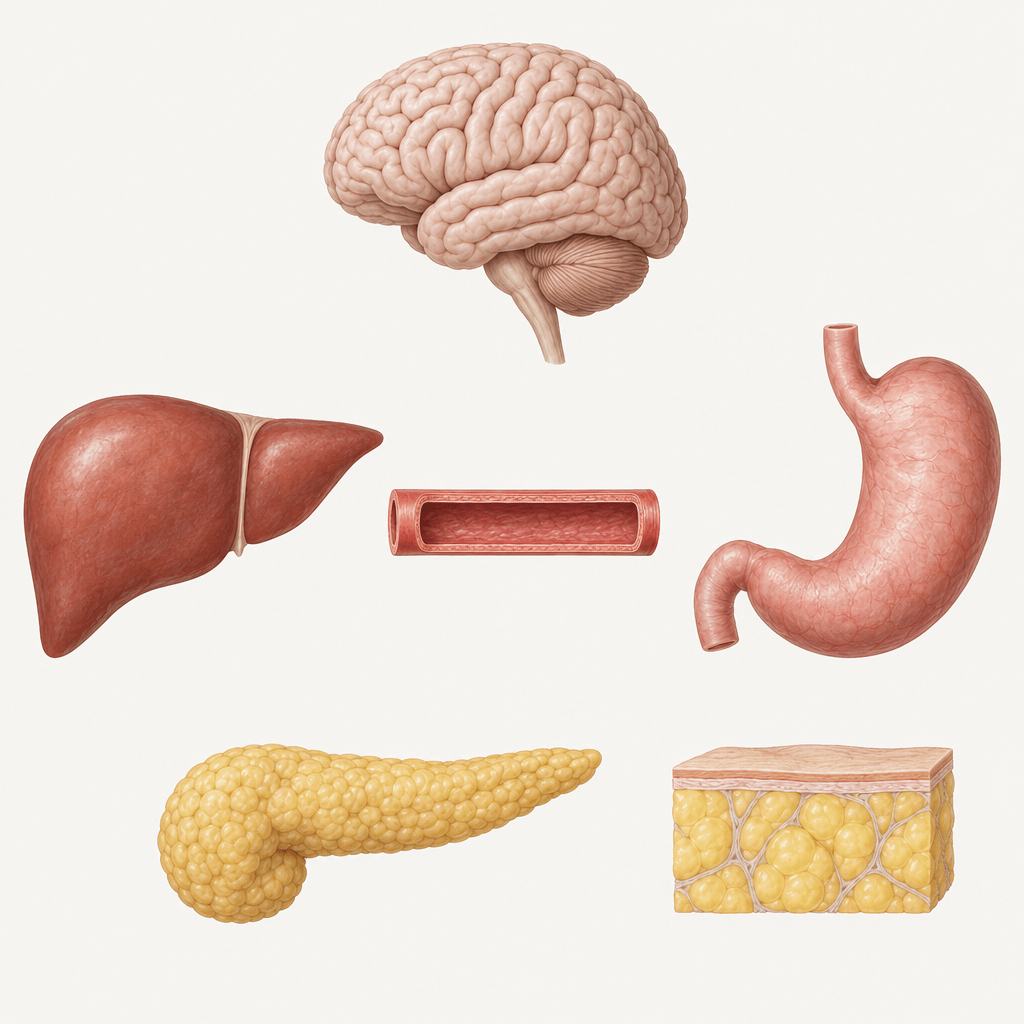
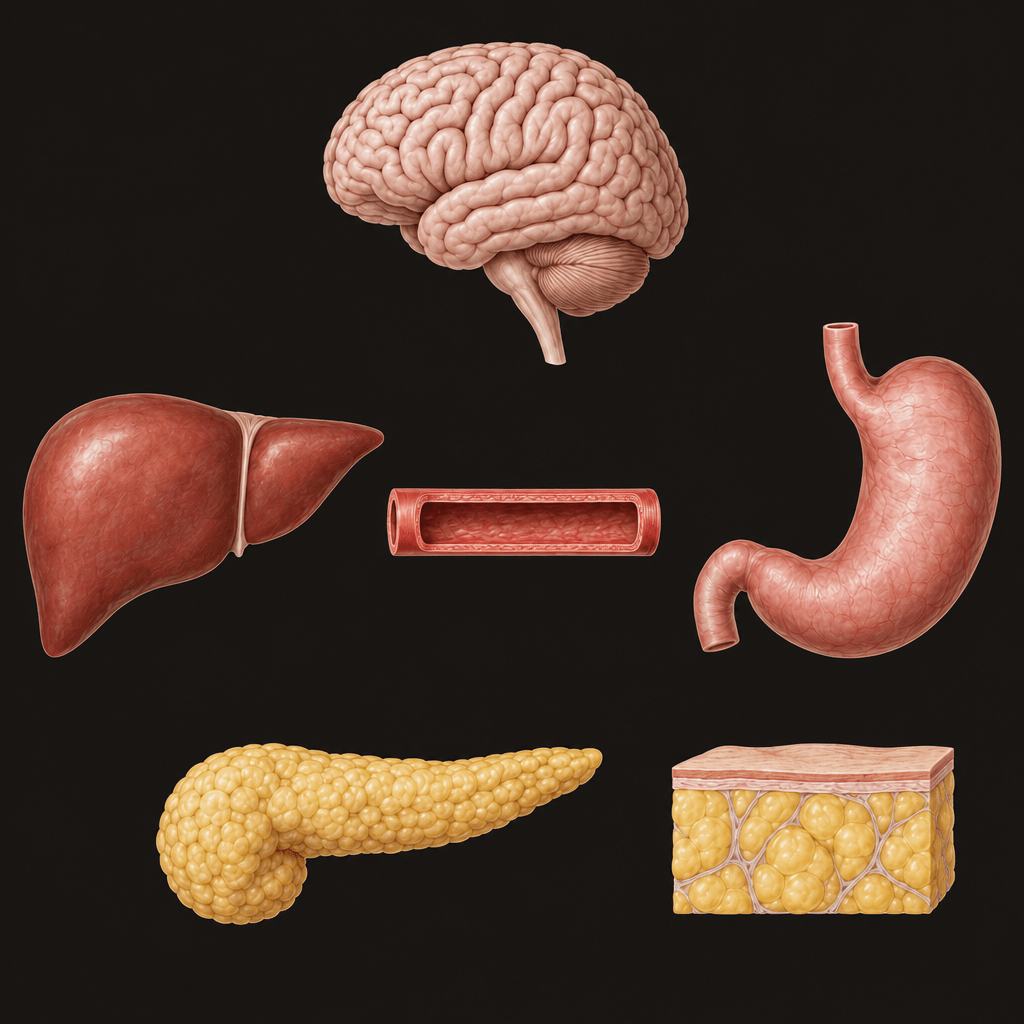
The figure shows first how retatrutide works in a single cell, then what happens in each organ, and how well each effect is shown.
How it works in a cell
- A receptor is a kind of switch on the outside of a cell. Retatrutide fits into the GLP-1 receptor, the GIP receptor and the glucagon receptor.
- Each receptor then switches on a messenger inside the cell, called cAMP.
- cAMP makes the cell respond. What it does depends on the cell, as the cards show.
Organ by organ: where it acts, and what happens there
-
Pancreas
 Close-up: Beta cell, which makes insulin
- GLP-1 receptor
- GIP receptor
In all published diabetes trials, blood sugar fell.29,30,31,15
Shown in people
-
Brain
Close-up: Nerve cell- GLP-1 receptor
- GIP receptor
Adults with type 2 diabetes on higher doses felt less hungry than those on placebo.23,15
Shown in people
Shown in animals: which brain cells take part, from studies of related medicines.26
-
Stomach
Close-up: Muscle and nerve cells in the stomach wall- GLP-1 receptor
Feeling sick and diarrhoea were the most common side effects.40,29,27
Shown in people
Shown in people: a short report by the maker says food leaves the stomach more slowly.105
-
Liver
Close-up: Liver cell- Glucagon receptor
In 98 adults with obesity and fatty liver, liver fat fell up to four-fifths, partly through weight loss.17,22
Shown in people
Shown in cells in the lab: it worked on liver cells through the glucagon receptor.34
-
Fat tissue
Close-up: Fat cell- GIP receptor
- Glucagon receptor
In adults with type 2 diabetes, higher doses cut body fat by about a quarter in 36 weeks.47,15,22
Shown in people
Shown in animals: mice burned more energy. Results in people are not published yet.11,33
-
Muscle
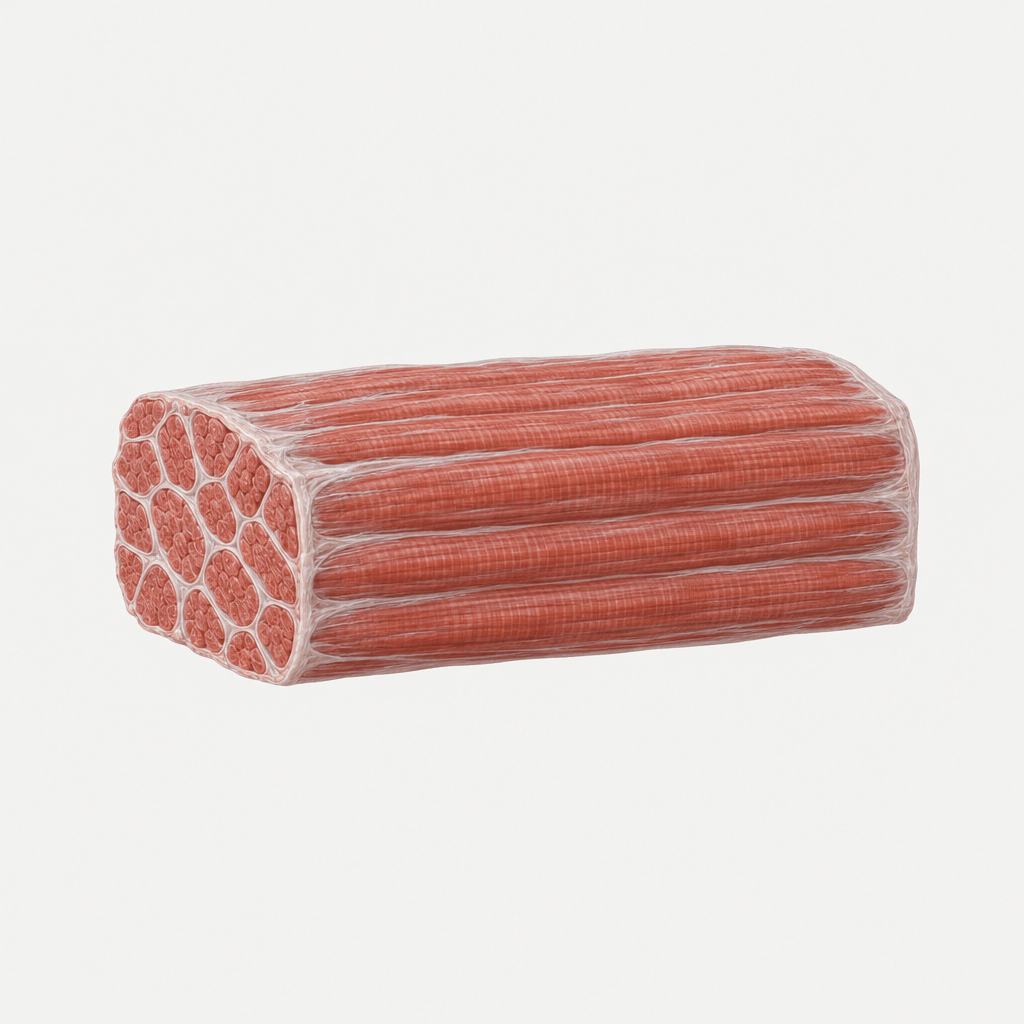
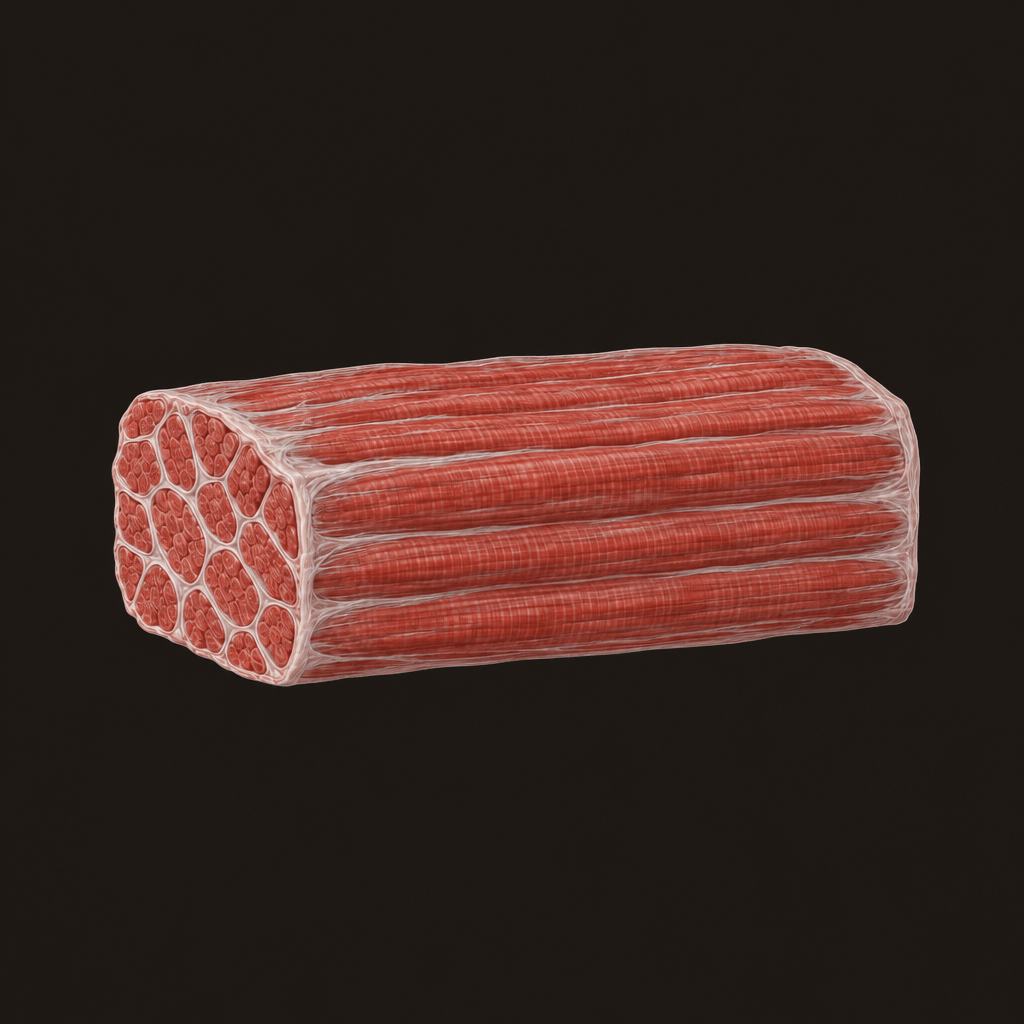 Close-up: Muscle fibre No receptor drawn: this card shows what changed with weight loss
Adults with type 2 diabetes lost lean mass too. The maker called the share typical of obesity drugs.47
Shown in people
Not known: how much of it was muscle, and what happens to strength.47,22
Lines: solid = shown in people long dashes = shown in animals or in cells in the lab short grey dashes = not known
Pictures: AI-generated illustration (gpt-image-2.5-sunburst-2026-09-08, 21 October 2026) CC BY 4.0 Image details AI-generated illustration (gpt-image-2.5-sunburst-2026-09-08, 22 October 2026) CC BY 4.0 Image details The pictures contain no text. The words and the cell drawings are added by this site.
In detail: The three receptors in one table: where they are found and what they do , about 2 minutes to read
| Receptor | Where it is mainly found | What switching it on does | How well this is shown for retatrutide |
|---|---|---|---|
| GLP-1 receptor | Pancreas, brain, gut, heart | More insulin when glucose is high, less hunger, slower stomach emptying | Less hunger and lower HbA1c shown in people |
| GIP receptor | Pancreas, brain, fat tissue | More insulin when glucose is high; effects on fat tissue and appetite | Fat and brain effects mainly in animals |
| Glucagon receptor | Liver above all | Liver releases sugar and burns fat and amino acids; more energy used | Extra energy use shown in mice; less liver fat in people, partly through weight loss |
| All three together | In an indirect comparison of separate trials, somewhat larger average weight loss than with single or dual agonists | Weight loss shown in people; the share due to glucagon is not known |
Sources 15, 22, 11, 23, 17, 24
In TRIUMPH-1, 2,339 adults with obesity were treated for 80 weeks: average weight fell by up to 25.0%, against 3.9% with placebo.25 How much of this needs the glucagon part is not known (see the open question below). Which brain areas take part is known mainly from animal studies of related medicines, such as semaglutide in rodents (Evidence level: Shown in animal studies).26
In the wall of the stomach and gut, GLP-1 receptors sit on muscle and nerve cells.27
In detail: Step by step: the chain of effects and its evidence , about 5 minutes to read
Each step is labelled with how well the link from the previous step is established.
-
One molecule, three receptors
In cell assays retatrutide switches on the receptors for GIP, GLP-1 and glucagon. Compared with the body's own hormones it is about 9 times as active at the GIP receptor, and about 0.4 and 0.3 times as active at the GLP-1 and glucagon receptors. Cryo-electron microscopy has shown it bound to all three. These numbers come from cells, not from human tissue.
-
Lasts about six days
Lysine 17 carries a fatty-acid tail of the kind that makes tirzepatide bind to albumin in the blood and stay for days. In people, retatrutide's half-life is about six days, which is why the trials inject it once a week.
-
cAMP rises inside target cells
All three receptors work through the Gs protein, which raises the messenger cAMP inside the cell. Structures show each retatrutide-bound receptor coupled to Gs, and in isolated heart tissue its effects depended on cAMP. Shown in cells and tissue only.
-
Less hunger, more insulin when glucose is high
The GLP-1 and GIP parts act as in tirzepatide. In a phase 2 trial in 275 adults with type 2 diabetes, higher doses lowered self-reported hunger and the urge to overeat compared with placebo. HbA1c fell in every published trial in people with diabetes.
-
Glucagon receptor: more energy used, liver fat burned
In obese mice, the glucagon part raised energy expenditure on top of eating less. In 11 healthy men a glucagon infusion raised energy use by 15%, but no study measuring retatrutide's effect on energy use in people has been published. In human liver cells it lowered a fat-regulating protein through the glucagon receptor.
-
Large weight loss, less liver fat, lower HbA1c
In an 80-week phase 3 trial in 2,339 adults with obesity, mean weight fell by up to 25.0% versus 3.9% with placebo. Liver fat fell by about four-fifths at higher doses in a phase 2 substudy. How much of this needs the glucagon part, rather than eating less, has not been shown.
-
A faster heartbeat
In the phase 2 obesity trial heart rate rose with dose, peaked at 24 weeks and then fell. In mouse heart tissue the rate effect ran through the glucagon receptor; in human heart tissue retatrutide made the muscle contract harder. Whether this affects heart rhythm in people is still being studied.
What each step rests on
Receptors and half-life. Cryo-electron microscopy shows retatrutide bound to each receptor, each coupled to the Gs protein that raises cAMP (Evidence level: Shown in cells or tissue in the laboratory).13 The activity ratios come from cell lines.17 The half-life of about six days was measured in 72 people with type 2 diabetes.16 So about half of a dose is still in the body six days after an injection, and the drug leaves the body slowly when injections stop. In four people who injected it twice, a week apart, it was still found in the blood 56 days after the first injection.28
Appetite and insulin. In an analysis of a phase 2 trial in 275 adults with type 2 diabetes, people on higher doses reported less hunger and less urge to overeat than on placebo (Evidence level: Shown in controlled human trials).23 HbA1c fell in every published diabetes trial.29,30,31
The glucagon part. Glucagon normally raises blood sugar. The idea is that the GLP-1 and GIP parts hold glucose down, while the glucagon part acts on the liver and on energy use.22 In obese mice, the glucagon part increased energy expenditure on top of eating less (Evidence level: Shown in animal studies).11 In 11 healthy men, a glucagon infusion raised energy use by 15% (Evidence level: Seen in humans in case reports or small uncontrolled studies), but that was glucagon itself, given briefly.32 A Lilly study that measured energy use in 85 people with obesity finished in August 2025; no results were public by 20 October 2026.33
The liver. In human liver cells, retatrutide lowered the release of ANGPTL3/8, a protein that slows the breakdown of blood fats, and a glucagon-receptor blocker stopped this (Evidence level: Shown in cells or tissue in the laboratory).34 In the liver-fat substudy, liver fat fell most in people who lost the most weight, and ketones, a sign of fat burning, rose by about 80% to 180% at the three higher dose levels, without ketoacidosis.17 Weight loss and a direct liver effect probably both contribute; the trials cannot separate them.
What the evidence actually shows
Does it work?
Weight fell by up to a quarter on average
17.6–25.0%
average weight lost in 80 weeks, depending on the dose, against 3.9% with placebo
Who took part TRIUMPH-1: 2,339 adults with obesity, or overweight with a related condition, without diabetes Sources Jastreboff et al. (2026); ClinicalTrials.gov (2026)25,1 Evidence Human trials
Weight also fell in people with type 2 diabetes
11.9–18.8%
average weight lost in 80 weeks, depending on the dose, against 5.1% with placebo
Who took part TRIUMPH-2: 1,152 adults with type 2 diabetes and a BMI of 27 or more Source Bellido et al. (2026)31 Evidence Human trials
Long-term blood sugar (HbA1c) fell more than with placebo
1.69–1.94
percentage points fall in HbA1c in 40 weeks, against 0.81 with placebo
Who took part TRANSCEND-T2D-1: 537 adults with type 2 diabetes on diet and exercise alone Source Bajaj et al. (2026)30 Evidence Human trials
Weight is a surrogate: it predicts, but is not the same as, fewer heart attacks, strokes or deaths. No outcome trial has reported.38
All 10 randomised-trial records on retatrutide in PubMed have at least one Lilly-affiliated author.39 That is normal before approval and does not make the results false. But the company chose the questions, the comparators and the timing of publication.
In detail: Every study in one table, and where the trials stand , about 9 minutes to read
22 studies: 14 in humans, 5 in animals, 2 in cells, 1 reviews or other.
| Study | Species | n | Design | Funding | Research group | What it found | What it did not show |
|---|---|---|---|---|---|---|---|
| Coskun et al. 2022 11 | Humans | 45 | Phase I trial (controlled, blinded) | Industry | Originating group | In healthy volunteers given single injections, safety looked similar to other incretin drugs, the half-life suited weekly dosing, and weight was still lower 43 days after one dose. | Single doses only, at one site in Singapore; reported within the developer's discovery paper, which we could read only as an abstract; 45 enrolled according to the trial registry. |
| Coskun et al. 2022 11 | Mixed | not reported | Animal experiment (controlled) | Industry | Originating group | In cell assays retatrutide was balanced at the glucagon and GLP-1 receptors and more active at the GIP receptor. In obese mice it lowered weight and glucose, and the glucagon part added extra energy expenditure to eating less. | Developer's own discovery paper; we could read only the abstract, so animal numbers and methods are not checked. |
| Urva et al. 2022 16 | Humans | 72 | Phase I trial (controlled, blinded) | Industry | Originating group | In 72 adults with type 2 diabetes treated for 12 weeks, glucose and HbA1c fell at the three highest dose levels, weight fell by up to about 9 kg more than with placebo, and the half-life was about 6 days. | Small, short, US only; 29 of 72 left the study early; mainly a safety and dose-finding study. |
| Jastreboff et al. 2023 40 | Humans | 338 | Phase II trial (controlled, blinded) | Industry | Originating group | In 338 adults with obesity or overweight, weight fell by up to 24.2% at the highest dose versus 2.1% with placebo after 48 weeks. Stomach and gut side effects rose with dose; heart rate rose with dose and peaked at 24 weeks. | Dose-finding trial with small groups per dose; 48 weeks; designed and funded by the manufacturer. |
| Rosenstock et al. 2023 29 | Humans | 281 | Phase II trial (controlled, blinded) | Industry | Originating group | In 281 adults with type 2 diabetes, HbA1c fell by up to 2.02 percentage points at 24 weeks versus 0.01 with placebo and 1.41 with dulaglutide; weight fell by up to 16.9% at 36 weeks. No severe low blood sugar. | US only, 36 weeks, small dose groups; dulaglutide was given at one dose only; manufacturer-funded. |
| Li et al. 2024 13 | Cells (lab) | not reported | Laboratory (cells) | Government | Independent group | Cryo-electron microscopy structures showed retatrutide bound to the GLP-1, GIP and glucagon receptors, each coupled to the Gs protein, and explained how one peptide fits three receptors. | Purified receptors outside a cell; shows binding shape, not effects in a body. A short research letter. |
| Pasqualotto et al. 2024 67 | Humans | 640 | Meta-analysis (controlled) | Not disclosed | Independent group | Pooling three early trials (640 people), retatrutide lowered weight and HbA1c versus placebo and raised the risk of stomach and gut side effects and allergic-type reactions (risk ratio 3.79). Heart rhythm problems were more frequent but not significantly (risk ratio 3.41, 95% CI 0.86–13.55). | Only three small trials, with few events; one pooled result is printed with the same numbers as another, so we do not use it; no funding statement. |
| Sanyal et al. 2024 17 | Humans | 98 | Phase II trial (controlled, blinded) | Industry | Originating group | In 98 adults with obesity and at least 10% liver fat, liver fat fell by up to 82% at 24 weeks; at the higher doses most people reached a normal liver-fat level. No sign of liver toxicity. | Substudy of a phase 2 trial; liver fat by MRI, not biopsy; many comparisons without correction; 48-week scans missing for 56% of participants; manufacturer-run. |
| Coskun et al. 2025 47 | Humans | 189 | Phase II trial (controlled, blinded) | Industry | Originating group | In a substudy of the phase 2 diabetes trial, body fat fell by about a quarter at the higher doses over 36 weeks. The company authors judged the share of lean tissue lost to be similar to other obesity drugs. | Only 103 of 189 enrolled had DXA scans at start and end; DXA lean mass includes water and organs, not only muscle; all authors were company staff. |
| Neumann et al. 2025 37 | Mice | not reported | Animal experiment (controlled) | Academic | Independent group | In isolated mouse right atria, retatrutide raised the beating rate. A glucagon-receptor blocker and a PKA inhibitor reduced this rise; GLP-1 and GIP receptor blockers and a beta-blocker did not. It did not raise the force of the left atrium. | Mouse tissue in a bath; mouse hearts carry glucagon receptors that human hearts may lack. Animal numbers not given in the abstract. |
| Branine N 2026 74 | Humans | 1 | Case report (uncontrolled) | — | Independent group | A man in his mid-30s with type 1 diabetes developed severe vomiting, high ketones and kidney injury after an online product sold as retatrutide, and later repeated low blood sugar in hospital. | One person; he also had a Shigella gut infection; the author says causation cannot be established. |
| Briand et al. 2026 35 | Mixed | not reported | Animal experiment (controlled) | Not disclosed | Independent group | In obese mice with fatty liver, retatrutide cut weight by 31% and lowered liver fat and insulin resistance; fat and lean mass both fell. In hamsters it lowered blood fats, and liver triglycerides fell by half. | Run by two contract-research companies to test their models, with no funding statement; energy expenditure did not change significantly in mice; liver tissue scores did not improve in hamsters. |
| Buzzi & Huber 2026 77 | Humans | 1 | Case report (uncontrolled) | — | Independent group | A woman in her mid-20s was admitted to hospital after five days of nausea and vomiting. She had received four weekly injections of a product said to contain retatrutide, given by a non-medical 'life coach'. Symptoms settled within a week. | One person; the product was not tested; the link is rated 'probable', not proven. |
| Carneiro et al. 2026 28 | Humans | 4 | Pharmacokinetic study (uncontrolled) | Government | Independent group | An anti-doping laboratory developed a test. Four people who injected a product they had obtained themselves, twice a week apart, still had retatrutide in their blood 56 days after the first injection. None was found in urine. | Four people using a product the laboratory checked only for identity, not amount or purity; not a pharmacology study. |
| Hitaka et al. 2026 49 | Mice | not reported | Animal experiment (controlled) | Not disclosed | Independent group | In mice lacking a key appetite receptor (MC4R), 21 days of retatrutide lowered weight by 24.1%, against 19.7% with semaglutide and 31.6% with tirzepatide. Fat and lean mass both fell. | A genetic mouse model, three weeks; mouse doses do not translate to people; funding not stated. |
| Neumann et al. 2026 69 | Cells (lab) | 29 | Laboratory (cells) (controlled) | Academic | Independent group | In strips of heart muscle from the right atrium of 29 adults having open-heart surgery, retatrutide made the muscle contract harder. Blockers of each of its three receptors weakened the effect. | Tissue in an organ bath, from people with severe coronary disease; says nothing directly about heart rhythm or outcomes in living people. One laboratory, no external funding. |
| Piatkowski et al. 2026 3 | — | not reported | Product testing (uncontrolled) | Mixed | Independent group | Three products sold in Australia as 10 mg retatrutide all contained retatrutide, but at 51%, 165% and 190% of the labelled amount. A trace of lead was found, well below the safety limit for injectable medicines. | Only three products, submitted anonymously to a testing service; sterility and bacterial toxins were not tested. |
| Sehgal et al. 2026 78 | Humans | 13,589 | Observational study (uncontrolled) | Academic | Independent group | 13,589 Reddit users described using non-approved retatrutide. Among the 7,823 whose posts named a symptom, the most common were increased appetite, fatigue, increased energy, nausea, food craving and insomnia; 4.8% mentioned a raised heart rate and about 2% painful or oversensitive skin. | Self-reported posts sorted by a language model; product, dose and other drugs unknown; cannot give rates or show cause. The authors call it hypothesis-generating. |
| Takahashi et al. 2026 71 | Mice | 77 | Animal experiment (controlled) | Mixed | Independent group | Obese mice given retatrutide for 3 weeks lost weight and fat, and atrial fibrillation became harder to trigger with electrical pacing. | Mice, short treatment, a side experiment in a study about fat around the heart; tests whether weight loss protects, not whether the drug itself disturbs rhythm. |
| Bajaj et al. 2026 30 | Humans | 537 | Phase III trial (controlled, blinded) | Industry | Originating group | In 537 adults with type 2 diabetes treated with diet and exercise alone, HbA1c fell by 1.69 to 1.94 percentage points versus 0.81 with placebo over 40 weeks, and weight by 11.5% to 15.3% versus 2.6%. No severe low blood sugar. | 40 weeks; early diabetes (on average 2.5 years since diagnosis); placebo rather than an active comparator; manufacturer-run. |
| Jastreboff et al. 2026 25 | Humans | 2,339 | Phase III trial (controlled, blinded) | Industry | Originating group | In 2,339 adults with obesity without diabetes, weight fell by 17.6% to 25.0% versus 3.9% with placebo over 80 weeks. Knee pain and breathing pauses during sleep improved in the subgroups with those conditions. | We could read only the abstract, which gives no rates of side effects other than that stomach and gut problems were most common; manufacturer-run. |
| Bellido et al. 2026 31 | Humans | 1,152 | Phase III trial (controlled, blinded) | Industry | Originating group | In 1,152 adults with obesity and type 2 diabetes, weight fell by 11.9% to 18.8% versus 5.1% with placebo over 80 weeks. Low blood pressure and abnormal skin sensations were more frequent with retatrutide. | We could read only the abstract; 80 weeks; stopping because of side effects or death reached 12% in one dose group; manufacturer-run. |
All human trials so far were designed, paid for and largely written by the developer. Below is what they tested and what they could not show.
Where the trials stand (20 October 2026)
| Trial | Who | People | Status |
|---|---|---|---|
| Phase 1 and 1b | Healthy adults; type 2 diabetes | 45; 72 | Published 2022 |
| Phase 2 (two trials) | Obesity; type 2 diabetes | 338; 281 | Published 2023 |
| TRANSCEND-T2D-1 | Type 2 diabetes, diet and exercise only | 537 | Published June 2026 |
| TRIUMPH-2 | Obesity with type 2 diabetes | 1,152 | Published September 2026 |
| TRIUMPH-1 | Obesity without diabetes | 2,339 | Published September 2026 |
| TRIUMPH-3 | Severe obesity with heart or vessel disease | 1,946 | Completed May 2026; not published |
| TRIUMPH-4 | Obesity with knee osteoarthritis | 445 | Completed November 2025; not published |
| TRANSCEND-T2D-2 | Type 2 diabetes, against semaglutide | 1,250 (planned) | Main phase finished August 2026; no results |
| TRIUMPH-5 | Obesity, against tirzepatide | 800 (planned) | Main phase due November 2026 |
| TRIUMPH-Outcomes | Heart and kidney events | 10,000 (planned) | Due 2029 |
In detail: What the trials found, and what is not yet published , about 2 minutes to read
Early trials
In a 12-week phase 1b trial in 72 adults with type 2 diabetes, glucose and HbA1c fell at the three highest dose levels, and weight fell by up to about 9 kg more than with placebo (Evidence level: Shown in controlled human trials); 29 people left early.16 In a 48-week phase 2 trial in 338 adults with obesity or overweight, mean weight fell by up to 24.2% at the highest dose, against 2.1% with placebo (Evidence level: Shown in controlled human trials).40 In a phase 2 trial in 281 adults with type 2 diabetes, HbA1c fell by up to 2.02 percentage points at 24 weeks, against 0.01 with placebo and 1.41 with dulaglutide, an authorised GLP-1 medicine (Evidence level: Shown in controlled human trials).29
Phase 3: what has been published
TRANSCEND-T2D-1 randomised 537 adults with type 2 diabetes on diet and exercise only, in the USA, Mexico and India. Over 40 weeks HbA1c fell by 1.69 to 1.94 percentage points across three dose levels, against 0.81 with placebo; weight fell by 11.5% to 15.3%, against 2.6% (Evidence level: Shown in controlled human trials).30
TRIUMPH-2 randomised 1,152 adults with obesity and type 2 diabetes in eight countries. Over 80 weeks weight fell by 11.9%, 16.8% and 18.8% at the low, middle and high dose levels, against 5.1% with placebo (Evidence level: Shown in controlled human trials).31
TRIUMPH-1 randomised 2,339 adults with obesity but no diabetes. Over 80 weeks mean weight fell by 17.6%, 23.7% and 25.0%, against 3.9% with placebo (Evidence level: Shown in controlled human trials). Knee pain improved more than with placebo in 574 people with knee osteoarthritis, and breathing pauses and shallow breaths during sleep fell by 22.8 to 34.3 an hour, against 9.6 with placebo, in 243 people with sleep apnoea.25 We could read only the abstracts of TRIUMPH-1 and TRIUMPH-2.
Announced by the company, not yet published
TRIUMPH-3 and TRIUMPH-4 have finished, and Lilly has announced positive results.41,42,44,9,45 Company announcements give headline (topline) numbers before independent experts have checked the full data. We will report their figures once the trials are published.
In detail: Substudies, and research outside the company , about 2 minutes to read
What the substudies add
- Liver fat. In 98 adults with at least 10% liver fat, liver fat fell by up to 82% at 24 weeks (Evidence level: Shown in controlled human trials), without signs of liver toxicity. The substudy used MRI rather than biopsy, made many comparisons without correction, and lacked 48-week scans for 56% of people.17 A large liver-outcome trial is recruiting, including in the Netherlands.46
- Body composition. In the diabetes trial, body fat fell by about a quarter at higher doses; only 103 of 189 people had scans at both start and week 36. The company authors judged the share of lean tissue lost to be similar to other obesity drugs.47
- Kidneys and blood fats. Post hoc analyses of the two phase 2 trials, written by or with Lilly scientists, found less protein (albumin) in the urine and lower triglycerides and LDL cholesterol.48,34
Independent research
No group outside Lilly has run a trial in people. About 16 small animal studies come from independent groups.39 In one, retatrutide lowered weight and liver fat in obese mice and hamsters (Evidence level: Shown in animal studies); in another, it lowered weight in mice lacking a key appetite receptor. In both, lean mass fell along with fat in mice.35,49 Independent studies of heart tissue, products and use outside trials are covered under the risks.
In detail: How it compares, and what the wait costs , about 1 minute to read
How it compares with other medicines
An independent network meta-analysis of 58 trials (24,214 adults without diabetes) estimated 22.1% more weight loss than placebo with retatrutide, and 19.3% with tirzepatide (Evidence level: Shown in controlled human trials), with low-certainty evidence that more people stop retatrutide.24 These are indirect comparisons; direct trials against semaglutide and tirzepatide have not reported.43,36
Where the evidence is genuinely promising, and what the wait costs
This is not a weak evidence base. Three placebo-controlled phase 3 trials in more than 4,000 people, published in peer-reviewed journals, show large and consistent falls in weight, lower HbA1c in people with diabetes, and benefits on knee pain and sleep apnoea.30,31,25 For people with severe obesity, that is a real prospect.
The wait has costs. Most people who see the headlines cannot get the drug legally outside a trial, and a grey market of unknown products has filled the gap.8,3 The wait also has reasons: questions about heart rate, skin sensations, lean mass and long-term outcomes are still open.38
What is genuinely unknown
What is still not known?
-
Longest published trials (TRIUMPH-1 and TRIUMPH-2)
80 weeks, about a year and a half
-
Longer use
Not known: not covered by the published trials
Sources Jastreboff et al. (2026); Bellido et al. (2026)25,31
In detail: All ten open questions, with their sources , about 1 minute to read
As of 20 October 2026, these are specifically unknown:
- Long-term safety. The longest published trials lasted 80 weeks.25,31
- Heart outcomes and rhythm. Whether the rise in heart rate leads to rhythm problems or heart events. The outcomes trial in 10,000 people is due in 2029.38
- What the glucagon part adds. Whether retatrutide raises energy use in people; a completed study is unpublished.33
- Muscle and strength. How much of the lean tissue lost is muscle, and whether strength or falls are affected.47,22
- Skin sensations. Why they happen and whether they always go away.45
- Two completed phase 3 trials, TRIUMPH-3 and TRIUMPH-4.41,42
- Interactions. Studies with the contraceptive pill and with warfarin, midazolam and caffeine finished in 2023 and 2024, without public results.50,51
- What happens after stopping. For semaglutide and tirzepatide, much of the lost weight returns; no stopping trial of retatrutide has been published.52,53
- Pregnancy and breastfeeding. We found no published human data.
- What grey-market products contain. Only three have been tested in a published study, none for sterility.3
Regulatory status
Is it legal?
| Netherlands and the EU | United States | |
|---|---|---|
| Approved as a medicine? | No No EU authorisation. The CBG database lists no retatrutide product.5,54 | No Not FDA-approved.7 |
| Has the maker asked for approval? | No It is not on the EMA list of applications under evaluation dated 5 October 2026.6 | No Not yet. Lilly plans to apply in the first quarter of 2027.9 |
| Legal to sell or supply? | No Dutch law forbids it without a marketing authorisation, with narrow exceptions.2 | No A new drug may not be sold across state lines without an approved application.55 |
| A legal way to get it outside a trial? | No None that we know of. No approved compassionate-use programme includes it.56 | Yes A doctor may ask for it through Lilly’s single-patient expanded-access programme, under strict conditions.57 |
| Allowed in sport? | No Not named, but covered by S0: prohibited at all times.58 | No The same worldwide rule applies.58 |
In detail: Status in each country and in sport , about 2 minutes to read
| Jurisdiction | Status | Note | Checked |
|---|---|---|---|
| European Union | Clinical trials only | Not authorised; not on the EMA list of applications under evaluation (5 October 2026). Phase 3 trials run at EU sites. 5,6,38 | |
| Netherlands | Clinical trials only | Not authorised; no approved compassionate-use programme. In practice legal only inside an approved trial. 54,2,56,38,46 | |
| Germany | Clinical trials only | Not authorised; a licence is required under AMG § 21. Phase 3 trial sites in Germany. 62,5,38,36 | |
| Belgium | Clinical trials only | Not authorised; a licence is required under the 1964 Medicines Act. Phase 3 trial sites in Belgium. 63,5,38,46 | |
| United Kingdom | Clinical trials only | Not authorised. MHRA: products sold outside trials are likely illegal; fake pens seized in 2025 and 2026. 20,21,8,64,38 | |
| United States | Clinical trials only | Not FDA-approved and may not be compounded. Single-patient expanded access on a doctor's request. Company plans an application in Q1 2027. 7,55,9,57 | |
| Sport (WADA) | Prohibited in sport · S0, at all times | Not named, but covered by S0 (non-approved substances): prohibited at all times. 58,59,60,61 |
All statuses were checked on 20 October 2026.
Sport (WADA)
Retatrutide is not named on the 2026 Prohibited List or on the 2027 List that takes effect on 1 January 2027.58,59 On the wording of section S0, it is still prohibited at all times. S0 covers any substance not addressed elsewhere on the List “with no current approval by any governmental regulatory health authority for human therapeutic use”, including “drugs under pre-clinical or clinical development”.58 WADA’s 2027 explanatory note and UK Anti-Doping both stress that a peptide does not have to be named to fall under S0.60,61 An approval anywhere would change this, so it needs rechecking. See sport and doping.
In detail: The European Union and the Netherlands , about 1 minute to read
European Union
No retatrutide product has an EU marketing authorisation. It is absent from the EMA’s medicines data and from the EMA list of applications under evaluation dated 5 October 2026.5,6 Its legal use in the EU is in clinical trials; the heart-and-kidney outcomes trial has sites in Belgium, Germany and the Netherlands.38
Netherlands
The CBG database lists no retatrutide product.54 The Geneesmiddelenwet forbids selling, supplying, stocking, offering or importing a medicine without a marketing authorisation (article 40). The exceptions include medicines for research, approved compassionate-use programmes, and an exemption that the Health and Youth Care Inspectorate (IGJ) can grant (article 40, third paragraph).2 The CBG’s list of approved programmes does not include retatrutide.56 We know of no inspectorate exemption for retatrutide, so in practice the only legal way to receive it is in a trial; Dutch hospitals and practices take part in two.38,46 See the law in the Netherlands.
In detail: Germany, Belgium, the United Kingdom and the United States , about 2 minutes to read
Germany
Finished medicines need a national or EU licence (AMG § 21); retatrutide has neither.62,5 German centres take part in phase 3 trials, including the comparison with tirzepatide.36
Belgium
A medicine may be placed on the market only after a national or EU authorisation (Medicines Act of 25 March 1964, art. 6 § 1).63 Retatrutide has neither.5 Belgian centres take part in the heart-and-kidney outcomes trial and in the liver-disease trial.38,46
United Kingdom
Selling or supplying an unauthorised medicine is prohibited (Human Medicines Regulations 2012, regulation 46).64 The MHRA states that retatrutide is not authorised in the UK, that products sold outside authorised trials are likely illegal, and that “there’s no guarantee that they even contain retatrutide”.20,8,21
United States
A new drug may not be sold across state lines without an approved application.55 The FDA states that retatrutide is not part of any approved drug, cannot be used in compounding, and has been sold illegally as “for research purposes”; JAMA reported 21 FDA warning letters to sellers since December 2024.7,4
Outside trials, a physician may request it through Lilly’s single-patient expanded-access programme. It is meant for an adult with a BMI of 35 or more whose obesity has not responded to approved weight-loss treatment, with at least two serious obesity-related complications and no access to a trial; availability depends on geography and supply.57 Lilly plans to submit a Biologics License Application in the first quarter of 2027; until the FDA approves it, retatrutide stays unapproved.9 Retatrutide was not among the seven peptides the FDA’s compounding advisory committee considered in July 2026.65
Risk profile
What are the risks?
Up to about 1 in 3 had diarrhoea
27–34%
had loose stools (diarrhoea), depending on the dose. With placebo it was 13%
Who took part TRIUMPH-2: 1,152 adults with type 2 diabetes and a BMI of 27 or more, 80 weeks Source Bellido et al. (2026)31 Evidence Human trials
Many felt sick
14–28%
had nausea, depending on the dose. With placebo it was 8%
Who took part The same trial (TRIUMPH-2) Source Bellido et al. (2026)31 Evidence Human trials
Some had burning, tingling or painful skin
4–7%
had odd skin feelings, depending on the dose. With placebo it was 1%
Who took part The same trial (TRIUMPH-2) Source Bellido et al. (2026)31 Evidence Human trials
Up to 12 in 100 stopped for good
4–12%
stopped because of side effects or death, depending on the dose. With placebo it was 5%
Who took part The same trial (TRIUMPH-2) Source Bellido et al. (2026)31 Evidence Human trials
Faster heartbeat. In the phase 2 obesity trial, heart rate rose with dose, peaked at 24 weeks and then fell. The abstracts we could read do not give the size of the rise.40
In detail: Everything the trials reported , about 2 minutes to read
What the trials reported
- Stomach and gut. Nausea, diarrhoea, vomiting and constipation were the most common side effects, mostly mild to moderate and related to dose.40,29 In TRIUMPH-2, diarrhoea affected 27% to 34% against 13% on placebo, and nausea 14% to 28% against 8%.31
- Stopping. In TRIUMPH-2, 4% to 12% stopped because of side effects or death, against 5% on placebo; in TRANSCEND-T2D-1, 2% to 5% against none.31,30
- Low blood pressure. In TRIUMPH-2, 1% to 6% against fewer than 1% on placebo.31
- Abnormal skin sensations. Burning, tingling or painful skin (dysaesthesia) affected 4% to 7% in TRIUMPH-2, against 1% on placebo.31 In the phase 2 obesity trial, 4 of 62 people on the highest dose had allodynia, against none in any other group.66 In the unpublished TRIUMPH-4, the company reported higher rates, up to about one in five at the highest dose; this figure has not been peer-reviewed. Most reported cases were mild to moderate, and the mechanism is unknown.45 The EU product information for semaglutide (Wegovy) and tirzepatide (Mounjaro) also lists dysaesthesia, so it may not be unique to retatrutide.19,15
- Allergic-type reactions. Pooling three early trials, they were more frequent than with placebo (risk ratio 3.79, 95% CI 1.20–11.96).67
- Pancreas and gallbladder. A few serious cases of acute pancreatitis (three) and gallbladder inflammation (two) occurred across the two phase 2 trials.66,68 Both are known, uncommon risks of GLP-1-based drugs.15
- Deaths. TRIUMPH-2 recorded six deaths on retatrutide and one on placebo; the investigators judged all unrelated to the drug.31
In detail: Why a heart-rhythm effect is theorised , about 2 minutes to read
- Retatrutide raises heart rate in people, in a dose-related way.40
- In mice, the glucagon receptor speeds the pacemaker. In isolated mouse atria, retatrutide raised the beating rate through the glucagon receptor and cAMP; a glucagon-receptor blocker reduced this rise (Evidence level: Shown in animal studies).37
- In human heart muscle, it raises force. In atrial tissue from 29 adults with coronary disease, retatrutide made the muscle contract harder, and blockers of each of its three receptors weakened this effect (Evidence level: Shown in cells or tissue in the laboratory).69 Whether this extra drive makes the heart more prone to rhythm problems in some people is the open question (Evidence level: Proposed, not demonstrated in any experiment).
- Early numbers point the same way, without proof. Pooling three early trials, rhythm problems were about three times as frequent as with placebo, but not statistically significantly (risk ratio 3.41, 95% CI 0.86–13.55) (Evidence level: Shown in controlled human trials).67 One person in the phase 2 diabetes trial had a serious episode of atrial fibrillation.68
There are honest counter-arguments. A Spanish laboratory study found no glucagon receptors and no glucagon effect on rate or force in human heart tissue, unlike in rats.70 That conflicts with the German human-tissue study above, so the two laboratories disagree about glucagon receptors in the human heart.69 Weight loss itself may protect: in obese mice, three weeks of retatrutide made atrial fibrillation harder to trigger (Evidence level: Shown in animal studies).71 And the rise in heart rate faded after 24 weeks.40 The outcomes trial is designed to settle this.38
In detail: Muscle, low blood sugar, the thyroid and pregnancy , about 2 minutes to read
Muscle and lean mass
Across GLP-1-based medicines, lean mass has made up from about 15% to 40–60% of the weight lost (Evidence level: Seen in humans in case reports or small uncontrolled studies); lean mass includes organs and water as well as muscle, and MRI studies of these older drugs suggest the muscle change largely fits the weight lost. The source is a narrative review.72 For retatrutide, the only human data are a company substudy with complete scans in 103 people.47 Because glucagon drives the breakdown of amino acids, a glucagon-receptor drug could take more lean tissue than other drugs (Evidence level: Proposed, not demonstrated in any experiment); an independent review lists this as a possible cost.22 In mice, lean mass fell along with fat.35,49 Effects on strength and falls are unknown.
Low blood sugar, and type 1 diabetes
No severe low blood sugar was reported in the phase 2 diabetes trial or in TRANSCEND-T2D-1.29,30 With insulin or sulfonylureas, which lower glucose whether it is high or not, other GLP-1-based drugs can push blood sugar too low.15 TRIUMPH-2 allowed sulfonylureas, but its abstract gives no figures for low blood sugar.31 None of the 34 registered retatrutide studies is about type 1 diabetes.73 In one case report, a man with type 1 diabetes developed severe vomiting, high ketones and kidney injury after an online product, and later repeated low blood sugar; he also had a gut infection, so the cause is uncertain.74 In type 1 diabetes, vomiting and missed insulin let ketones build up.74 A drug that also raises ketones could make this worse (Evidence level: Proposed, not demonstrated in any experiment).17
Thyroid and pregnancy
GLP-1 receptor agonists stimulate thyroid C-cells in rodents (Evidence level: Shown in animal studies); human and monkey C-cells carry few GLP-1 receptors, so the relevance to people is uncertain.75 The US labels of authorised drugs of this class warn about medullary thyroid cancer.76 TRIUMPH-1 excluded people with a personal or family history of medullary thyroid carcinoma or MEN-2.1 We found no published carcinogenicity or reproduction studies of retatrutide.
In detail: What happens outside trials, and in sport , about 2 minutes to read
What happens outside trials
- Wrong amounts. Three products sold as 10 mg in Australia held 51%, 165% and 190% of the label; a trace of lead was well below safety limits, and none was tested for sterility.3
- A different drug. In Australian testing, one product sold as retatrutide held “a high dose of semaglutide and no retatrutide”, JAMA reported.4
- Liver injury. The Victoria Department of Health in Australia received reports of six cases of liver toxicity linked to products labelled retatrutide.4 No sign of liver toxicity was seen in the phase 2 obesity trial,17 so a contaminant may be to blame (Evidence level: Proposed, not demonstrated in any experiment); this has not been shown.
- Hospital care. A young woman was admitted to hospital with days of vomiting after injections given by a non-medical “life coach”.77
- Self-reports. 13,589 social media users wrote about using it. Among the 7,823 who named a symptom, common ones were increased appetite, fatigue, increased energy, nausea and insomnia; 4.8% mentioned a raised heart rate. These are posts, not measurements.78
Sport
Retatrutide is prohibited at all times under S0.58 An anti-doping laboratory still detected it in the blood of four users 56 days after the first of two injections (Evidence level: Seen in humans in case reports or small uncontrolled studies).28
If someone is going to do this anyway
This section exists to reduce harm. It gives no doses, schedules or sourcing advice, and it is not a recommendation to use this compound.
How can someone lower the risk?
The legal routes
In the EU, retatrutide is in practice legal only inside a trial. You can look for recruiting trials in the EU and US trial registers and ask your doctor whether you might qualify; trials have strict entry rules.38,46
Two related medicines are authorised: semaglutide and tirzepatide. They come with a label, a known dose and medical follow-up. A doctor can tell you whether one of them suits you. See talking to your doctor and legal routes.
Retatrutide itself is approved nowhere, and outside trials selling it is illegal, so no pharmacy can legally sell it either. The checks below apply to any product with this name, whoever supplied it. That includes pens: the UK regulator has seized thousands of fake retatrutide and tirzepatide pens.5,2,21,8
If your product did not come from a pharmacy: check before you use it
These checks can show that something is wrong. None of them can show that a product is good or free of germs.79,80,81
Tick each box when you have checked it.
-
A lab report proves little if:
- its batch number is not the one on your vial;
- it does not name the lab, or has no date or signature;
- it shows only purity (HPLC), with no test of what it is, such as mass spectrometry;
- it has no test for germs (sterility) or for toxins from germs (endotoxin).
Even a full report covers only one sample. A report from the seller comes from someone who gains if it looks good. It cannot show that your vial is clean.87,88,89,90,91
When to stop and get help
Sources 66, 40, 4, 67, 74, 102, 103, 104, 101
Burning, tingling or painful skin is not an emergency, but it is a reason to stop and see a doctor. In the trials most cases were mild to moderate; the cause is not known.45
Stop-now warning signs
Call your local emergency number now
- Confusion or slurred speech, very fast breathing, or pale, blue or blotchy skin, often with fever or shivering These can be signs of sepsis: the body's reaction to an infection has started to damage its own organs.
- Fainting and not waking up within a minute, or fainting with chest pain, a racing heart or a fit This can be a dangerous heart rhythm or a severe allergic reaction.
- Pain at the injection spot that is much worse than it looks, or dark, purple or grey patches or blisters there This can be a rare, fast-spreading infection of the deep layers under the skin (necrotising fasciitis).
- Swelling of the lips, tongue or throat, trouble breathing or swallowing, wheezing, a hoarse voice, or feeling faint, soon after an injection This can be a severe allergic reaction (anaphylaxis), which is life-threatening and gets worse very quickly.
- Pain, pressure or tightness in the chest, or pain that spreads to the arm, neck, jaw or back This can be a heart attack, which needs treatment in hospital straight away.
- Sudden, severe shortness of breath: gasping, or not able to finish a sentence This can be a serious problem with the heart, the lungs or an allergic reaction.
- A racing, pounding or irregular heartbeat that does not settle, or that comes with chest pain, breathlessness or fainting This can be a dangerous heart rhythm.
- A sudden, severe headache with blurred vision, chest pain, confusion or vomiting Blood pressure may be dangerously high, which can damage the brain, heart, kidneys and eyes.
- An erection that lasts more than 3 hours, or a painful erection that will not go down Blood trapped in the penis can damage it for good if it is not treated quickly.
- Shaking, sweating or sudden hunger that turns into confusion or drowsiness Very low blood sugar can cause a fit or loss of consciousness; take something sugary if you can still swallow safely.
- Severe, constant pain in the upper belly that spreads to the back, often with vomiting This can be an inflamed pancreas (pancreatitis), a known risk of GLP-1 medicines such as semaglutide and tirzepatide.
Get medical help today
- Fever, shivering or feeling very ill in the days after an injection Germs from the needle, the skin or the product may have reached your blood. If you also have a fast heartbeat or fast breathing, call your local emergency number.
- Redness, heat, swelling or pain around the injection spot that keeps growing or getting worse This can be a skin infection (cellulitis), which needs antibiotics before it spreads.
- Red lines that run from the injection spot towards the armpit or groin The infection may be spreading along the lymph vessels, and from there into the blood. If you also have a fever with a fast heartbeat or fast breathing, call your local emergency number.
- A painful, warm lump that fills with pus This is probably an abscess: it often needs draining by a doctor, so do not squeeze it.
- You were pricked by a needle that someone else had used Blood on a used needle can pass on HIV and hepatitis B or C, and preventive treatment works best within hours.
- Vomiting so often that you cannot keep fluids down, or passing very little urine Losing too much fluid can damage the kidneys.
- Yellow skin, or yellow whites of the eyes This can be a sign of a liver problem, gallstones or an inflamed pancreas.
- Dark, red or cola-coloured urine together with muscle pain, tenderness or weakness Damaged muscle can release a protein that harms the kidneys (rhabdomyolysis).
Stop and contact a doctor
- You fainted, but woke up quickly and now feel well Fainting is often harmless, but a doctor should check the cause.
- A new mole, or a mole that changes size, shape or colour, itches or bleeds A changing mole can be skin cancer, and tanning peptides such as melanotan II have been linked to new and changing moles in case reports.
- A lump at an injection spot that does not go away, or keeps growing A doctor should check whether it is an abscess, a reaction to the product or something else.
- An itchy, raised rash, or puffy eyes or lips, while breathing stays normal Your body may be reacting to the product, and using it again can bring the reaction back.
- Palpitations that keep coming back, even if they pass and you then feel well A doctor can check whether your heart rhythm is normal.
In detail: What you cannot know about a product sold as retatrutide , about 1 minute to read
You cannot see what is in a vial or pen. Tested products held from half to nearly twice the amount on the label, and one held semaglutide instead.3,4 No published study has tested them for sterility. See product risk. If you inject anything, follow sterile technique: a dirty product or needle can cause an infection.
About half of an injected dose is still in the body six days later.16 So if you get a side effect, stopping will not end it the next day.
In detail: Checks that make sense, and why , about 1 minute to read
A doctor can help you choose which of these fit you. Tell them what you use.
- Pulse and heart rhythm at rest, because retatrutide raises heart rate and a rhythm effect has not been ruled out. A doctor can arrange an ECG (heart tracing) if you feel palpitations.
- Liver tests, because of the Australian reports of liver injury with products of unknown content.
- Blood glucose, if you use insulin or a sulfonylurea (such as gliclazide), because the combination could push sugar too low.
- Ketones, if you have type 1 diabetes, especially when you are vomiting or cannot eat.
- Kidney function after days of vomiting or diarrhoea, because losing fluid can harm the kidneys.
In detail: Interactions, and who should not use it at all , about 2 minutes to read
Plausible interactions (none published)
- Insulin and sulfonylureas: higher risk of low blood sugar, as with other GLP-1-based drugs.15
- The contraceptive pill: a short company report says retatrutide delays stomach emptying (we could read only its title and index terms).105 Slower stomach emptying could change how well tablets are absorbed (Evidence level: Proposed, not demonstrated in any experiment). A pill study finished in 2024 without public results.50 For tirzepatide, UK and US regulators advise a non-pill method or condoms for four weeks after starting and after each dose increase.106,76
- Warfarin and other medicines where small changes matter: an interaction study finished in 2023 without published results.51
- Other GLP-1 drugs, or “stacks” with other peptides: they add the same side effects, and make any reaction harder to trace.
Who should not use it at all
- Anyone pregnant, breastfeeding or trying to conceive: there are no human data, and the authorised drugs of this class harmed unborn animals in studies.19,15
- Anyone who has had pancreatitis, or with a personal or family history of medullary thyroid carcinoma or MEN-2: TRIUMPH-1 excluded these people.1
- Anyone with a heart rhythm problem or heart failure, because of the rise in heart rate and the open rhythm question.40,67
- People with type 1 diabetes, because of the ketone risk described above.
- Children and teenagers: all published trials were in adults.25,30
- Athletes subject to anti-doping rules: it is prohibited at all times and detectable for weeks.58,28
Sources
Every claim on this page links to one of these sources. Scholarly sources link to their DOI; regulatory sources to the regulator's own page.
In detail: All 107 sources, numbered as in the text , about 18 minutes to read
- (2026). NCT05929066 — A Master Protocol to Investigate the Efficacy and Safety of LY3437943 Once Weekly in Participants Without Type 2 Diabetes Who Have Obesity or Overweight (TRIUMPH-1). Trial registration clinicaltrials.gov (opens an external site) — accessed 20 October 2026 ↩
- (2007). Geneesmiddelenwet (BWBR0021505). wetten.overheid.nl. Law wetten.overheid.nl (opens an external site) — accessed 20 October 2026 ↩
- (2026). Composition and Labelling Accuracy of Products Sold as Retatrutide in Australia. Drug and Alcohol Review 45:e70231. Research article doi:10.1111/dar.70231 (opens an external site) ↩
- (2026). Unapproved GLP-1 Drugs Retatrutide and Zenagamtide Sold Online Are No Bargain. JAMA. Research article doi:10.1001/jama.2026.20514 (opens an external site) ↩
- (2026). Medicines data download (JSON report of all EPARs: authorised, refused, withdrawn and suspended medicines). Dataset ema.europa.eu (opens an external site) — accessed 20 October 2026 ↩
- (2026). Applications for new human medicines under evaluation by the CHMP — October 2026 (EMA/222468/2026). Regulator ema.europa.eu (opens an external site) — accessed 20 October 2026 ↩
- (2026). FDA's concerns with unapproved GLP-1 drugs used for weight loss. Regulator fda.gov (opens an external site) — accessed 20 October 2026 ↩
- (2026). Counterfeit weight loss pens worth £2 million seized by MHRA and West Midlands Police. GOV.UK. Regulator gov.uk (opens an external site) — accessed 22 October 2026 ↩
- (2026). Lilly reports second-quarter 2026 financial results (Form 8-K, Exhibit 99.1, 5 August 2026). U.S. Securities and Exchange Commission (EDGAR). Report sec.gov (opens an external site) — accessed 20 October 2026 ↩
- (2026). ChEMBL compound CHEMBL5095485 (retatrutide): mechanisms of action. ChEMBL. Dataset ebi.ac.uk (opens an external site) — accessed 20 October 2026 ↩
- (2022). LY3437943, a novel triple glucagon, GIP, and GLP-1 receptor agonist for glycemic control and weight loss: From discovery to clinical proof of concept. Cell Metabolism 34:1234-1247.e9. Research article doi:10.1016/j.cmet.2022.07.013 (opens an external site) ↩
- (2026). Global Substance Registration System: retatrutide (UNII NOP2Y096GV). GSRS. Dataset gsrs.ncats.nih.gov (opens an external site) — accessed 20 October 2026 ↩
- (2024). Structural insights into the triple agonism at GLP-1R, GIPR and GCGR manifested by retatrutide. Cell Discovery 10:77. Research article doi:10.1038/s41421-024-00700-0 (opens an external site) ↩
- (2026). PubChem Compound Summary for CID 171390338 (compound title 'Triple G'; deposited substances named retatrutide map here). PubChem. Dataset pubchem.ncbi.nlm.nih.gov (opens an external site) — accessed 20 October 2026 ↩
- (2026). Mounjaro (tirzepatide): EPAR — overview and product information. Official product information ema.europa.eu (opens an external site) — accessed 20 October 2026 ↩
- (2022). LY3437943, a novel triple GIP, GLP-1, and glucagon receptor agonist in people with type 2 diabetes: a phase 1b, multicentre, double-blind, placebo-controlled, randomised, multiple-ascending dose trial. The Lancet 400:1869-1881. Clinical trial doi:10.1016/S0140-6736(22)02033-5 (opens an external site) ↩
- (2024). Triple hormone receptor agonist retatrutide for metabolic dysfunction-associated steatotic liver disease: a randomized phase 2a trial. Nature Medicine 30:2037-2048. Clinical trial doi:10.1038/s41591-024-03018-2 (opens an external site) ↩
- (2026). NCT03841630 — A Single-Ascending Dose Study to Evaluate the Safety, Tolerability, and Pharmacokinetics of LY3437943 in Healthy Subjects. Trial registration clinicaltrials.gov (opens an external site) — accessed 20 October 2026 ↩
- (2026). Wegovy (semaglutide): EPAR — overview and product information. Official product information ema.europa.eu (opens an external site) — accessed 20 October 2026 ↩
- (2025). MHRA smashes major illicit weight loss medicine production facility in record seizure. GOV.UK. Regulator gov.uk (opens an external site) — accessed 20 October 2026 ↩
- (2026). No summer shortcut for safe weight loss. GOV.UK. Regulator gov.uk (opens an external site) — accessed 22 October 2026 ↩
- (2026). IUPHAR review: From foe to friend: Repurposing glucagon to treat obesity and type 2 diabetes. Pharmacological Research 223:108077. Review doi:10.1016/j.phrs.2025.108077 (opens an external site) ↩
- (2025). Appetite, eating attitudes, and eating behaviours during treatment with retatrutide in adults with type 2 diabetes: Results of a phase 2 study. Diabetes, Obesity and Metabolism 27:6988-6998. Clinical trial doi:10.1111/dom.70097 (opens an external site) ↩
- (2026). Comparative efficacy and safety of glucagon-like peptide 1 based drugs for weight loss in adults with overweight or obesity without diabetes: network meta-analysis of randomised controlled trials. BMJ Medicine 5:e003026. Meta-analysis doi:10.1136/bmjmed-2026-003026 (opens an external site) ↩
- (2026). Retatrutide, a Triple Hormone Receptor Agonist, for Treatment of Obesity. New England Journal of Medicine. Clinical trial doi:10.1056/NEJMoa2604169 (opens an external site) ↩
- (2020). Semaglutide lowers body weight in rodents via distributed neural pathways. JCI Insight 5:e133429. Research article doi:10.1172/jci.insight.133429 (opens an external site) ↩
- (2019). Glucagon-like peptide 1 (GLP-1). Molecular Metabolism 30:72-130. Review doi:10.1016/j.molmet.2019.09.010 (opens an external site) ↩
- (2026). Detection and Excretion Profile of Retatrutide in Human Plasma and Urine by LC-HRMS: Implications for Antidoping Analysis. Rapid Communications in Mass Spectrometry 40:e70179. Research article doi:10.1002/rcm.70179 (opens an external site) ↩
- (2023). Retatrutide, a GIP, GLP-1 and glucagon receptor agonist, for people with type 2 diabetes: a randomised, double-blind, placebo and active-controlled, parallel-group, phase 2 trial conducted in the USA. The Lancet 402:529-544. Clinical trial doi:10.1016/S0140-6736(23)01053-X (opens an external site) ↩
- (2026). Efficacy and safety of retatrutide, a GIP, GLP-1, and glucagon receptor agonist, in people with type 2 diabetes and inadequate glycaemic control with diet and exercise (TRANSCEND-T2D-1): a double-blind, randomised, phase 3 trial. The Lancet 407:2402-2413. Clinical trial doi:10.1016/S0140-6736(26)00967-0 (opens an external site) ↩
- (2026). Retatrutide in adults with obesity and type 2 diabetes (TRIUMPH-2): a double-blind, parallel-group, randomised, placebo-controlled, phase 3 trial. The Lancet 408:1455-1472. Clinical trial doi:10.1016/S0140-6736(26)01861-1 (opens an external site) ↩
- (2016). Glucagon increases energy expenditure independently of brown adipose tissue activation in humans. Diabetes, Obesity and Metabolism 18:72-81. Research article doi:10.1111/dom.12585 (opens an external site) ↩
- (2026). NCT06313528 — A Randomized, Double-Blind, Phase 1 Study to Investigate the Effect of LY3437943 Versus Placebo on Calorie Intake and Energy Expenditure in Participants With Obesity Under Calorie Restriction. Trial registration clinicaltrials.gov (opens an external site) — accessed 20 October 2026 ↩
- (2025). Decreases in circulating ANGPTL3/8 concentrations following retatrutide treatment parallel reductions in serum lipids. Diabetes, Obesity and Metabolism 27:5985-5995. Research article doi:10.1111/dom.16661 (opens an external site) ↩
- (2026). Retatrutide Shows Multiple Metabolic Benefits in Diet-Induced Obese MASH Mouse and Hamster Models. Obesity (Silver Spring) 34 Suppl 1:43-53. Research article doi:10.1002/oby.70155 (opens an external site) ↩
- (2026). NCT06662383 — A Phase 3, Randomized, Double-Blind Study to Evaluate the Efficacy and Safety of Retatrutide Compared to Tirzepatide in Adults Who Have Obesity (TRIUMPH-5). Trial registration clinicaltrials.gov (opens an external site) — accessed 20 October 2026 ↩
- (2025). Contractile effects of retatrutide in isolated mouse atrial preparations. Naunyn-Schmiedeberg's Archives of Pharmacology 398:17147-17160. Research article doi:10.1007/s00210-025-04335-0 (opens an external site) ↩
- (2026). NCT06383390 — A Phase 3, Randomized, Double-Blind, Placebo-Controlled, Event-Driven Study to Investigate the Effect of Retatrutide on the Incidence of Major Adverse Cardiovascular Events and Major Adverse Kidney Events in Participants With Body Mass Index ≥27 kg/m2 and Atherosclerotic Cardiovascular Disease and/or Chronic Kidney Disease (TRIUMPH-Outcomes). Trial registration clinicaltrials.gov (opens an external site) — accessed 20 October 2026 ↩
- (2026). PubMed searches, 20 October 2026: (retatrutide[tiab] OR LY3437943[tiab]) — 207 records; AND randomized controlled trial[pt] — 10 records, 0 after NOT lilly[ad]. PubMed. Dataset pubmed.ncbi.nlm.nih.gov (opens an external site) — accessed 20 October 2026 ↩
- (2023). Triple-Hormone-Receptor Agonist Retatrutide for Obesity - A Phase 2 Trial. New England Journal of Medicine 389:514-526. Clinical trial doi:10.1056/NEJMoa2301972 (opens an external site) ↩
- (2026). NCT05882045 — A Randomized, Double-Blind, Phase 3 Study to Investigate the Efficacy and Safety of LY3437943 Once Weekly Compared to Placebo in Participants With Severe Obesity and Established Cardiovascular Disease (TRIUMPH-3). Trial registration clinicaltrials.gov (opens an external site) — accessed 20 October 2026 ↩
- (2026). NCT05931367 — A Phase 3 Study to Investigate the Efficacy and Safety of LY3437943 Once Weekly in Participants Who Have Obesity or Overweight and Osteoarthritis of the Knee: A Randomized, Double-Blind, Placebo-Controlled Trial (TRIUMPH-4). Trial registration clinicaltrials.gov (opens an external site) — accessed 20 October 2026 ↩
- (2026). NCT06260722 — A Phase 3, Randomized, Multicenter, Open-label Study to Investigate the Efficacy and Safety of Retatrutide Once Weekly Compared With Semaglutide Once Weekly in Adult Participants With Type 2 Diabetes and Inadequate Glycemic Control With Metformin With or Without SGLT2 Inhibitor (TRANSCEND-T2D-2). Trial registration clinicaltrials.gov (opens an external site) — accessed 20 October 2026 ↩
- (2026). Lilly reports fourth-quarter 2025 financial results (Form 8-K, Exhibit 99.1, 4 February 2026). U.S. Securities and Exchange Commission (EDGAR). Report sec.gov (opens an external site) — accessed 20 October 2026 ↩
- (2026). Potential Role of the Triple Receptor Agonist Retatrutide in Antipsychotic-Associated Metabolic Dysfunction Among Clozapine- and Olanzapine-Treated Schizophrenia Spectrum Disorders: A Narrative Review and Theoretical Framework. Biomedicines 14:1957. Review doi:10.3390/biomedicines14091957 (opens an external site) ↩
- (2026). NCT07165028 — A Master Protocol for a Randomized, Controlled, Clinical Trial of Multiple Pharmacologic Agents in Adult Participants With Metabolic Dysfunction-Associated Steatotic Liver Disease Who Are at Increased Risk of Developing Major Adverse Liver Outcomes. Trial registration clinicaltrials.gov (opens an external site) — accessed 20 October 2026 ↩
- (2025). Effects of retatrutide on body composition in people with type 2 diabetes: a substudy of a phase 2, double-blind, parallel-group, placebo-controlled, randomised trial. The Lancet Diabetes & Endocrinology 13:674-684. Clinical trial doi:10.1016/S2213-8587(25)00092-0 (opens an external site) ↩
- (2025). The Effect of Retatrutide on Kidney Parameters in Participants With Type 2 Diabetes Mellitus and/or Obesity. Kidney International Reports 10:1980-1992. Research article doi:10.1016/j.ekir.2025.03.049 (opens an external site) ↩
- (2026). Efficacy of GLP-1 analog peptides, semaglutide, tirzepatide, and retatrutide on MC4R deficient obesity and their comparison. International Journal of Obesity 50:928-937. Research article doi:10.1038/s41366-026-02025-2 (opens an external site) ↩
- (2026). NCT06039826 — A Phase 1 Study to Investigate the Effect of LY3437943 on the Pharmacokinetics of the Combined Oral Contraceptive Ethinyl Estradiol and Drospirenone in Female Participants. Trial registration clinicaltrials.gov (opens an external site) — accessed 20 October 2026 ↩
- (2026). NCT05445232 — A Multiple-Dose Drug-Drug Interaction Study to Determine the Effect of LY3437943 on Drug Metabolizing Enzymes. Trial registration clinicaltrials.gov (opens an external site) — accessed 20 October 2026 ↩
- (2022). Weight regain and cardiometabolic effects after withdrawal of semaglutide: the STEP 1 trial extension. Diabetes, Obesity and Metabolism 24:1553-1564. Clinical trial doi:10.1111/dom.14725 (opens an external site) ↩
- (2024). Continued treatment with tirzepatide for maintenance of weight reduction in adults with obesity: the SURMOUNT-4 randomized clinical trial. JAMA 331:38-48. Clinical trial doi:10.1001/jama.2023.24945 (opens an external site) ↩
- (2026). Geneesmiddeleninformatiebank (database of medicines authorised in the Netherlands). Regulator geneesmiddeleninformatiebank.nl (opens an external site) — accessed 20 October 2026 ↩
- (2026). 21 U.S. Code § 355 – New drugs (FD&C Act § 505). United States Code. Law law.cornell.edu (opens an external site) — accessed 22 October 2026 ↩
- (2026). Overzicht van goedgekeurde compassionate use programma's. Regulator cbg-meb.nl (opens an external site) — accessed 20 October 2026 ↩
- (2026). NCT07629401 — Pre-approval Expanded Access of Retatrutide (LY3437943). Trial registration clinicaltrials.gov (opens an external site) — accessed 20 October 2026 ↩
- (2025). World Anti-Doping Code International Standard: Prohibited List 2026. Regulator wada-ama.org (opens an external site) — accessed 20 October 2026 ↩
- (2026). World Anti-Doping Code International Standard: Prohibited List 2027 (in effect 1 January 2027). Regulator wada-ama.org (opens an external site) — accessed 20 October 2026 ↩
- (2026). Summary of Major Modifications and Explanatory Notes, 2027 Prohibited List. Regulator wada-ama.org (opens an external site) — accessed 22 October 2026 ↩
- (2026). 2027 Prohibited List: Summary of Changes. Web page ukad.org.uk (opens an external site) — accessed 22 October 2026 ↩
- (2026). Arzneimittelgesetz (AMG), § 21 Zulassungspflicht. gesetze-im-internet.de. Law gesetze-im-internet.de (opens an external site) — accessed 20 October 2026 ↩
- (1964). Wet van 25 maart 1964 op de geneesmiddelen voor menselijk gebruik, artikel 6 § 1 (vergunning voor het in de handel brengen vereist). ejustice.just.fgov.be. Law ejustice.just.fgov.be (opens an external site) — accessed 20 October 2026 ↩
- (2012). The Human Medicines Regulations 2012 (SI 2012/1916), regulation 46: Requirement for authorisation. legislation.gov.uk. Law legislation.gov.uk (opens an external site) — accessed 20 October 2026 ↩
- (2026). July 23-24, 2026: Meeting of the Pharmacy Compounding Advisory Committee. Regulator fda.gov (opens an external site) — accessed 20 October 2026 ↩
- (2026). NCT04881760 — A Phase 2 Study of Once-Weekly LY3437943 Compared With Placebo in Participants Who Have Obesity or Are Overweight With Weight-Related Comorbidities (results). Trial registration clinicaltrials.gov (opens an external site) — accessed 20 October 2026 ↩
- (2024). Effects of once-weekly subcutaneous retatrutide on weight and metabolic markers: A systematic review and meta-analysis of randomized controlled trials. Metabolism Open 24:100321. Meta-analysis doi:10.1016/j.metop.2024.100321 (opens an external site) ↩
- (2026). NCT04867785 — A Phase 2 Study of Once-Weekly LY3437943 Compared With Placebo and Dulaglutide in Participants With Type 2 Diabetes (results). Trial registration clinicaltrials.gov (opens an external site) — accessed 20 October 2026 ↩
- (2026). Inotropic effects of retatrutide in isolated human atrial preparations. Naunyn-Schmiedeberg's Archives of Pharmacology 399:317-327. Research article doi:10.1007/s00210-025-04421-3 (opens an external site) ↩
- (2023). Evidence for a lack of inotropic and chronotropic effects of glucagon and glucagon receptors in the human heart. Cardiovascular Diabetology 22:128. Research article doi:10.1186/s12933-023-01859-8 (opens an external site) ↩
- (2026). Kynurenic acid mediates epicardial fat-induced lymphatic metabolic dysfunction in atrial fibrillation. Nature Communications 17:6616. Research article doi:10.1038/s41467-026-72974-9 (opens an external site) ↩
- (2024). Changes in lean body mass with glucagon-like peptide-1-based therapies and mitigation strategies. Diabetes, Obesity and Metabolism 26 Suppl 4:16-27. Review doi:10.1111/dom.15728 (opens an external site) ↩
- (2026). ClinicalTrials.gov search, 20 October 2026: intervention 'retatrutide OR LY3437943' — 34 records. Trial registration clinicaltrials.gov (opens an external site) — accessed 20 October 2026 ↩
- (2026). Online-Sourced Retatrutide Complicating Impending Diabetic Ketoacidosis in a Patient With Type 1 Diabetes and Concurrent Shigella Gastroenteritis. Cureus 18:e115260. Research article doi:10.7759/cureus.115260 (opens an external site) ↩
- (2010). Glucagon-like peptide-1 receptor agonists activate rodent thyroid C-cells causing calcitonin release and C-cell proliferation. Endocrinology 151:1473-1486. Research article doi:10.1210/en.2009-1272 (opens an external site) ↩
- (2026). MOUNJARO (tirzepatide) injection — prescribing information (revised 08/2026). Official product information accessdata.fda.gov (opens an external site) — accessed 20 October 2026 ↩
- (2026). Emerging risks of health optimisation: refractory nausea associated with peptide injections reported to contain retatrutide. BMJ Case Reports 19:e276106. Research article doi:10.1136/bcr-2026-276106 (opens an external site) ↩
- (2026). Self-Reported Adverse Effects Among Social Media Users Taking Nonapproved Retatrutide. JAMA Network Open 9:e2638929. Research article doi:10.1001/jamanetworkopen.2026.38929 (opens an external site) ↩
- (2026). Online medicijnen. Regulator igj.nl (opens an external site) — accessed 22 October 2026 ↩
- (2024). Multifactor Quality and Safety Analysis of Semaglutide Products Sold by Online Sellers Without a Prescription: Market Surveillance, Content Analysis, and Product Purchase Evaluation Study. Journal of Medical Internet Research 26:e65440. Research article doi:10.2196/65440 (opens an external site) ↩
- (2013). Fungal infections associated with contaminated methylprednisolone injections. The New England Journal of Medicine 369:1598-1609. Research article doi:10.1056/NEJMoa1213978 (opens an external site) ↩
- (2020). BeSafeRx: Considering an Online Pharmacy?. Regulator fda.gov (opens an external site) — accessed 22 October 2026 ↩
- (2026). Sterile Water for Injection, USP: prescribing information. Official product information dailymed.nlm.nih.gov (opens an external site) — accessed 20 October 2026 ↩
- (2010). WHO best practices for injections and related procedures toolkit (WHO/EHT/10.02). World Health Organization, Geneva. Report who.int (opens an external site) — accessed 20 October 2026 ↩
- (2001). Directive 2001/83/EC on the Community code relating to medicinal products for human use (consolidated text). Official Journal of the European Communities, L 311. Law eur-lex.europa.eu (opens an external site) — accessed 20 October 2026 ↩
- (2026). EGRIFTA SV (tesamorelin for injection): prescribing information and instructions for use. Official product information dailymed.nlm.nih.gov (opens an external site) — accessed 20 October 2026 ↩
- (2000). ICH Q7 Good manufacturing practice for active pharmaceutical ingredients (CPMP/ICH/4106/00). European Medicines Agency, scientific guideline. Regulator ema.europa.eu (opens an external site) — accessed 22 October 2026 ↩
- (2025). Guideline on the Development and Manufacture of Synthetic Peptides (EMA/CHMP/CVMP/QWP/367182/2025). European Medicines Agency. Regulator ema.europa.eu (opens an external site) — accessed 22 October 2026 ↩
- (2026). FDA Briefing Document for BPC-157-Related Bulk Drug Substances (BPC-157 (free base) and BPC-157 acetate), Pharmacy Compounding Advisory Committee meeting, 23–24 July 2026. Regulator fda.gov (opens an external site) — accessed 20 October 2026 ↩
- (2026). FDA Briefing Document for TB-500-Related Bulk Drug Substances (TB-500 (free base) and TB-500 acetate), Pharmacy Compounding Advisory Committee meeting, 23–24 July 2026. Regulator fda.gov (opens an external site) — accessed 20 October 2026 ↩
- (2018). Impurity profiling of the most frequently encountered falsified polypeptide drugs on the Belgian market. Talanta 188:795-807. Research article doi:10.1016/j.talanta.2018.06.023 (opens an external site) ↩
- (2010). Stability of protein pharmaceuticals: an update. Pharmaceutical Research 27:544-575. Review doi:10.1007/s11095-009-0045-6 (opens an external site) ↩
- (2024). Preventing Unsafe Injection Practices. Regulator cdc.gov (opens an external site) — accessed 20 October 2026 ↩
- (2025). Poisoning. Web page nhs.uk (opens an external site) — accessed 22 October 2026 ↩
- (2026). Hypoglycaemic coma induced by a falsified semaglutide product: a case report. European Journal of Hospital Pharmacy 33:486-489. Research article doi:10.1136/ejhpharm-2025-004656 (opens an external site) ↩
- (2024). Ik ga naar de huisarts: wat kan ik van tevoren doen en verwachten?. Web page thuisarts.nl (opens an external site) — accessed 22 October 2026 ↩
- (2026). Toxicity linked to unapproved peptide product labelled Retatrutide (health alert). Regulator health.vic.gov.au (opens an external site) — accessed 22 October 2026 ↩
- (2024). Medisch beroepsgeheim: wat en waarom. Web page knmg.nl (opens an external site) — accessed 20 October 2026 ↩
- (2024). Cellulitis. Web page nhs.uk (opens an external site) — accessed 20 October 2026 ↩
- (2026). Sepsis. Web page nhs.uk (opens an external site) — accessed 20 October 2026 ↩
- (2023). Anaphylaxis. Web page nhs.uk (opens an external site) — accessed 20 October 2026 ↩
- (2026). Acute pancreatitis. Web page nhs.uk (opens an external site) — accessed 20 October 2026 ↩
- (2026). Heart palpitations. Web page nhs.uk (opens an external site) — accessed 20 October 2026 ↩
- (2024). Jaundice. Web page nhs.uk (opens an external site) — accessed 20 October 2026 ↩
- (2023). The novel GIP, GLP-1 and glucagon receptor agonist retatrutide delays gastric emptying. Diabetes, Obesity and Metabolism 25:2784-2788. Research article doi:10.1111/dom.15167 (opens an external site) ↩
- (2026). GLP-1 medicines for weight loss and diabetes: what you need to know. GOV.UK. Regulator gov.uk (opens an external site) — accessed 20 October 2026 ↩
- (2026). PubChem Compound Summary for CID 171934787 (record titled 'Retatrutide (sodium salt)'). PubChem. Dataset pubchem.ncbi.nlm.nih.gov (opens an external site) — accessed 20 October 2026